
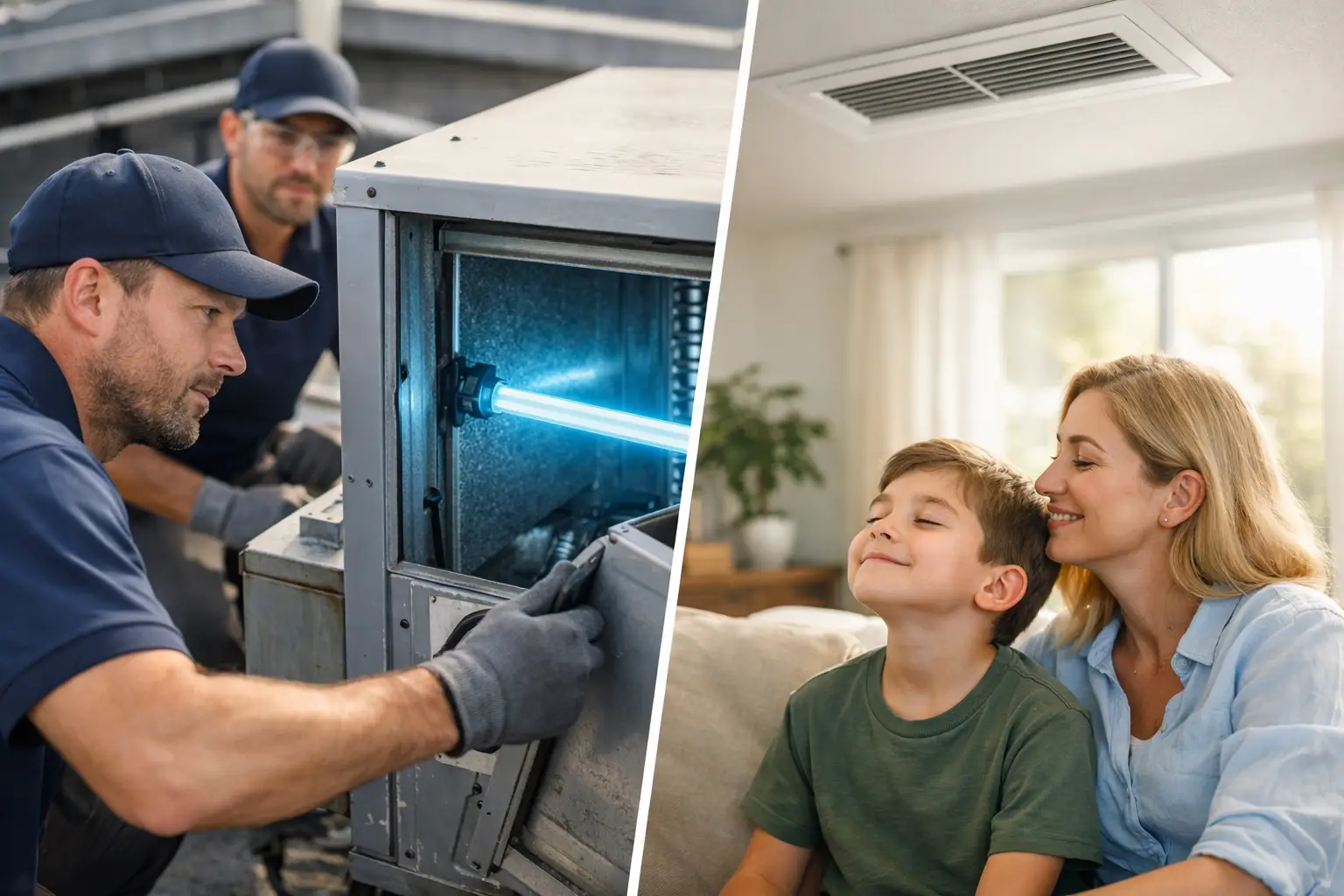
A UV light installed inside an HVAC system does not make your home or business sterile, and it is not a replacement for filtration, cleaning, or ventilation. What it can do is address a specific problem that matters in humid Southeast Texas: microbial growth on damp indoor components. Understanding the real UV light HVAC benefits helps you decide whether this indoor air quality upgrade is a smart fit for your property.
For homeowners, that may mean reducing stubborn odors and helping an AC system stay cleaner through a long cooling season. For property managers and commercial facility teams, it may support more consistent airflow and fewer coil-cleaning concerns across occupied spaces. The value depends on the equipment, the installation location, and the condition of the system already in place.
What an HVAC UV Light Actually Does
HVAC UV lights use ultraviolet-C, or UV-C, energy. This type of light is installed inside the air handler, near the evaporator coil, drain pan, or in the ductwork. When properly selected and positioned, it is intended to disrupt the growth of certain microorganisms that may collect in dark, damp areas of the HVAC system.
The evaporator coil is often the most practical location. During air conditioning operation, the coil removes humidity from indoor air. Condensation forms on the coil and drains into a pan, creating a moist environment where mold and biofilm can develop over time. Dust and organic material can provide additional fuel for that buildup.
A coil-mounted UV light shines continuously on this surface. Rather than treating air only as it passes through a duct, it targets the area where growth is most likely to persist. This distinction is important because not every UV product delivers the same results or serves the same purpose.
UV Light HVAC Benefits for Homes and Businesses
The most meaningful benefit is helping keep the evaporator coil and nearby drain area cleaner. A cleaner coil can allow air to move more freely across the system, which supports comfort and helps the equipment operate closer to its intended performance. It does not fix a failing blower motor, undersized ductwork, or a clogged filter, but it can reduce one source of buildup that contributes to restricted airflow.
UV lights can also help with odors that originate within the HVAC system. A musty smell when the air conditioner starts may be related to moisture and microbial growth on the coil, drain pan, or other internal surfaces. If that is the underlying cause, a properly installed UV light may be part of the solution. If the odor comes from a plumbing issue, wet insulation, a dirty duct system, or a dead animal in a crawlspace, UV light alone will not resolve it. Good diagnostics come first.
Indoor air quality is another reason people consider this upgrade. UV lights may help reduce microbial activity inside the system before it has the opportunity to build up on wet components. They work best as one layer of a broader indoor air quality plan that includes the right filter, routine maintenance, humidity control, and adequate ventilation.
For commercial properties, the benefit often comes down to protecting system cleanliness and occupant comfort. Offices, retail spaces, clinics, and multi-tenant buildings can have long operating hours and substantial cooling demands. Keeping coils cleaner may help facility managers avoid some of the performance decline associated with dirt and biological buildup. Results vary based on occupancy, maintenance practices, equipment type, and humidity levels.
Better airflow can support efficiency
When an evaporator coil is coated with dirt or biofilm, the HVAC system may have to work harder to move air and transfer heat. That can lead to reduced cooling performance, longer run times, and added strain on components. By limiting biological growth on an otherwise well-maintained coil, UV treatment may help preserve airflow and heat transfer.
This is not a promise of a specific utility-bill reduction. Energy savings depend on many factors, including the age and condition of the unit, thermostat settings, insulation, duct leakage, refrigerant charge, and how often the system runs. Still, protecting a clean coil is a practical part of maintaining efficient operation.
Less buildup between maintenance visits
Every HVAC system still needs professional maintenance. Filters must be changed, drain lines need attention, electrical parts need inspection, and coils may require cleaning. A UV light does not eliminate those responsibilities.
What it may do is reduce the rate at which certain growth returns in the areas it reaches. For properties with recurring coil buildup or drain-pan concerns, that can be a worthwhile advantage. In the Magnolia and Greater Houston area, where air conditioners often run for much of the year, moisture control inside the air handler deserves attention.
Coil Lights vs. In-Duct Air Lights
Not all HVAC UV lights are designed the same way. The two broad categories are coil sterilization lights and in-duct air treatment lights.
Coil lights are placed near the evaporator coil and operate continuously. Their purpose is to control microbial growth on the coil, drain pan, and surrounding surfaces. For many residential systems, this is the most direct and dependable application because the light remains focused on a fixed target.
In-duct air lights are designed to expose moving air to UV-C as it travels through the system. Since air moves quickly, exposure time is limited. These systems may be useful in certain applications, especially when paired with appropriate filtration and ventilation strategies, but their performance depends heavily on design, lamp intensity, duct configuration, and airflow speed.
A qualified HVAC technician should evaluate the equipment and the specific concern before recommending either option. If the issue is visible coil growth and recurring musty odor, a coil light may make more sense. If a building has more complex air quality needs, the answer could involve several improvements rather than a single product.
Important Limits and Trade-Offs
UV lights are helpful in the right application, but they are not a cure-all. They do not remove dust, pollen, pet dander, or other airborne particles. A quality air filter is still the primary tool for capturing particles, and the filter must be changed on schedule.
They also do not correct moisture problems outside the HVAC cabinet. High indoor humidity can result from oversized equipment, poor ventilation, duct leakage, drainage issues, or building-envelope concerns. If humidity remains excessive, homeowners may continue to experience comfort and air quality problems even with UV treatment installed.
There are maintenance costs to consider. UV lamps lose output over time and typically need replacement on a regular schedule according to the manufacturer’s specifications. Some lights can also affect certain plastic or rubber components if installed too close to them. Proper placement, shielding when needed, and professional installation are essential.
Safety matters as well. UV-C light can damage eyes and skin with direct exposure. The light should be installed inside the HVAC equipment or ductwork so occupants are not exposed, and service personnel should follow proper shutdown procedures before opening the system.
When Is a UV Light Worth Considering?
A UV light is often worth discussing if your system has recurring microbial buildup on the evaporator coil, persistent musty odors tied to the air handler, frequent drain-pan slime, or a history of moisture-related maintenance issues. It can also make sense for businesses that want an additional layer of HVAC cleanliness as part of a preventive maintenance plan.
It may be less urgent if the system is clean, humidity is well controlled, filters are changed consistently, and there are no odor or coil-buildup concerns. In that situation, putting the budget toward maintenance, duct repairs, filtration, or a thermostat upgrade may deliver more immediate value.
The best recommendation starts with an inspection. A technician can check the coil condition, drainage, filtration, airflow, and humidity factors that influence whether UV treatment will solve a real problem or simply add equipment that is not needed.
Professional Installation Makes the Difference
Placement is not a minor detail. The lamp needs to reach the intended surface without damaging nearby materials, interfering with service access, or creating safety concerns. The electrical connection, access panel, lamp type, and future replacement plan all matter.
BluePeak 360 can evaluate your HVAC system and explain whether a UV light is appropriate for your home, rental property, or commercial space. You should receive a clear recommendation based on what the equipment needs, not a one-size-fits-all add-on.
If your AC has a recurring musty smell, visible coil buildup, or drainage trouble, address it before another demanding Texas cooling season puts more strain on the system. A focused inspection can identify the source and help you choose the right next step for cleaner equipment and more dependable comfort.