
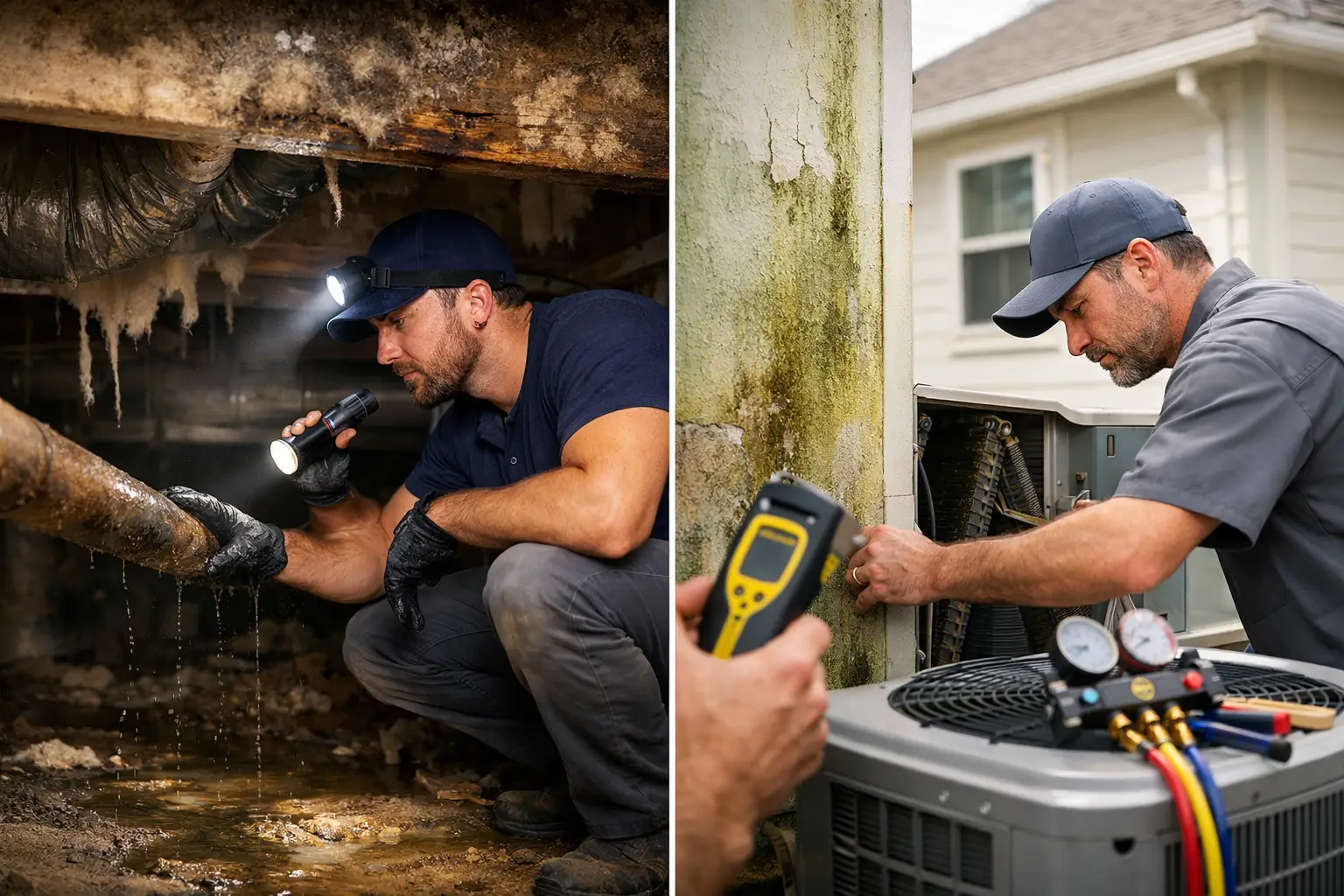
A musty smell is not just an annoyance you cover with a candle or air freshener. If you are asking, “why does my house smell musty,” your home is often signaling that moisture has collected somewhere it should not. In the Houston-area climate, that can happen quickly – especially during long humid stretches, heavy rain, or periods when the AC is not removing moisture as it should.
The odor itself usually comes from mold, mildew, bacteria, or damp materials releasing airborne compounds. Finding the source early can protect indoor air quality, prevent building damage, and keep a small HVAC or plumbing issue from becoming a larger repair.
Why Does My House Smell Musty? Start With Moisture
Mustiness needs two things: moisture and something organic for microbes to grow on. That could be dust inside ductwork, damp carpet backing, drywall paper, wood framing, insulation, stored boxes, or a dirty AC drain system. The smell may be strongest after rain, when the air conditioner starts, or when you open a closet, cabinet, or rarely used room.
The challenge is that the odor does not always appear right beside the problem. Air moves through your home, and an HVAC system can carry odors from a damp area into bedrooms, living spaces, and offices. A quick spray may mask the smell for an afternoon, but it will not correct the moisture source.
High indoor humidity
For many homes in Magnolia, The Woodlands, Spring, Tomball, Conroe, and Houston, indoor humidity is a leading cause. When indoor relative humidity regularly rises above about 60%, surfaces can stay damp enough for mildew growth. You may notice clammy rooms, condensation on windows, a sticky feeling indoors, or towels that take too long to dry.
High humidity can occur when the AC is undersized, oversized, poorly maintained, low on refrigerant, or running with airflow problems. An oversized system is a common surprise: it may cool the house quickly but shut off before it runs long enough to remove adequate moisture. Leaky ducts, open doors, poor insulation, and exhaust fans that do not vent outdoors can also allow humid air to linger.
HVAC drain or air handler problems
Your air conditioner removes water from the air as it cools. That water should flow safely through a condensate drain line. If the line is clogged with algae, dust, or sludge, water can back up into the drain pan or air handler. The result can be a musty smell when the system turns on, along with water stains, a drain safety switch shutting the system down, or visible moisture around the indoor unit.
A dirty evaporator coil, wet insulation near the air handler, or microbial buildup in the condensate pan can create similar odors. These issues are especially likely when the smell seems strongest at supply vents. Changing the filter may help airflow and dust levels, but it will not clear a blocked drain line or repair a leaking component.
Water leaks and hidden damp areas
A slow plumbing leak under a sink, behind a refrigerator, around a water heater, or inside a wall can stay hidden for weeks. Roof leaks and window leaks often become noticeable after storms. Even a small leak can soak drywall, cabinets, flooring, or insulation, creating the conditions that produce that familiar basement-like odor.
Check for bubbling paint, soft drywall, warped baseboards, discolored ceilings, damp cabinet interiors, and unexplained increases in your water bill. Do not overlook laundry rooms, bathrooms, crawl spaces, garages, and closets on exterior walls. Stored belongings can absorb moisture and hold the odor long after the original leak has stopped.
Damp carpets, furniture, and fabrics
Carpet and padding are particularly good at trapping moisture. A pet accident, spilled drink, wet shoes, overflowing toilet, or minor flood may seem resolved once the carpet surface feels dry. The padding underneath may still be wet. Upholstered furniture, curtains, area rugs, and piles of laundry can also hold moisture and odors.
If a room smells musty only when it is closed up, pull furniture away from walls and inspect the floor and baseboards. A dehumidifier can help lower the moisture level, but wet materials may need professional drying or replacement depending on how long they have been damp and whether the water was clean.
What to Check Before the Smell Gets Worse
Start with a practical inspection, but avoid tearing into walls or handling suspicious materials without the right protection. First, note when and where the smell is strongest. Does it appear only when the AC runs? Is it worse after rain? Does one bathroom, closet, or bedroom have a stronger odor than the rest of the home? Those details help narrow down the cause.
Then check visible moisture areas. Look beneath sinks, around toilets, near the indoor air handler, and around windows. Replace a dirty HVAC filter if it is overdue, and make sure supply and return vents are open and unobstructed. Check that bathroom and kitchen exhaust fans actually move humid air outdoors rather than into an attic or enclosed space.
A simple indoor humidity monitor is useful. Aim for roughly 30% to 50% relative humidity when practical. In Southeast Texas, holding that range may require a properly operating air conditioner, improved ventilation, air sealing, or a whole-home dehumidification solution. The right answer depends on the home, its equipment, and where the moisture is entering.
When the Musty Odor Points to an HVAC Issue
Call for HVAC diagnostics when the smell is clearly tied to AC operation, returns after filter changes, or comes with weak airflow, inconsistent temperatures, water around the air handler, or frequent system shutdowns. A technician can inspect the condensate drain, drain pan, evaporator coil, blower area, duct condition, airflow, and overall humidity performance.
This matters because an AC system is not only responsible for cooling. It also plays a major role in moisture control. A system that runs but does not dehumidify correctly can leave your home feeling uncomfortable even at a low thermostat setting. Turning the thermostat lower may not solve the underlying problem and can increase energy use.
BluePeak 360 can evaluate whether a clogged drain, maintenance issue, equipment fault, duct problem, or system-sizing concern is contributing to indoor moisture. Clear findings and transparent repair options are far more useful than guessing at the source of an odor.
Do Not Ignore Possible Mold Growth
Not every musty smell means a major mold problem, and not every dark spot is mold. Still, persistent odor paired with visible growth, recurring water damage, or health symptoms deserves prompt attention. People with asthma, allergies, respiratory conditions, or compromised immune systems may be more sensitive to poor indoor air quality.
Do not paint over stained drywall or run the AC continuously to hide the odor. Correct the moisture source first. Materials that remain wet or visibly contaminated may require a qualified water-damage or mold-remediation professional, particularly after flooding, sewage exposure, or extensive leaks. Your HVAC contractor can address system-related moisture concerns, while the appropriate remediation team handles affected building materials when needed.
Keep Musty Smells From Returning
Prevention is mostly about controlling water and humidity before they settle into your home. Keep up with AC maintenance, including drain-line service and filter changes based on your household and system needs. Repair plumbing, roof, and window leaks promptly. Use bath fans during showers and for a while afterward, and avoid storing damp items in closets, garages, or enclosed rooms.
If your home consistently feels humid despite normal cooling, do not assume that is simply part of Texas living. A properly diagnosed HVAC or dehumidification improvement can make the home feel cleaner, more comfortable, and easier to cool. Address the smell while it is still a clue, not after it becomes a costly moisture problem.