
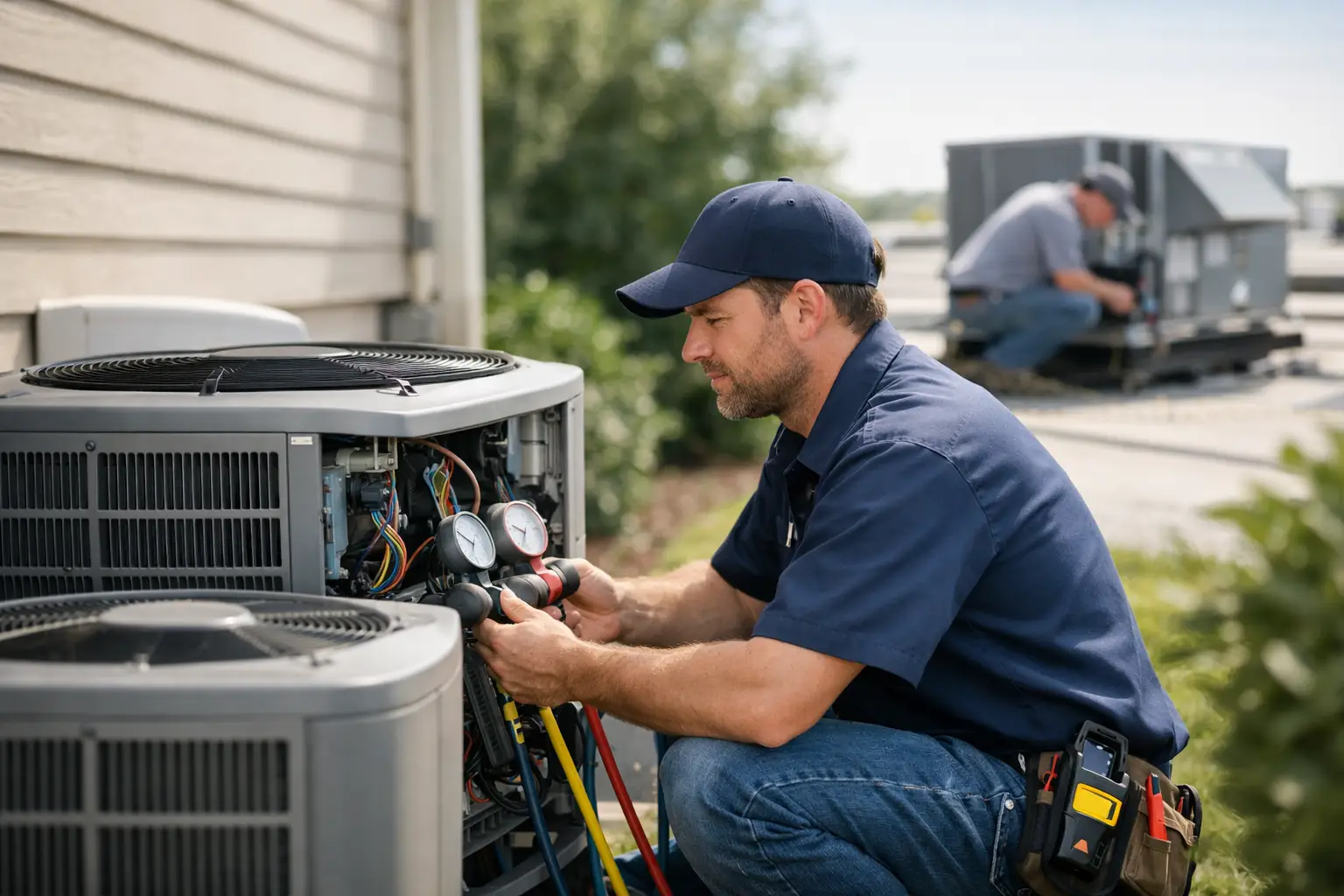
If your AC quits in August or your heater struggles on the first cold front, the question gets real fast: how often should HVAC be serviced? For most homes and commercial properties, the right answer is twice a year – once before cooling season and once before heating season. That schedule catches wear early, keeps efficiency from slipping, and gives you a much better shot at avoiding emergency repairs when your system is working its hardest.
That said, not every property runs under the same conditions. A newer system in a well-maintained home may stay in good shape with routine seasonal service and regular filter changes. An older unit, a busy commercial space, or a system in the Houston-area heat may need more attention. The best maintenance schedule is the one that matches how hard your equipment works, how clean your air stays, and how costly downtime would be.
How often should HVAC be serviced for most properties?
For the average household, two professional service visits per year is the standard. One visit should happen in the spring before the cooling season ramps up. The other should happen in the fall before you rely on heat. In Southeast Texas, where air conditioning carries a heavy load for much of the year, that spring tune-up matters even more.
Commercial properties often need a tighter schedule. A light-use office may still do well with twice-yearly service, but restaurants, retail spaces, medical offices, warehouses, and buildings with rooftop units usually benefit from quarterly inspections. When equipment runs longer hours or serves more people, small issues turn into expensive interruptions faster.
A lot of owners ask whether annual maintenance is enough. Technically, some systems may get by with one visit a year for a while. But “getting by” is not the same as protecting performance. Skipping that second visit can mean missing a worn capacitor, dirty evaporator coil, loose electrical connection, or drainage problem before peak season exposes it.
Why twice-a-year service makes sense
HVAC systems do not usually fail all at once. Most problems build slowly. Airflow drops a little. Electrical components weaken. Drain lines collect buildup. Refrigerant performance changes. You may not notice any of it until the house feels warmer, utility bills climb, or the unit starts short cycling.
Seasonal service gives a technician time to inspect, clean, test, and adjust the system before those problems become repair calls. It is also when issues that are easy to fix stay easy to fix. A dirty coil cleaned during maintenance is a routine visit. A system that overheats and shuts down during a heat wave is a much bigger disruption.
There is also the efficiency side. A neglected system has to work harder to deliver the same comfort. That means longer run times, more wear, and higher operating costs. In a climate where cooling can run for long stretches, even a modest drop in efficiency adds up over the season.
When your HVAC may need service more often
Twice a year is a strong baseline, but some situations call for more frequent attention.
If you have pets, indoor air tends to carry more hair and dander, which can load filters faster and affect airflow. If anyone in the home has allergies or asthma, keeping the system cleaner can support better indoor air quality. If your property has ongoing dust from remodeling, nearby construction, or heavy traffic, the system may need closer monitoring.
System age matters too. Once equipment gets older, parts naturally wear down and tolerances get tighter. An older AC or furnace may still run reliably, but it usually benefits from more watchful maintenance.
Commercial properties have their own variables. Longer operating hours, higher occupant loads, multiple thermostatic zones, and rooftop exposure can all increase maintenance needs. For a business, comfort problems are not just inconvenient. They can affect staff productivity, customer experience, inventory, and tenant satisfaction.
Signs you should not wait for your next scheduled service
Even if you stay on a maintenance plan, there are times when you should call sooner. Weak airflow, uneven temperatures, unusual noises, musty odors, short cycling, rising energy bills, or water around the indoor unit all point to a system that needs attention.
The same goes for frequent thermostat adjustments. If people in different rooms are always too hot or too cold, the issue may not be the thermostat itself. Airflow restrictions, duct leaks, low refrigerant, dirty coils, or sensor problems could all be part of it.
For commercial buildings, complaints from occupants often show up before a total failure. One hot office, one noisy rooftop unit, or one area with humidity problems can be an early warning sign. Handling it early usually costs less than waiting for a full breakdown.
What happens during professional HVAC maintenance?
A proper service visit should be more than a quick visual check. The goal is to verify safe operation, maintain efficiency, and catch developing issues.
On the cooling side, technicians typically inspect electrical components, test capacitors and contactors, check refrigerant performance, clean coils as needed, inspect the condensate drain, verify thermostat operation, measure airflow, and look for signs of wear or leakage. On the heating side, service may include inspecting burners, heat exchangers, safeties, ignition components, blower performance, and electrical connections.
For heat pumps, both heating and cooling functions need attention because the same equipment handles year-round comfort. Commercial systems often require added checks based on unit type, controls, rooftop conditions, and operating demands.
Good maintenance is not about finding problems that do not exist. It is about giving you a clear picture of system condition, what needs immediate repair, and what may need planning in the months ahead. That kind of transparency matters, especially when you are managing a budget for a home or a commercial property.
What you can do between service visits
Professional maintenance is essential, but owners still play a big role in system health.
The biggest task is filter replacement. A clogged filter restricts airflow, increases strain, and can cause comfort issues that look like larger equipment failures. Some filters need monthly checks, while others may last longer depending on type, system use, pets, and indoor air conditions.
It also helps to keep supply and return vents clear, make sure the outdoor unit has breathing room, and pay attention to changes in system sound or performance. If your drain line has a history of clogging, ask your HVAC provider what preventive steps make sense for your setup. Small habits can extend the value of every professional tune-up.
How maintenance affects repair costs and system lifespan
A lot of people ask whether regular service is really worth paying for if the system seems to be working fine. In many cases, yes. Maintenance does not guarantee you will never have a repair, but it reduces the odds of preventable failures and helps you avoid the kind of neglect that shortens equipment life.
Think of it this way: HVAC systems are expensive assets. Replacing a failed blower motor, compressor, or heat exchanger is far more disruptive than catching warning signs early. And if a system is already older, maintenance can help you make smarter timing decisions about repair versus replacement instead of being forced into a rushed choice during extreme weather.
That matters even more for business owners and property managers. Emergency downtime can mean interrupted operations, uncomfortable tenants, and urgent after-hours service calls. Preventive maintenance gives you more control.
How often should HVAC be serviced in Texas heat?
In hotter climates, air conditioning does more than occasional seasonal work. It carries the comfort load for long stretches, and that sustained run time increases wear. For homeowners in Magnolia, The Woodlands, Spring, Tomball, Conroe, Houston, and nearby areas, spring service should be treated as a priority, not an extra.
If your system runs hard for much of the year, if humidity control is a concern, or if your equipment is aging, twice-yearly service is the practical minimum. For many commercial systems, quarterly service is the safer move. The cost of more frequent maintenance is often lower than the cost of lost cooling when demand is high and service calls are stacked across the region.
The best schedule is the one you will actually keep
A perfect maintenance plan on paper does not help if it gets pushed off every season. The best schedule is simple, realistic, and tied to how your property actually uses HVAC. For most homeowners, that means spring and fall. For many commercial properties, quarterly service makes more sense.
If you are not sure what your equipment needs, a licensed HVAC professional can look at the age of the system, usage patterns, filter conditions, air quality concerns, and past repair history to recommend the right interval. BluePeak 360 takes that same practical approach – clear recommendations, transparent pricing, and service built around long-term reliability. A little attention at the right time can save you from a much bigger problem when comfort matters most.