
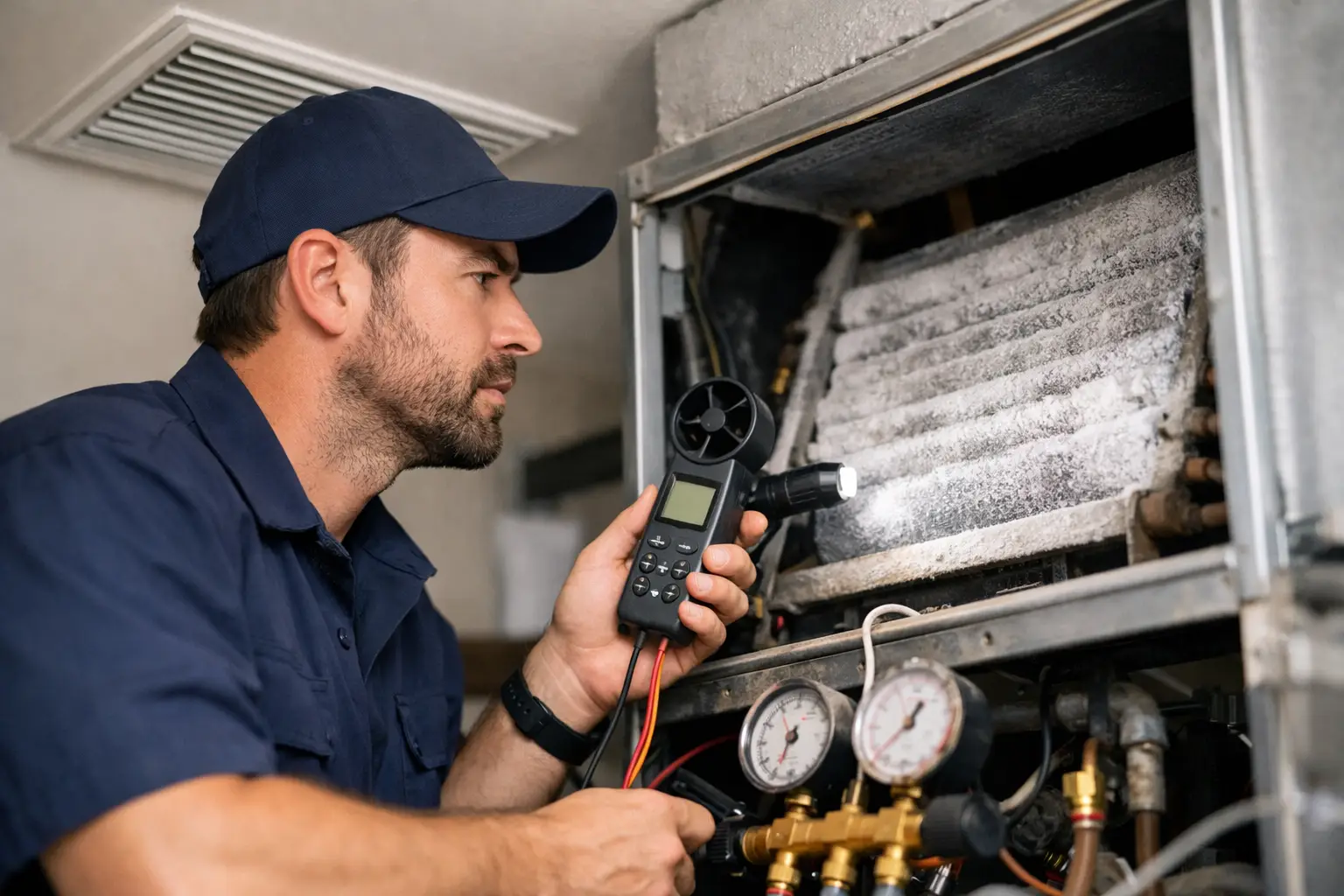
When a room in your home stays warm long after the AC kicks on, or your office has vents that barely seem to move air, the issue is rarely just “weak cooling.” In most cases, HVAC diagnostics for low airflow uncover a system problem that is limiting how air moves through the equipment, ductwork, or supply vents. That distinction matters, because low airflow can drive up energy use, reduce comfort, and put extra strain on expensive components.
Low airflow is one of those problems that can look simple from the outside. You feel less air at the register, so it is easy to assume the system is just old or low on refrigerant. Sometimes age is part of the story, but poor airflow usually has a more specific cause. A proper diagnosis focuses on where the restriction starts, how severe it is, and whether it is affecting one room, one zone, or the entire building.
What low airflow usually points to
Air conditioning and heating systems depend on balance. The blower has to move enough air across the coil, through the duct system, and into the occupied space. If any part of that path is restricted, performance drops quickly. In Texas, where systems often run hard for long stretches, even a moderate airflow issue can become noticeable fast.
A clogged air filter is the most common starting point, but it is far from the only one. Dirty evaporator coils, failing blower motors, slipping blower wheels, closed dampers, crushed flex ducts, disconnected duct sections, and undersized return air can all reduce airflow. In commercial spaces, rooftop units may also have issues with belts, economizer settings, or neglected maintenance that affect air volume.
That is why a reliable technician does not stop at the obvious. Replacing a filter may help, but if the motor is weak or the duct system is poorly designed, the problem will come right back.
HVAC diagnostics for low airflow starts with the pattern
The first clue is not always inside the air handler. It often starts with the pattern of complaints. If every room feels weak, the issue may be at the blower, coil, filter, or main trunk line. If only one area is affected, the problem may be a branch duct, damper, register, or balancing issue.
A technician will usually ask a few direct questions. Has airflow gotten worse over time or changed suddenly? Is the issue happening in cooling mode, heating mode, or both? Did it start after construction, remodeling, or filter replacement? Are there unusual noises from the indoor unit? Those answers help narrow the list before testing begins.
This step matters because low airflow is not always a repair problem. Sometimes it is a design problem that has been there since installation. A room added onto the home, a long duct run to a second floor, or an office reconfiguration can expose airflow limitations that were hidden before.
Basic checks that reveal a lot
A good diagnostic process starts with the basics, because basic problems are still expensive when they go unnoticed. The filter is checked for type, size, and condition. The return grille is inspected for blockage from dust, furniture, or stored items. Supply registers are checked to confirm they are open and not obstructed.
From there, the indoor unit is inspected. The blower wheel may be dirty enough to reduce air movement even if the motor still runs. The evaporator coil may be coated with buildup that restricts airflow across the surface. In some cases, a frozen coil is the first visible sign that airflow has been too low for too long.
For commercial systems, technicians may also inspect belt tension, pulley alignment, motor amperage, and rooftop cabinet condition. A unit can technically still operate while delivering far less airflow than it should.
Measuring airflow instead of guessing
The difference between a quick look and real HVAC diagnostics for low airflow is measurement. Guessing wastes time. Testing tells you whether the system is struggling because of restriction, leakage, equipment failure, or poor duct performance.
Static pressure testing is one of the most useful tools in this process. High static pressure often points to a system working against resistance, which may come from a dirty filter, clogged coil, undersized ductwork, or restrictive return design. Low pressure in the wrong location may suggest disconnected ducts or major leakage.
Technicians may also measure temperature split, blower speed settings, motor performance, and air volume at selected registers. If the system is moving too little air across the coil, that can affect cooling capacity, humidity control, and compressor health. In heating mode, it can create temperature rise problems and stress the heat exchanger or limit switches.
The exact testing depends on the equipment. A residential split system, a zoned setup, and a commercial rooftop unit each call for a slightly different diagnostic approach. The goal stays the same – find the restriction and verify how it is affecting the system.
Ductwork problems are more common than many owners realize
People often think of ductwork as fixed and permanent, but ducts can shift, sag, disconnect, leak, or deteriorate over time. In attics especially, flex ducts may become kinked or compressed. That can dramatically reduce airflow to one or more rooms even when the central unit is otherwise working.
Leaks are another common issue. If conditioned air is escaping into an attic or wall cavity, the equipment may run longer while rooms still feel under-supplied. Return duct leaks can be just as problematic, especially if they pull hot, dusty, or humid air into the system.
Not every duct issue can be solved with a simple patch. Some systems were installed with return air that is too small for the equipment, or with long branch runs that were never balanced properly. In those cases, repair helps only up to a point. Redesign or modification may be the real fix.
Why the blower and coil need close attention
Low airflow often gets blamed on ducts, but the air handler itself is just as important. A blower motor can weaken gradually. A capacitor problem may keep the motor from running at the correct speed. On variable-speed systems, control issues can also affect how much air is delivered.
The blower wheel collects dust more often than many property owners expect. When buildup changes the shape of the blades, the wheel cannot move air efficiently. Add a dirty evaporator coil to the equation, and the system can lose a surprising amount of airflow without fully shutting down.
This is one reason preventive maintenance matters. Catching dirt, motor wear, and pressure problems early is usually far less costly than waiting for a freeze-up, compressor strain, or repeated comfort complaints.
When low airflow is not the only problem
Sometimes airflow is the main issue. Sometimes it is a symptom of something larger. Refrigerant problems, thermostat control issues, and oversized or undersized equipment can all overlap with airflow complaints.
For example, a frozen evaporator coil may be caused by low airflow, low refrigerant, or both. A room that feels uncomfortable may have poor airflow, poor insulation, high solar gain, or a zoning issue. In commercial buildings, tenant complaints may point to operational schedules or control settings rather than a single failed part.
That is why diagnosis should stay grounded in testing, not assumptions. The right fix depends on the full picture.
What owners can check before calling for service
There are a few reasonable checks a homeowner or facility manager can make. Confirm the filter is clean and the correct size. Make sure supply and return grilles are not blocked. Look for obvious collapsed flex duct if the attic is safely accessible. Check whether the issue affects one room or the whole property.
Beyond that, it is usually time for professional service. Opening equipment panels, adjusting blower settings, or chasing duct restrictions without the right tools can create more problems than it solves. If the system is freezing, making unusual noise, short cycling, or causing major comfort loss, waiting tends to increase repair risk.
In a hot, humid market like the greater Houston area, low airflow can become more than an annoyance quickly. Comfort drops, humidity rises, and equipment strain builds every time the system runs.
What a good repair plan should include
A trustworthy diagnosis should lead to a clear explanation, not vague language. You should know what was tested, what was found, and whether the fix is a simple repair, a cleaning issue, a duct improvement, or a larger system recommendation.
Transparent service matters here because airflow problems can have more than one cause. A contractor should explain trade-offs. If a coil cleaning will improve performance but the duct system is still undersized, you should hear that. If a blower motor repair makes sense now but the aging system is becoming a recurring cost, you should hear that too.
For homeowners and commercial clients alike, the best outcome is not just stronger air at the vent. It is a system that moves the right amount of air, controls temperature more evenly, and operates without unnecessary strain.
BluePeak 360 approaches these calls the same way any good HVAC partner should – with clear diagnostics, professional repair recommendations, and no guessing when comfort and system reliability are on the line.
If your vents feel weak, certain rooms never seem to catch up, or your system runs longer than it should, low airflow is worth addressing early. A careful diagnosis today can prevent bigger repairs later and bring your space back to the comfort level it was designed to deliver.