
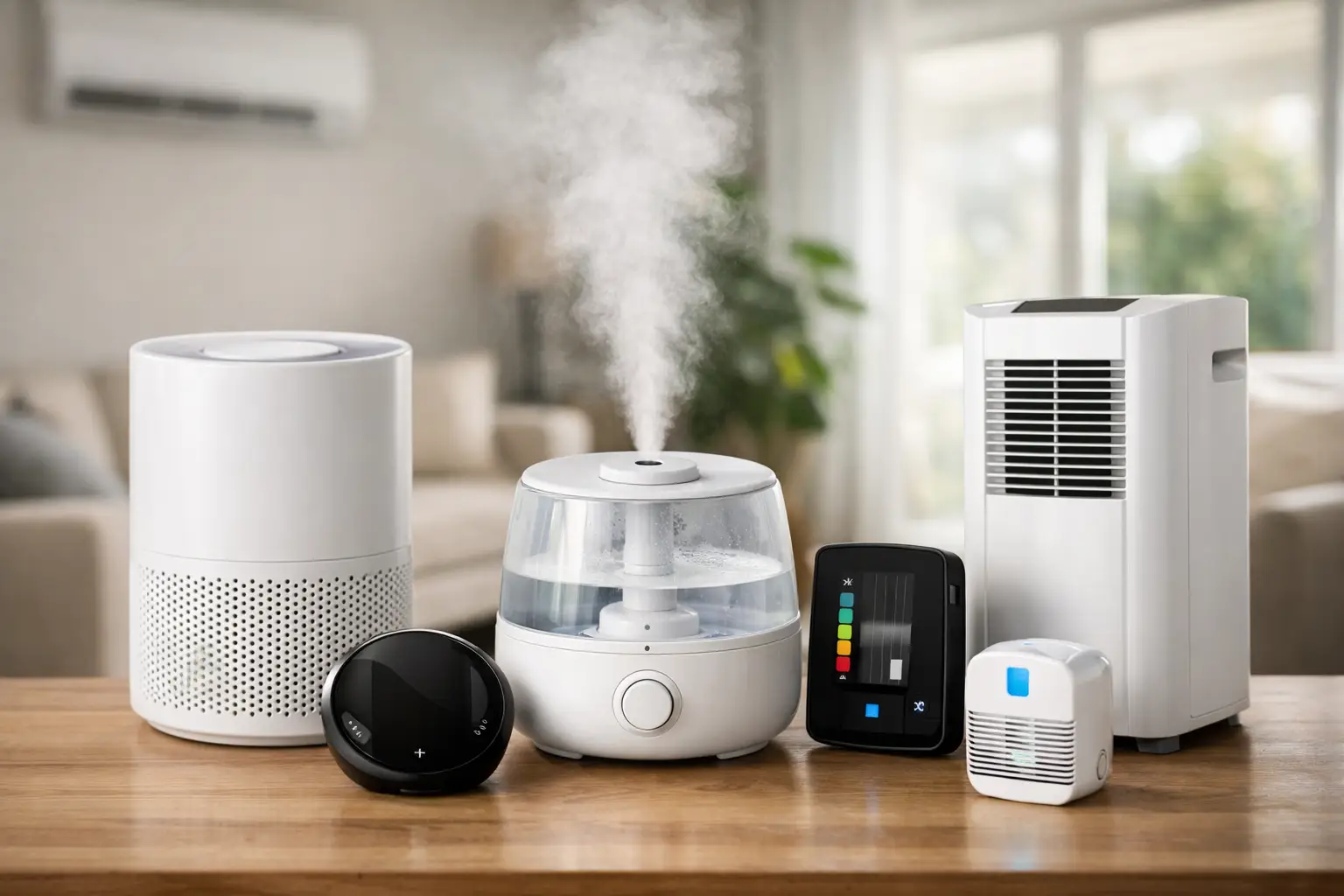
When the house feels dusty no matter how often you clean, or one room always smells stale, the problem is often bigger than housekeeping. Many indoor air quality products home owners buy are meant to solve real comfort issues, but not every product fits every house, HVAC system, or air quality concern.
The right choice depends on what you are trying to fix. Allergies, excess humidity, pet dander, odors, and airborne particles each call for a different approach. A good air quality upgrade should improve comfort without creating new maintenance headaches or wasting money on equipment you do not need.
Which indoor air quality products home owners actually need?
A lot of air quality advice online treats every home the same. That is rarely how it works in Texas. A newer, tighter home may trap humidity and indoor pollutants more easily, while an older home may deal with dust infiltration, uneven airflow, and duct leakage. If your AC runs hard for much of the year, your HVAC system is already playing a major role in the air you breathe.
That is why the best air quality products usually fall into two categories. Some work at the room level, like portable air purifiers. Others work through the HVAC system, like media filters, UV lights, whole-home dehumidifiers, and fresh air ventilation equipment. Room products can help in a specific space. Whole-home products are usually the better fit when the issue affects the entire house.
Start with the problem, not the product
Before buying anything, it helps to identify the main symptom. If family members are sneezing, waking up congested, or dealing with flare-ups during high pollen months, filtration may be the priority. If the house feels sticky and smells musty, humidity control matters more. If cooking odors, cleaning chemicals, or stale air linger, ventilation may be the missing piece.
This is where many homeowners overspend. They buy a purifier for odors when the real issue is poor ventilation, or they install a very restrictive filter that hurts airflow because they were chasing better dust control. Indoor air quality is connected to system performance. A product that sounds impressive can still be the wrong choice if it works against your HVAC system.
HVAC filters and media filters
For many homes, filtration is the first place to look. Standard one-inch filters help protect equipment, but they do not always do much for finer particles like pollen, dander, and smaller dust. Upgrading to a higher-quality filter can improve air capture, but the filter still has to match your system’s airflow requirements.
A media filter cabinet is often a better long-term solution than simply choosing the most aggressive one-inch filter at the store. Media filters typically have more surface area, which helps them capture more particles without choking airflow. That matters because restricted airflow can lead to comfort issues, higher energy use, and strain on the equipment.
This is one of those areas where stronger is not always better. A filter with a very high rating sounds good on paper, but if your system is not designed for it, performance can suffer. The goal is cleaner air and dependable system operation together.
Portable air purifiers
Portable purifiers make sense when the problem is limited to one area, such as a bedroom, nursery, home office, or pet zone. A quality unit with a true HEPA filter can reduce airborne particles in the room where it operates. For allergy sufferers, that can be a noticeable improvement, especially overnight.
Still, portable units have limits. They only treat the air in their coverage area, they need regular filter replacement, and they can become expensive if you try to outfit the whole house one room at a time. They are often best used as a targeted solution, not a substitute for whole-home filtration when the issue is house-wide.
Noise and maintenance also matter more than people expect. A purifier that is too loud for sleep or too expensive to maintain often ends up running less than intended.
Whole-home air purifiers
Whole-home air purifiers are installed within the HVAC system and treat air as it circulates through the home. These products can help reduce particles throughout the house without adding multiple devices to different rooms. For larger homes or families dealing with ongoing dust and allergens, this can be the cleaner and more practical option.
The exact performance depends on the type of purifier. Some focus on high-efficiency filtration. Others use additional air cleaning technologies. What matters most is using equipment that is properly matched to the system and installed correctly. Poor installation or the wrong product can reduce the benefits you were expecting.
For homeowners who want a less cluttered solution with more consistent coverage, whole-home systems are often worth considering. They are especially useful when indoor air concerns are not isolated to one room.
UV lights for HVAC systems
UV lights are commonly installed near the indoor coil or in the air handler. Their main purpose is usually not dust removal. Instead, they are used to help control microbial growth in damp areas of the HVAC system, where mold and biofilm can develop over time.
That can be helpful in humid climates where moisture around the coil becomes a recurring issue. Cleaner coil surfaces may also support system efficiency and reduce certain musty odors. But UV lights are not a cure-all. They are usually one piece of a broader indoor air quality strategy, not a standalone answer for allergy symptoms or general dust.
If someone is promising that a UV light alone will solve every air quality issue in the home, that is a sign to ask more questions.
Dehumidifiers and why they matter in Texas homes
Humidity control is one of the most overlooked air quality issues in this region. If indoor humidity stays high, the home can feel uncomfortable even when the thermostat setting looks fine. High humidity can also contribute to musty smells, encourage mold growth, and make air feel heavier than it should.
A whole-home dehumidifier works with your HVAC system to remove excess moisture more consistently than your AC alone. That is important because air conditioners are designed to cool first. They do remove moisture, but not always enough, especially during milder weather or in homes with ventilation and insulation issues.
If your house feels clammy, windows fog from the inside, or certain rooms hold onto a damp smell, a dehumidifier may do more for comfort than another air cleaner. It can also help your home feel cooler at a higher thermostat setting, which may support energy savings.
Ventilation products and fresh air systems
Sometimes the issue is not that the air is dirty. It is that the home is not getting enough fresh air exchange. Tighter construction improves efficiency, but it can also trap odors, VOCs, and stale indoor air. In that case, ventilation products may be the missing piece.
Fresh air ventilation systems bring in outdoor air in a controlled way and help prevent the house from feeling closed up. This can be especially useful in homes where cooking odors linger, cleaning product smells hang around, or occupancy levels are high.
Ventilation has to be handled carefully in hot and humid climates. Bringing in outdoor air without managing moisture can create new problems. That is why it is important to look at ventilation as part of the full HVAC and humidity picture, not as a standalone add-on.
Smart monitors and air quality sensors
Air quality monitors can be helpful if you want better visibility into what is happening indoors. They can track things like humidity, particulate levels, and VOCs, depending on the model. That data can help confirm a problem instead of relying only on guesswork.
These devices are useful, but they do not solve anything on their own. Think of them as diagnostic tools. They can tell you when humidity is too high or when particle levels spike, but you still need the right equipment and system setup to correct the issue.
For homeowners who like clear numbers and want to track improvement over time, a monitor can be a smart addition.
Choosing the right setup for your home
The best air quality plan is usually layered. A house with allergies and dust issues may benefit from upgraded filtration and duct evaluation. A house with persistent odors and stuffy air may need ventilation. A home that feels sticky most of the year may need dedicated humidity control more than anything else.
That is why a one-size-fits-all recommendation rarely works. The right answer depends on the age of the home, the HVAC system, insulation and air leakage, pets, occupancy, and whether the concern is seasonal or constant. In many cases, the most effective move is to evaluate the HVAC system first and choose products that support it rather than compete with it.
If you are investing in indoor air quality upgrades, make sure the solution is tied to the actual problem and installed for long-term performance. Cleaner air should also come with dependable airflow, manageable maintenance, and comfort you can feel every day. For most homeowners, that is the difference between buying a product and solving the problem.