
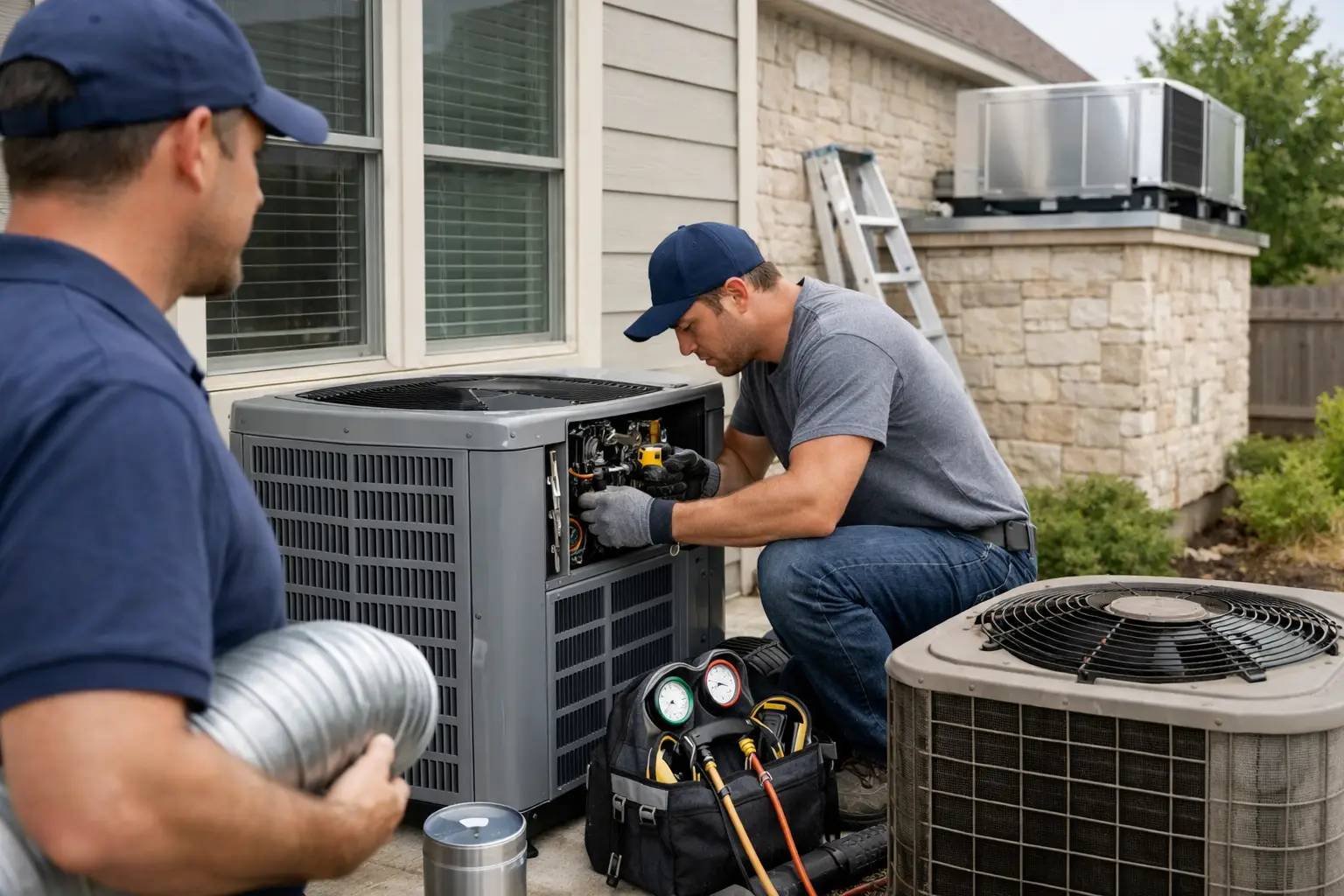
If your AC is limping through another Texas summer, replacement planning should start before the next breakdown forces a rushed decision. A good residential HVAC replacement planning guide helps you avoid overspending, undersizing, and choosing equipment that looks efficient on paper but struggles in real life.
For most homeowners, replacement is not just about swapping a box outside. It is about comfort, humidity control, utility costs, airflow, duct performance, and whether the new system actually matches the house. When you plan it correctly, you get fewer surprises, clearer pricing, and better long-term value.
When a residential HVAC replacement planning guide matters most
The worst time to think about replacement is during an emergency call when the house is heating up by the hour. That is when people tend to approve the fastest option, not the best one. Planning ahead gives you time to compare system types, review efficiency options, and ask better questions about installation quality.
Replacement planning becomes especially important when your current system is 10 to 15 years old, repair costs are stacking up, or comfort is uneven from room to room. In the Houston area, heavy cooling demand and long run times can expose weaknesses faster than in milder climates. A unit that still turns on is not always a unit that is performing well.
You should also start planning if your energy bills keep rising without a clear reason, indoor humidity feels harder to control, or your technician is finding refrigerant leaks, blower issues, or compressor wear. These are not always immediate replacement triggers, but they are signs that waiting much longer can limit your options.
Start with the real reason you are replacing it
Some homeowners replace because the system failed. Others replace because they are tired of hot spots, noise, dust, or high electric bills. Those are different problems, and they do not always have the same solution.
If your main issue is age and reliability, a standard like-for-like replacement may make sense. If your main issue is comfort, you may need more than new equipment. Duct leakage, poor return air design, bad thermostat placement, and incorrect sizing can all make a new system underperform.
That is why a proper evaluation matters. A trustworthy contractor should look beyond the outdoor condenser and indoor unit. They should inspect airflow, duct condition, insulation factors, drain setup, electrical components, and how the current system has actually been operating in your home.
Sizing is not guesswork
One of the most common replacement mistakes is choosing a system based on the size of the old one. If the old equipment was oversized or undersized, repeating that choice locks the same problem into your next system.
A system that is too small may run constantly and still struggle on peak heat days. A system that is too large can cool the house too quickly without removing enough humidity. In Southeast Texas, that trade-off matters. A house that reaches thermostat setpoint but still feels damp is not truly comfortable.
Proper sizing should account for square footage, ceiling height, insulation levels, window exposure, occupancy, and duct layout. This process may feel more detailed than homeowners expect, but that detail protects you from expensive mistakes.
Think beyond SEER ratings
Efficiency ratings matter, but they are not the whole story. Higher-efficiency systems can reduce operating costs, especially when cooling demand is high for much of the year. Still, the best choice depends on your budget, how long you plan to stay in the home, and whether the rest of the system supports that equipment.
For example, paying more for premium efficiency may make sense if your current bills are high and you expect to stay put for years. On the other hand, a mid-range high-efficiency unit paired with excellent installation may outperform a top-tier system installed poorly.
This is where homeowners need clear, transparent pricing. You should understand what you are paying for, what efficiency gains are realistic, and whether upgrades like variable-speed equipment, zoning, or smart thermostats will produce benefits you will actually notice.
Budget for the full job, not just the equipment
A residential HVAC replacement planning guide should always include budgeting for more than the nameplate system. Equipment is only one piece of the total investment.
Installation costs may also include duct modifications, drain line upgrades, pad replacement, electrical updates, filtration improvements, thermostat replacement, and code-related adjustments. If indoor air quality is a concern, this is also the time many homeowners consider better filtration, UV products, or humidity control upgrades.
The cheapest quote is often the narrowest quote. That does not automatically make it the wrong one, but it does mean you should compare scope carefully. Ask what is included, what could become an added cost, and whether permits, startup testing, and removal of old equipment are part of the proposal.
A good estimate should feel organized, not vague. If the proposal is hard to understand before the job starts, the process is not likely to become clearer later.
Timing your replacement can save stress
If your current system still operates, replacing before peak summer failure season usually gives you more flexibility. You are more likely to get your preferred installation date, spend time reviewing options, and avoid making decisions under pressure.
Spring and fall are often easier planning windows because demand is less extreme than it is during long heat waves. That said, the right time is not only about the calendar. It is also about your system condition. If repairs are becoming frequent, waiting for a total failure may cost more in emergency service, temporary discomfort, and rushed installation.
For landlords and property managers, early planning matters even more. Vacancy turns, tenant scheduling, and property access all get easier when replacement is proactive rather than reactive.
Choose the installer as carefully as the system
Homeowners often focus heavily on equipment brand and less on installation quality. In practice, both matter. Even strong equipment can deliver weak results if refrigerant charge is incorrect, airflow is not verified, duct connections leak, or the system is not commissioned properly.
Look for a licensed and insured contractor who explains the process clearly and does not avoid technical questions. You want someone who will discuss sizing, installation scope, warranty terms, and expected performance in plain language. Fast response is valuable, especially during an outage, but speed should not replace thoroughness.
This is one area where local experience helps. Contractors working in Magnolia, The Woodlands, Spring, Tomball, Conroe, and Houston understand how extended cooling seasons, humidity, and attic conditions affect system choices. BluePeak 360 approaches replacement with that practical local lens – not just what fits the house, but what holds up under real Texas demand.
Questions worth asking before you approve the job
A few good questions can tell you a lot about the quality of a proposal. Ask whether the system is being sized from current home conditions or simply matched to the old equipment. Ask whether your ducts were evaluated. Ask what efficiency level makes sense for your usage pattern, not just what is available.
You should also ask what kind of thermostat is recommended, whether airflow testing and startup verification are included, and what warranty coverage applies to both equipment and labor. If there are comfort issues in specific rooms now, ask directly whether the replacement plan addresses them.
A contractor who gives straight answers without rushing you is usually easier to work with from start to finish.
Plan for life after installation
Replacement is not the finish line. Even a high-quality new system needs maintenance to protect performance and service life. Filters need to be changed, coils need to stay clean, drains need to remain clear, and seasonal inspections can catch small issues before they become expensive ones.
This is also a good time to set realistic expectations. A new system should improve reliability, efficiency, and comfort, but it will not solve every issue if the house has significant insulation gaps or major duct problems that were left untouched. Good planning means understanding what the new system will fix and what may still need attention later.
The right replacement should make your home feel more stable, more comfortable, and less stressful to manage. If you start planning before the emergency call, ask better questions, and focus on the full system instead of the equipment alone, you give yourself the best chance of getting a result that lasts when the heat does not let up.