
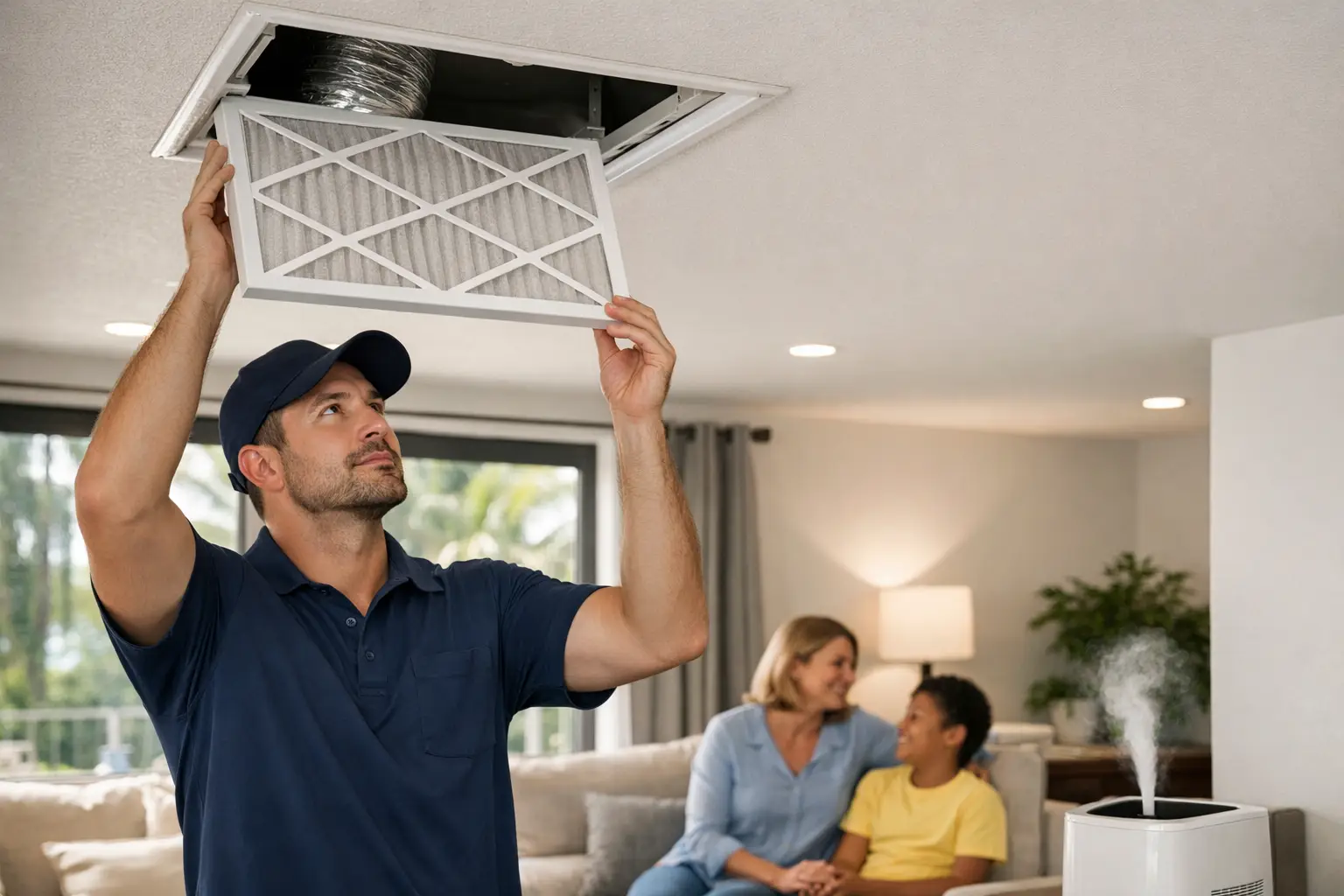
Houston heat can make people shut their windows, turn down the thermostat, and spend most of the day indoors. That makes indoor air quality Houston homeowners experience a practical comfort issue, not just a seasonal concern. When humidity, dust, pollen, odors, and poor airflow build up inside, a home can feel stuffy even when the AC is running.
The good news is that cleaner indoor air does not always require a major equipment replacement. The right solution depends on what is affecting the air in your home, how your HVAC system is performing, and whether moisture is under control. A professional evaluation can separate a simple maintenance need from a problem that calls for filtration, humidity control, duct repairs, or a system upgrade.
Why Houston Homes Face Indoor Air Challenges
Houston-area homes work hard against long cooling seasons, high outdoor humidity, heavy pollen periods, and frequent rain. Air conditioning removes some moisture as it cools the air, but it can only do that effectively when the system is properly sized, maintained, and operating long enough to complete a normal cooling cycle.
An oversized system, for example, may cool a home quickly but shut off before removing sufficient humidity. The temperature may look fine on the thermostat while the rooms still feel damp or clammy. That excess moisture can contribute to musty odors and create conditions where mold may grow on surfaces or inside poorly maintained HVAC components.
Outdoor air also finds its way indoors through open doors, leaky ductwork, gaps around penetrations, and normal daily activity. Pollen, dust, pet dander, cooking particles, and cleaning-product odors can then circulate through the home. In commercial spaces, higher occupancy, frequent door traffic, and larger HVAC systems add another layer of complexity.
Signs Your Indoor Air Needs Attention
Some air-quality problems are obvious. A persistent musty smell, visible dust around vents, or uneven comfort between rooms deserves attention. Others are easier to dismiss because they develop gradually.
Watch for increased dust shortly after cleaning, lingering cooking or pet odors, condensation on vents or windows, frequent filter clogging, and rooms that feel humid despite active cooling. Family members may also notice more irritation from allergies or asthma while indoors. These symptoms do not identify one specific cause, but they are useful clues for an HVAC technician.
A smart thermostat can show temperature patterns, but it cannot tell the whole story. Relative humidity, airflow, filter condition, coil cleanliness, duct leakage, and ventilation all affect how the air feels and how well your system performs.
Indoor Air Quality Houston Solutions That Actually Fit
There is no single product that fixes every air-quality complaint. The best approach starts with the source of the problem and avoids adding equipment that does not address it.
Start With HVAC Maintenance and Airflow
A clean, properly maintained system is the foundation of better indoor air. During routine service, a technician can inspect the filter, evaporator coil, condensate drain, blower components, refrigerant performance, and overall airflow. A clogged filter or dirty coil can restrict airflow and reduce the system’s ability to cool and dehumidify effectively.
Homeowners should check filters regularly, especially during high-use summer months. The replacement schedule depends on the filter type, household size, pets, construction activity, and system runtime. A filter that is too restrictive for the equipment can also create airflow issues, so higher filtration is not automatically better unless the system can support it.
Control Humidity Before It Controls the Home
For Houston homes, humidity control is often the difference between air that feels fresh and air that feels heavy. Most homes are generally more comfortable when indoor relative humidity stays in a moderate range, often around 40% to 60%. The ideal setting can vary with the home, outdoor conditions, and equipment.
If humidity stays elevated, the first step is diagnosing why. The AC may be short-cycling, improperly sized, low on airflow, or dealing with a drainage issue. In other situations, a dedicated whole-home dehumidifier may be a practical addition. Unlike a portable unit, a whole-home system can address moisture across the house without constantly occupying floor space or requiring manual emptying.
Choose Filtration for the Problem You Have
Standard HVAC filters primarily protect the equipment from large dust particles. Better filters can capture more airborne particles, but the right rating should be chosen with your system’s airflow capacity in mind. A technician can recommend a filter setup that improves filtration without putting unnecessary strain on the blower.
For homes with pets, allergy concerns, or high dust levels, upgraded media filtration may be worthwhile. Portable air cleaners can also help in specific areas, such as bedrooms or home offices. They are useful for targeted support, but they do not correct a moisture problem, dirty coil, leaking duct, or poorly performing central system.
Consider Air Purification Carefully
Air purification products can be beneficial in certain homes and businesses, particularly when odors, airborne particles, or biological contaminants are a concern. However, product claims vary widely. The right equipment should be selected based on the building, the HVAC system, and the specific issue being addressed.
Avoid treating air purification as a substitute for cleaning, source control, proper ventilation, or regular HVAC maintenance. If an air cleaner is installed, it should complement those essentials rather than cover up an unresolved problem.
Do Your Ducts Need Cleaning or Repair?
Duct cleaning is not an automatic annual requirement for every property. It may make sense after major remodeling, pest activity, visible debris, water damage, or a confirmed contamination issue. Simply scheduling duct cleaning because dust exists in the home may not solve the underlying cause.
Duct repair or sealing can be more valuable when conditioned air is escaping into an attic, crawlspace, or unconditioned area. Leaky return ducts can also draw in dusty or humid air from places it does not belong. A professional inspection can identify whether ducts are contributing to poor air quality, uneven temperatures, or higher energy use.
Everyday Habits That Support Cleaner Air
HVAC improvements work best alongside a few practical home habits. Use exhaust fans while cooking and bathing, and let them run long enough to remove moisture and odors. Keep supply and return vents open and clear of furniture, rugs, and stored items so air can move as designed.
Vacuuming with a properly maintained vacuum, managing pet grooming, and addressing water leaks quickly can reduce the load on your HVAC system. If you are painting, renovating, or using strong cleaning chemicals, follow product instructions and provide appropriate ventilation. During periods of high outdoor pollen, keeping windows closed can also reduce what enters the home.
For property managers and business owners, maintenance matters even more. A clogged filter, neglected drain line, or rooftop unit with weak airflow can affect tenant comfort, employee productivity, and customer experience. Scheduled preventive service gives facility teams a clearer view of equipment condition before a minor air-quality concern becomes an interruption.
When to Call an HVAC Professional
Call for an evaluation if your home smells musty, humidity remains high while the AC runs, dust quickly returns after cleaning, rooms have weak airflow, or you see water around HVAC equipment. It is also wise to schedule service after flooding, a roof leak, major renovation, or a long period of system inactivity.
A qualified technician should assess the complete system rather than immediately recommend a single device. That includes checking cooling performance, drainage, airflow, ducts, filtration options, and the conditions inside the home. BluePeak 360 provides professional HVAC service with a personal touch for homeowners and businesses that need clear answers and dependable solutions.
Cleaner air starts with knowing what is actually happening inside your system and your space. Address the source, maintain the equipment, and choose upgrades that match the way your home or business operates.