
A full drain pan, a wet spot near the indoor unit, or an AC that suddenly shuts off in the middle of a Texas heat wave usually points to one small problem – clogged condensate drainage. That is why ac drain line cleaning matters more than many homeowners and property managers realize. When the line backs up, the issue is not just comfort. It can turn into water damage, mold growth, and a system that stops cooling when you need it most.
Why ac drain line cleaning matters
Your air conditioner does more than cool the air. It also removes moisture from it. That moisture condenses on the evaporator coil and drains away through the condensate line. When that line stays clear, water exits the system as it should. When it clogs with algae, sludge, dust, or debris, the water has nowhere to go.
In many homes and commercial spaces, the first sign is a dripping secondary drain, standing water in the pan, or a float switch that shuts the system down to prevent overflow. That shutdown is helpful, but it usually happens at the worst possible time. In the greater Houston area, where AC systems work hard for long stretches, drain problems tend to show up fast and get worse quickly.
There is also a cost issue. A clogged line itself is usually a manageable service call. Ignoring it can lead to soaked drywall, ceiling stains, ruined flooring, or indoor humidity problems that make the whole building feel uncomfortable.
What causes a clogged AC drain line
Most clogs build slowly. Condensation moving through the line carries small particles over time. Add warmth and moisture, and you have the right conditions for algae and biofilm to grow inside the pipe.
Dirty air filters can make the problem worse because more dust may reach the coil and drain system. If the system was installed with poor slope on the drain line, water may not flow out efficiently. In commercial settings, heavy runtime and larger equipment loads can speed up buildup. And if routine maintenance has been skipped, a blockage becomes much more likely.
Not every clog has the same cause, which is why the fix can vary. A minor algae blockage near the outlet is different from a line packed with debris or a drain assembly issue inside the air handler.
Signs you need AC drain line cleaning
Some warning signs are obvious, while others are easy to miss until the problem spreads. Water around the indoor unit is the clearest red flag. So is a musty smell coming from the vents, especially if moisture is lingering where it should not.
You may also notice the AC turning off even though the thermostat is calling for cooling. That often happens when a safety switch detects rising water in the drain pan. In some cases, the system still runs, but humidity indoors climbs and the home feels sticky.
If you manage a commercial property, watch for stained ceiling tiles, damp mechanical closet floors, or tenant complaints about odors near vents. These are common signs that condensate is not draining properly.
Can you handle ac drain line cleaning yourself?
Sometimes, yes. Sometimes, no. A basic clog near the drain line outlet can often be cleared safely with a few simple steps. But if the line is badly blocked, the drain pan is overflowing, or the system has shut down repeatedly, professional service is the better call.
Homeowners often hear about pouring bleach into the drain line. That advice is common, but it is not always the best approach. Harsh chemicals can damage parts, create fumes, and still fail to remove a stubborn clog. A safer method is usually better.
Safe DIY steps for a minor clog
Start by turning off power to the system. If your indoor unit is in an attic, closet, or utility space, check the area for standing water before doing anything else.
Locate the condensate drain line access point, usually a T-shaped vent near the indoor air handler. If you can see visible debris at the opening, remove it carefully. Then check the outdoor drain outlet. If buildup is near the end of the pipe, that is often where the problem starts.
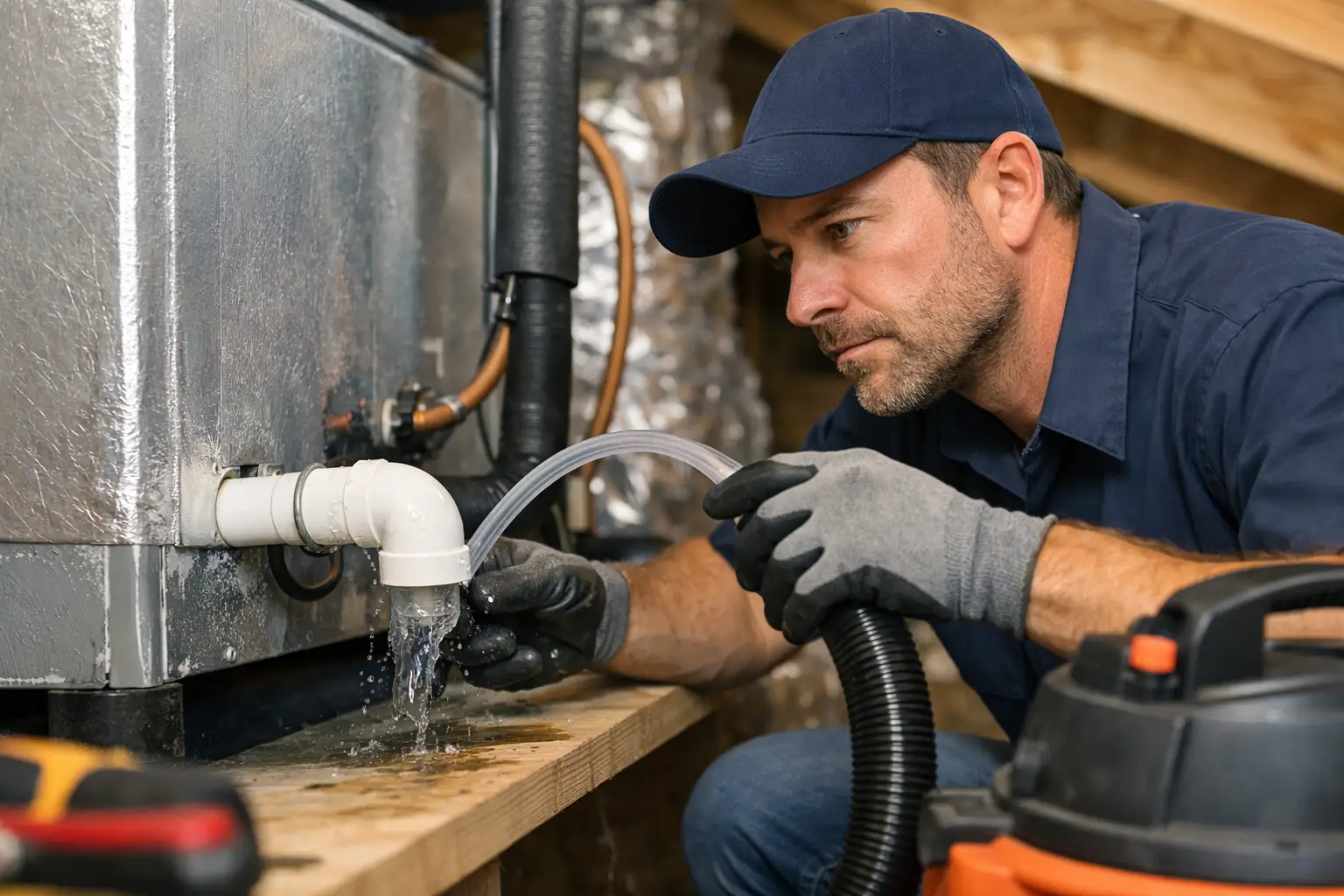
A wet/dry vacuum attached to the drain outlet for a minute or two can sometimes pull out algae and sludge. That is one of the most effective DIY methods for a light blockage. After that, flushing the line with warm water can help confirm that it is draining again.
If water still does not move through the line, stop there. Pushing harder with wire, compressed air, or chemical cleaners can damage the drain line or disconnect fittings you cannot see.
When to call an HVAC professional
There is a point where ac drain line cleaning stops being a maintenance chore and becomes a system issue. If the drain pan is full, the line clogs again shortly after clearing, or the unit is not cooling properly, it is time to have the system inspected.
A licensed HVAC technician can do more than clear the blockage. They can confirm whether the drain line has proper pitch, inspect the evaporator coil for dirt that may be contributing to the problem, test the float switch, and check for hidden water damage. That matters because some drain issues are symptoms of larger airflow or maintenance problems.
For commercial systems, quick diagnosis is even more important. Water leaks above occupied spaces can interrupt business, damage finishes, and create liability concerns if the moisture spreads.
What professional AC drain line service usually includes
A proper service call should focus on the full condensate system, not just the visible pipe. The technician will typically inspect the line, pan, safety switch, and nearby system components. Clearing the blockage may involve vacuum removal, flushing, and checking for trapped debris closer to the air handler.
If the line is repeatedly clogging, the technician may recommend coil cleaning, filter changes, or drain line treatment as part of preventive maintenance. In some cases, the issue is poor drainage design or an aging system component that needs replacement.
This is where experience matters. A fast fix is useful, but a fix that prevents the next overflow is better.
How often should AC drain lines be cleaned?
There is no single schedule that fits every building. It depends on system usage, indoor air quality, filter condition, and the environment around the equipment. In hot and humid climates, drain lines usually need more attention because the AC is producing more condensation for more months of the year.
For many homes, checking and cleaning the drain line during seasonal maintenance is enough. For properties with heavy AC use, pets, dust, or past clog issues, more frequent attention may make sense. Commercial buildings often benefit from scheduled preventive service because downtime and water damage cost more than routine care.
If your system has already had one clogged drain line, do not assume it was a one-time event. Repeats are common when the underlying cause is left alone.
How to reduce future clogs
The best prevention starts with regular HVAC maintenance. A clean system produces fewer opportunities for buildup inside the drain assembly. Changing filters on schedule helps reduce dust reaching the coil. Keeping the drain line and pan inspected during service visits helps catch early growth before it turns into a shutdown.
It also helps to pay attention to subtle changes. If your home starts feeling more humid than usual, if you notice a faint musty smell, or if the AC shuts off without a clear reason, do not wait for visible water damage. Small warning signs usually come first.
For businesses and property managers, a maintenance plan is often the smartest approach. It keeps drain issues from becoming emergency calls and helps protect occupied spaces from leaks.
Why quick action saves money
Drain line clogs are easy to underestimate because the pipe itself is small and inexpensive. The damage from ignoring it is not. Drywall repair, ceiling replacement, flooring damage, and mold remediation can all cost far more than cleaning the line.
There is also the comfort factor. A blocked drain can trigger a system shutdown on a day when cooling is not optional. For families, that means a hot house. For commercial properties, it can mean uncomfortable tenants, interrupted operations, or unhappy customers.
Fast service, clear diagnosis, and transparent recommendations make a big difference here. That is the kind of practical HVAC support people need when a minor drain issue starts turning into a bigger problem.
If your AC is showing signs of a clogged condensate line, do not wait for the stain on the ceiling or the puddle on the floor to get worse. A simple inspection now can save you from a much larger repair later, and that is always a better way to protect your comfort.