
That sticky feeling indoors when the thermostat says 74 degrees is often a humidity problem, not a temperature problem. Learning how to reduce indoor humidity can make your home feel cooler, help your air conditioner work more effectively, and limit the moisture that encourages mold, mildew, and musty odors.
In Magnolia and across the greater Houston area, outdoor humidity is a fact of life for much of the year. You cannot eliminate it completely, but you can keep excessive moisture from taking over your home. The right solution depends on where the moisture is coming from, how your HVAC system is operating, and whether the issue is limited to one room or affects the whole building.
What Indoor Humidity Level Is Best?
For most homes, indoor relative humidity should stay between 30% and 50%. In hot, humid Texas weather, holding close to 45% to 50% is often a realistic and comfortable target. Below 30%, the air may feel dry and irritate your throat, skin, and sinuses. Above 60%, moisture problems become far more likely.
A small digital hygrometer gives you a clear starting point. Place one in a central living area, away from direct sunlight, kitchens, bathrooms, and supply vents. If certain rooms feel damp or smell musty, check those spaces separately. Humidity can vary significantly between an upstairs bedroom, a laundry room, and a closed-off storage area.
Start With Your Air Conditioner
Your central air conditioner does more than lower the temperature. As warm air passes over the indoor evaporator coil, the system removes moisture through condensation. That water drains away through the condensate line. When the system is properly sized, maintained, and running long enough, it plays a major role in keeping indoor humidity under control.
If your home feels cool but clammy, the AC may be short-cycling. This means it turns on and off too quickly to remove enough moisture. An oversized system, an incorrectly set thermostat, a dirty filter, a refrigerant issue, or an airflow problem can all contribute.
Check the air filter first. A clogged filter restricts airflow and can reduce both cooling and dehumidification performance. Replace disposable filters on the schedule recommended for your home, usually every one to three months. Homes with pets, construction dust, or high system use may need more frequent changes.
Your thermostat setting matters, too. Setting the temperature very low for short bursts does not always remove humidity as well as allowing the system to run consistently at a reasonable setting. Many homeowners find that 74 to 78 degrees, paired with a humidity setting or dehumidification feature when available, provides better comfort and lower energy use than extreme temperature adjustments.
Make Sure Moisture Can Leave the Home
Everyday activities add water vapor indoors. Showers, cooking, dishwashing, laundry, and even breathing contribute to the load. In a humid climate, that moisture needs a route out of the house instead of drifting into bedrooms, closets, and wall cavities.
Run the bathroom exhaust fan during showers and for at least 15 to 20 minutes afterward. If the fan is weak, noisy, or does not seem to pull steam from the room, it may need cleaning, repair, or replacement. A properly vented bathroom fan should exhaust outdoors, not into an attic or crawlspace.
Use the kitchen range hood whenever you boil water, simmer food, or run the dishwasher. Recirculating hoods help with odors and grease but do not remove moisture outside. If indoor humidity is a persistent concern, an exterior-vented range hood is the more effective option.
Dryers should also vent outdoors through a clean, intact duct. If the laundry room becomes warm and damp while the dryer runs, inspect the vent connection and have the duct cleaned if airflow is restricted. A disconnected dryer vent can release a surprising amount of moisture into the home.
Control Moisture Before It Gets Inside
Air leaks are not just an energy-loss issue. In summer, gaps around doors, windows, plumbing penetrations, attic access panels, and ductwork can allow humid outdoor air to enter conditioned spaces.
Weatherstripping and caulk can help around windows and exterior doors, especially if you notice drafts or visible gaps. Keep in mind that older windows may have larger performance issues than caulk alone can solve. The goal is not to make a house completely airtight without a ventilation plan. It is to reduce uncontrolled humid air infiltration while maintaining healthy, intentional ventilation.
Look for water intrusion as well. A roof leak, plumbing leak, foundation crack, overflowing gutter, or poor grading near the home can create a humidity problem that no thermostat setting will solve. Check for discolored ceilings, peeling paint, damp baseboards, soft drywall, and recurring mildew. Address the source of water first, then dry the affected area thoroughly.
Crawlspaces, garages, and attics deserve attention because they can transfer moisture into living areas. In some homes, unsealed ductwork in a hot attic pulls humid air into the HVAC system or loses conditioned air before it reaches the rooms. Proper duct sealing and insulation can improve comfort while reducing the strain on your equipment.
Use a Dehumidifier When the AC Needs Help
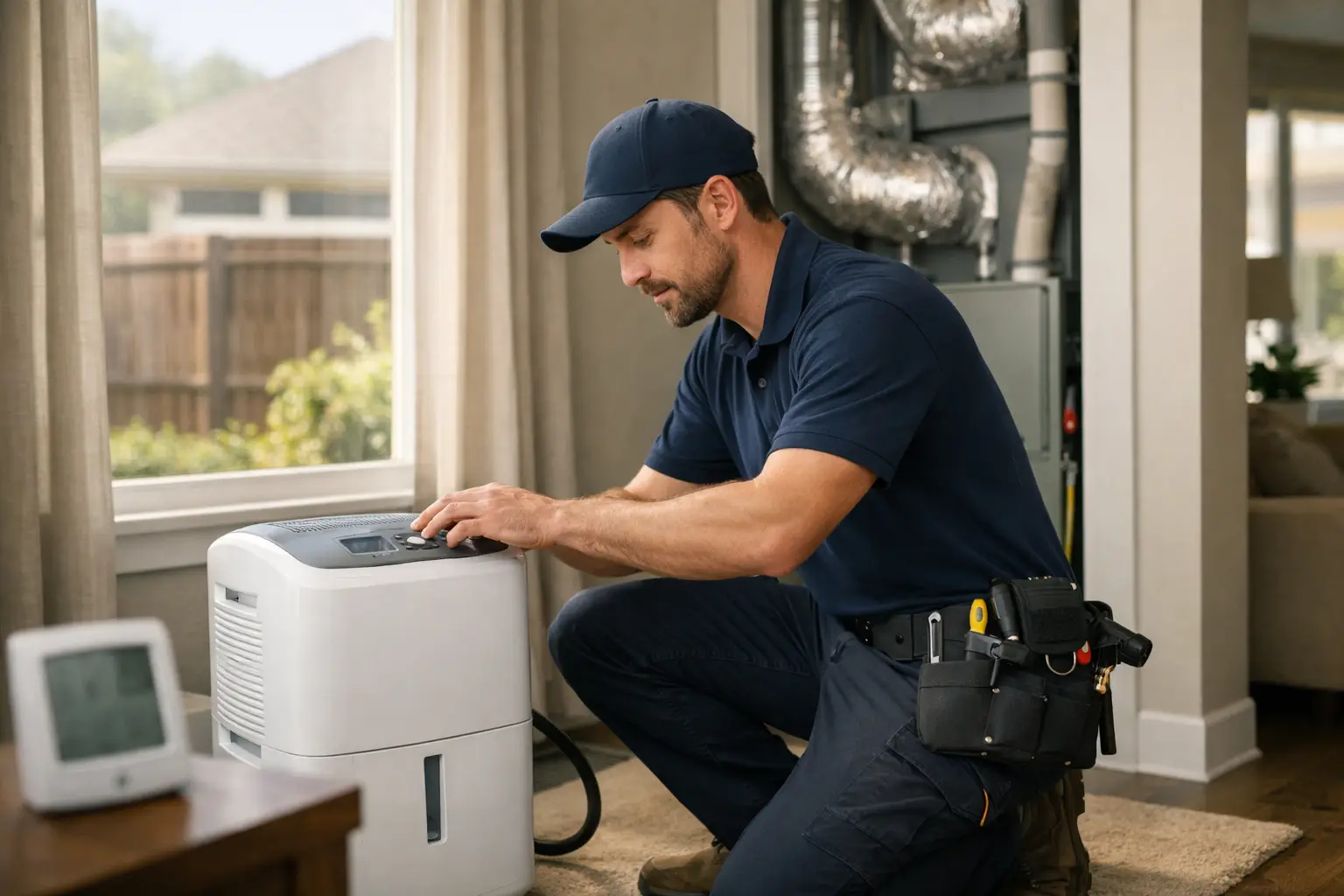
A portable dehumidifier can be useful for a single damp room, such as a basement, bathroom, closet, or laundry area. Choose one rated for the room size, keep doors and windows closed while it runs, and empty or drain the reservoir regularly. Clean the filter according to the manufacturer instructions so the unit continues to work efficiently.
For widespread humidity issues, a whole-home dehumidifier is often the better long-term option. It integrates with the HVAC system and removes moisture throughout the home without relying on multiple portable units. This approach is particularly helpful during mild but humid weather, when your air conditioner may not run long enough to handle the moisture load on its own.
There is a trade-off. Whole-home equipment is an investment and should be sized correctly for the home, its occupants, and local climate conditions. A professional HVAC assessment can determine whether your existing air conditioner simply needs service or whether dedicated dehumidification would provide more consistent results.
Avoid Habits That Add Unnecessary Humidity
Small changes can make a noticeable difference when indoor humidity is already high. Cover pots while cooking, take shorter and cooler showers when practical, and avoid drying clothes indoors. If you use a portable humidifier for allergies or dry air, turn it off once the indoor humidity reaches a healthy range.
Houseplants can also add moisture, although a few plants rarely cause a major whole-home problem. If you have many plants in one room and notice condensation or a persistent damp smell, spread them out and avoid overwatering.
Keep interior doors open when possible so conditioned air can circulate. Closed rooms with poor supply and return airflow often become more humid than the rest of the house. If one room repeatedly feels warmer or damper, it may point to a duct, insulation, airflow, or ventilation issue rather than a need for a larger air conditioner.
When High Humidity Signals an HVAC Problem
Call for HVAC service if humidity stays above 60% despite normal AC use, if the system runs constantly without improving comfort, or if you see water around the indoor unit. Other warning signs include weak airflow, frozen refrigerant lines, unusual cycling, musty odors from vents, and condensation on windows or supply registers.
Commercial properties can face similar issues on a larger scale. Humidity control affects employee comfort, customer experience, inventory, flooring, electronics, and mold risk. A rooftop unit or commercial HVAC system that is poorly maintained, incorrectly sized, or operating with ventilation problems can leave a building cool but uncomfortable. Property managers should treat recurring humidity complaints as a system-performance issue, not simply a thermostat preference.
BluePeak 360 can inspect system operation, airflow, drainage, ductwork, and equipment condition to identify what is actually driving the moisture problem. Clear diagnostics matter because adding a dehumidifier will not fix a hidden leak, and lowering the thermostat will not correct an oversized or short-cycling AC system.
A comfortable home in a Texas summer should not feel damp just because it is hot outside. Start with a humidity reading, keep moisture-producing areas properly vented, and give your HVAC system the maintenance it needs. If the problem continues, a timely professional inspection can protect both your comfort and the home around you.