
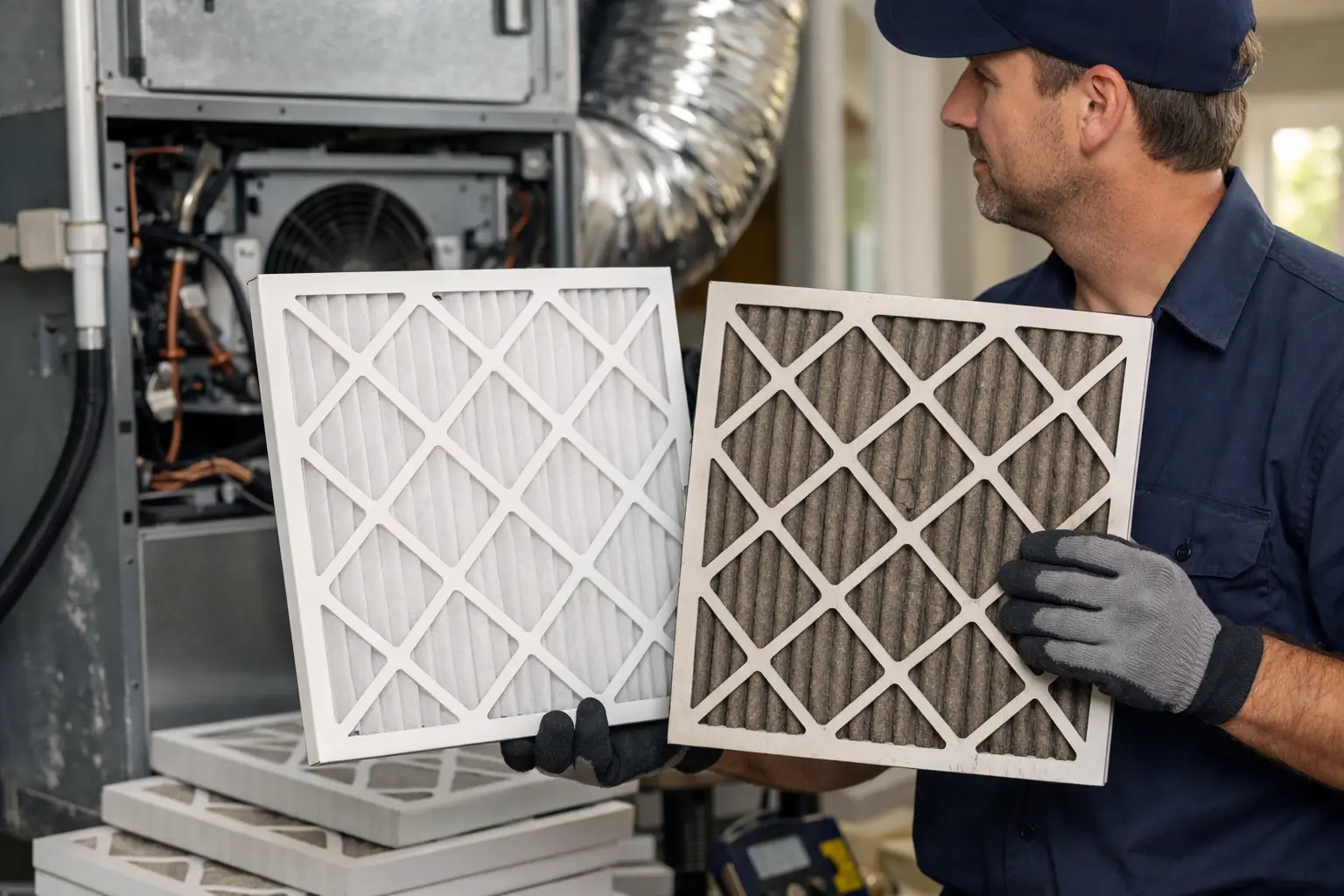
A dusty filter can turn your air conditioner into part of the allergy problem. When pollen, pet dander, dust mites, and outdoor pollutants are common triggers, choosing the best AC filters for allergies can make a noticeable difference in how your home feels – especially during a long Texas cooling season.
The right filter is not necessarily the most expensive or the one with the highest rating on the shelf. Your HVAC system has to move enough air to cool properly, control humidity, and avoid unnecessary strain. The goal is to capture more airborne irritants without restricting airflow beyond what your equipment can handle.
What Makes an AC Filter Good for Allergies?
An HVAC filter works by trapping particles as air returns to your system. Basic fiberglass filters mainly protect the equipment from large debris. They do very little for smaller particles that can aggravate allergies, such as pollen, mold spores, pet dander, and fine dust.
For allergy relief, look at a filter’s MERV rating. MERV stands for Minimum Efficiency Reporting Value, and it measures how effectively a filter captures particles of different sizes. Higher numbers generally mean better filtration, but higher is not automatically better for every home or system.
A filter that is too restrictive can reduce airflow. That may lead to uneven temperatures, longer AC run times, frozen evaporator coils, higher utility bills, and premature equipment wear. In Houston-area humidity, poor airflow can also make it harder for your system to remove moisture from indoor air.
Best AC Filters for Allergies: Choose the Right MERV Rating
For most homes with allergy concerns, a pleated MERV 11 or MERV 13 filter is the practical starting point. Both provide a meaningful upgrade over standard filters, but the best fit depends on your system, household, and indoor air conditions.
MERV 8: Better than basic, but limited for allergies
A quality MERV 8 pleated filter can capture larger particles like dust, lint, and some pollen. It is a solid option for protecting the HVAC system and maintaining reliable airflow, but it may not capture enough smaller allergy triggers for households dealing with persistent symptoms.
MERV 8 can still be appropriate if your equipment is older, your return-air setup is limited, or a technician has identified airflow concerns. It is often a better choice than installing an overly restrictive filter that your system cannot support.
MERV 11: A strong choice for many Texas homes
MERV 11 filters capture more pollen, pet dander, dust, and mold spores than lower-rated options. For many homeowners, this rating offers the best balance of filtration performance, cost, and airflow.
If you have pets, seasonal allergies, or frequent dust buildup, MERV 11 is often a sensible everyday filter. It can improve the air circulating through your home without creating the airflow problems that may come with more aggressive filtration on certain systems.
MERV 13: Higher filtration for more sensitive households
MERV 13 filters are designed to capture smaller airborne particles, including finer dust and some particles associated with smoke and respiratory irritants. They are often a good fit for households with severe allergies, asthma concerns, multiple pets, or a strong need for cleaner indoor air.
The trade-off is resistance. Not every residential HVAC system is designed to operate efficiently with a MERV 13 filter, particularly if the filter is undersized or the return ductwork is already restrictive. Before making the jump, have a qualified HVAC technician confirm that your equipment can maintain proper airflow.
What about HEPA filters?
HEPA filters remove extremely small particles and are common in portable air purifiers and specialized medical environments. A standard one-inch HVAC filter is not the same as a true HEPA filter, and most central air systems cannot simply accept a HEPA filter without modifications.
Trying to force a high-resistance HEPA-style filter into a conventional return grille can harm performance. If your family needs higher-level filtration, an HVAC professional can discuss compatible media cabinets, whole-home air cleaners, or portable room filtration for bedrooms and other high-use spaces.
Filter Thickness Matters More Than Many Homeowners Realize
A one-inch filter has less surface area than a four-inch or five-inch media filter. When a thin filter captures more debris, it can become restrictive faster. That is one reason a MERV 13 one-inch filter may not be ideal for every system.
A deeper media filter has more room to collect particles while maintaining airflow over a longer service interval. If your system supports a larger media cabinet, it may allow you to use stronger filtration with less pressure drop than a thin, high-MERV filter.
This is a system-specific decision. The cabinet size, blower capacity, duct design, number of return vents, and condition of the evaporator coil all affect what your HVAC system can handle.
How Often Should You Change an Allergy Filter?
Do not rely only on the date printed on the package. Filter life changes based on household conditions, filter size, pets, renovation dust, occupancy, and how often the air conditioner runs.
For many homes using a one-inch pleated filter, checking it every 30 days is a good habit. Replacement may be needed every one to three months. Homes with shedding pets, smokers, ongoing construction nearby, or family members with allergies may need more frequent changes.
Deeper media filters can often last longer, sometimes six months or more, but they still need regular inspection. A filter can look relatively clean on the surface while restricting airflow deeper in the material.
Replace the filter sooner if you notice reduced airflow from vents, more dust around the home, allergy symptoms that worsen indoors, longer cooling cycles, or a musty smell when the system starts. These signs do not always point to the filter alone, but they are worth addressing quickly.
A Better Filter Cannot Fix Every Indoor Air Problem
Filtration is only one part of allergy control. Your AC filter can capture particles moving through the return air, but it will not remove allergens already settled in carpet, upholstery, bedding, or ductwork. It also cannot correct moisture problems that support mold growth.
For better results, keep indoor humidity under control, seal obvious air leaks around doors and windows, vacuum with a sealed high-efficiency vacuum, and clean regularly during high-pollen periods. Keep windows closed when pollen counts are elevated, especially if someone in the household is sensitive to outdoor allergens.
If you see visible mold, smell persistent mildew, have water damage, or experience ongoing allergy symptoms despite regular filter changes, the issue may be larger than filtration. Dirty evaporator coils, drainage problems, leaky ducts, oversized equipment, and poor ventilation can all affect indoor air quality and comfort.
Avoid These Common Filter Mistakes
The most common mistake is buying the highest MERV rating available without considering the system. A filter that reduces airflow can create comfort and reliability issues that cost more than the filtration upgrade is worth.
Another mistake is using the wrong size. Even a small gap around the filter allows unfiltered air and dust to bypass it. Check the size printed on the old filter, but verify the actual opening or filter cabinet dimensions if it fits loosely.
Finally, do not install a filter backward. Look for the airflow arrow on the frame. It should point toward the air handler or furnace, in the direction air travels through the return duct.
Get Filtration Advice That Fits Your System
The best filter is the one that improves air quality while allowing your HVAC system to cool, dehumidify, and operate as designed. For many households, that means a properly sized MERV 11 filter. For others, a MERV 13 filter, upgraded media cabinet, or whole-home air quality solution may be the better answer.
If allergy concerns are affecting comfort in your Magnolia, The Woodlands, or greater Houston home, BluePeak 360 can evaluate your equipment, airflow, and indoor air quality options. A quick professional assessment can help you choose a filtration strategy that supports cleaner air without putting unnecessary stress on your AC system.