
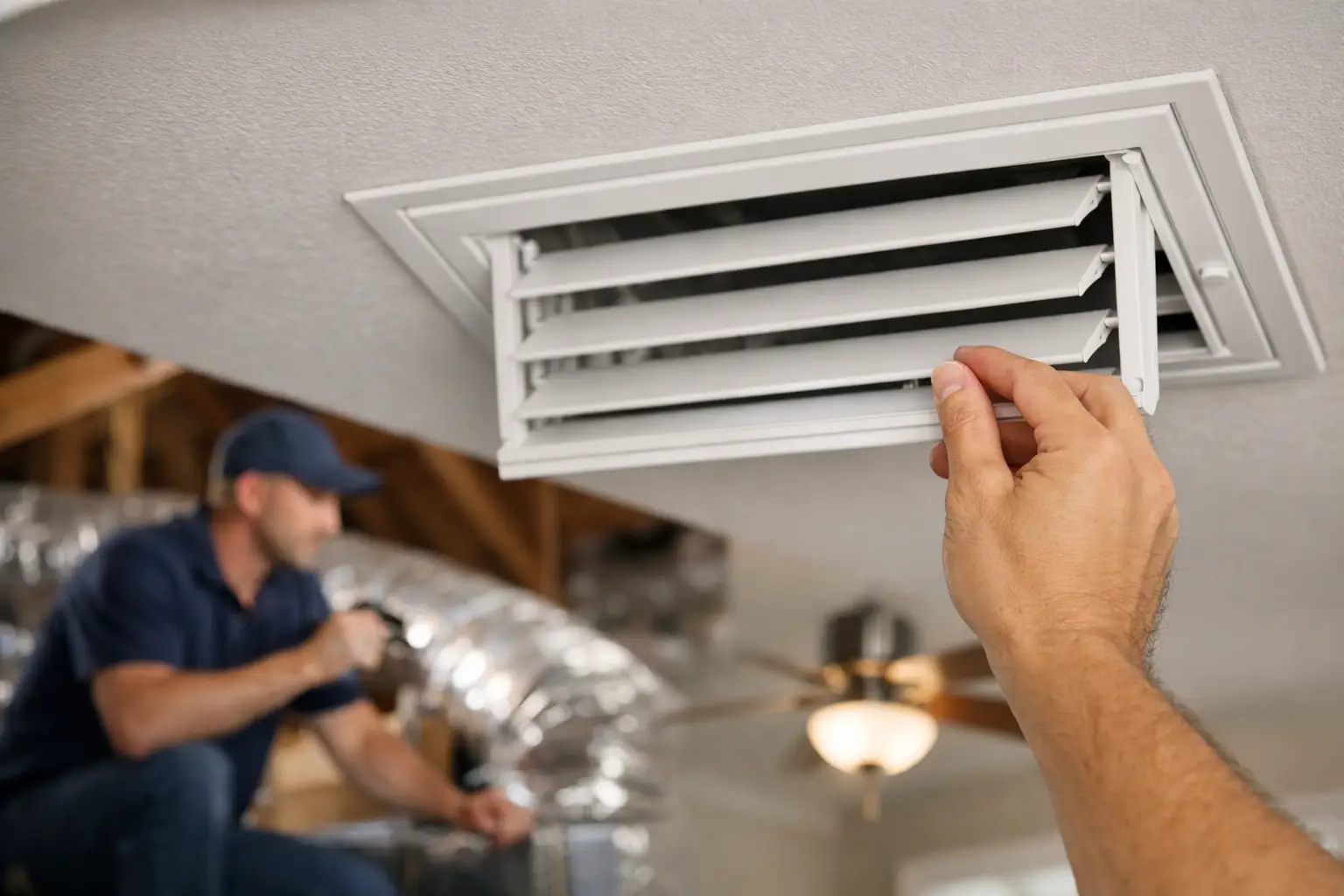
If one room in your house feels stuffy while another stays freezing, airflow is usually the real problem. Knowing how to improve indoor airflow can make your home feel more comfortable, reduce strain on your HVAC system, and help your air stay fresher year-round.
Poor airflow does not always mean your air conditioner is failing. In many homes, the issue starts with something simpler – a clogged filter, blocked vents, leaky ductwork, or a fan that is not moving enough air. In Texas, where cooling systems work hard for much of the year, those small issues can turn into uneven temperatures, higher energy bills, and extra wear on your equipment.
Why indoor airflow matters more than people think
Airflow is what allows your HVAC system to do its job. Your equipment can cool or heat the air, but that treated air still has to move through the home properly. When airflow is restricted, comfort drops fast. Rooms can feel muggy, stale, or hard to cool, and your system may run longer without giving you better results.
There is also a practical side to it. Weak airflow can contribute to hot and cold spots, poor humidity control, dust buildup, and avoidable system stress. For homeowners and property managers, that often means more service calls and a shorter equipment lifespan. For businesses, it can mean uncomfortable employees, unhappy tenants, or customer complaints.
How to improve indoor airflow without replacing your system
The good news is that many airflow problems can be improved without a full HVAC replacement. The right fix depends on where the restriction is happening.
Start with your air filter
A dirty air filter is one of the most common airflow problems, and it is also one of the easiest to fix. When the filter gets packed with dust and debris, your system has to work harder to pull air through it. That can reduce airflow at the vents and put added strain on the blower motor.
Check your filter regularly and replace it on schedule. For many homes, that means every one to three months, but it depends on filter type, pets, indoor dust levels, and how often the system runs. A higher-rated filter is not always better if your system is not designed for it. Some very restrictive filters can actually reduce airflow if the equipment is not matched correctly.
Make sure vents and registers are open and clear
This sounds basic, but it gets overlooked all the time. Supply vents should not be covered by rugs, furniture, curtains, or storage. Return vents also need open space around them so air can circulate back to the system.
Closing vents in unused rooms is another common mistake. It seems like it would save energy, but in many systems it can throw off air balance and increase pressure in the ductwork. That can make airflow worse in the rooms you use most. If you have comfort issues in certain rooms, it is better to diagnose the system than to start shutting vents at random.
Check your fan setting
Your thermostat fan setting can affect how air moves through the house. With the fan set to Auto, the blower runs only during heating or cooling cycles. With the fan set to On, the blower runs continuously.
Running the fan continuously can help circulate air more evenly, especially in rooms that tend to feel stagnant. It may also help with air mixing between floors. The trade-off is that it can increase energy use, and in humid weather it is not always the best option. If your system is not controlling humidity well, leaving the fan on all the time can sometimes make the home feel clammy.
Look at the condition of your ductwork
If airflow is weak in specific rooms, the duct system may be part of the problem. Leaks, disconnected sections, crushed flex ducts, poor layout, or undersized duct runs can all reduce the amount of conditioned air reaching the space.
This is especially common in older homes, additions, and buildings where the duct system was never properly balanced. You may notice one room always runs hotter than the rest, or the far end of the building never gets enough airflow. In those cases, changing the filter will not solve the root issue.
A professional duct inspection can identify whether air is being lost before it reaches the room. Sealing leaks, correcting damaged sections, or redesigning problem runs can make a noticeable difference in comfort and efficiency.
Use fans the right way
Ceiling fans and portable fans do not cool the air, but they do help it feel cooler by improving circulation. That makes them useful for solving comfort issues, especially in rooms where air tends to sit still.
Ceiling fan direction matters. In summer, the blades should rotate counterclockwise to push air downward. In winter, many fans can be reversed to help move warm air that collects near the ceiling. The fan speed also matters. A low setting may be enough to improve circulation without creating a draft.
Exhaust fans in kitchens, bathrooms, and laundry areas also play a role. They help remove heat, moisture, and odors that can make indoor air feel heavy. If these fans are weak, noisy, or rarely used, air quality and comfort can suffer.
Control humidity if the air feels heavy
Sometimes what people describe as poor airflow is really a humidity problem. When indoor humidity is too high, the air can feel thick and uncomfortable even if the temperature is technically correct.
That is a real concern in the Houston area, where outdoor moisture levels stay high for much of the year. If your home feels sticky, your AC may be oversized, short cycling, or struggling with airflow issues that prevent proper dehumidification. In some cases, a whole-home dehumidifier is the right solution. In others, the answer is correcting airflow so the system can remove moisture more effectively.
The key point is that comfort is not just about moving air faster. It is about moving the right amount of conditioned air while keeping humidity in a healthy range.
When poor airflow points to a bigger HVAC issue
If you have already changed the filter and cleared the vents, but airflow still feels weak, the problem may be inside the system itself. A failing blower motor, dirty evaporator coil, blocked return air, duct leakage, or thermostat issue can all affect performance.
You may also hear unusual noises, notice rising utility bills, or see that the system runs for long periods without keeping up. Those are signs that the issue is no longer a quick fix. At that point, professional diagnostics can save time and prevent more expensive damage.
For commercial buildings, airflow problems can be even more complex because of larger duct systems, rooftop units, occupancy changes, and zoning demands. If one suite is uncomfortable while another is fine, the system may need balancing, controls work, or mechanical repairs rather than a simple thermostat adjustment.
How to improve indoor airflow in problem rooms
Some rooms struggle more than others. Bonus rooms over garages, upstairs bedrooms, corner offices, and spaces with lots of windows often have airflow complaints. The cause is not always the same.
In one room, the issue may be duct design. In another, it may be solar heat gain, poor insulation, or a return air problem. A room can have plenty of supply air but still feel uncomfortable if air cannot circulate back properly. That is why airflow fixes should be based on diagnosis, not guesswork.
If you have one or two consistently uncomfortable spaces, options may include duct adjustments, added returns, zoning improvements, fan upgrades, or insulation corrections. It depends on how the building is laid out and how the HVAC system was designed to serve it.
Maintenance is the long-term fix
The best airflow improvements are not always dramatic. Often, they come from staying ahead of the small issues that slowly reduce performance over time. Regular maintenance keeps filters, coils, motors, drains, and controls in better condition so air can move the way it should.
It also gives you a chance to catch problems early. A system with declining airflow may still run, but that does not mean it is running efficiently. Routine service can help you avoid the point where comfort drops and repair costs rise at the same time.
For homeowners and business owners who want reliable performance through the hottest months, this is where a trusted HVAC partner matters. BluePeak 360 helps customers identify airflow problems clearly, explain the real cause, and recommend practical solutions that fit the property.
Better airflow is not about chasing a perfect temperature in every corner of the building. It is about giving your HVAC system the support it needs to move air cleanly, evenly, and efficiently – so your home or business feels the way it should every day.