
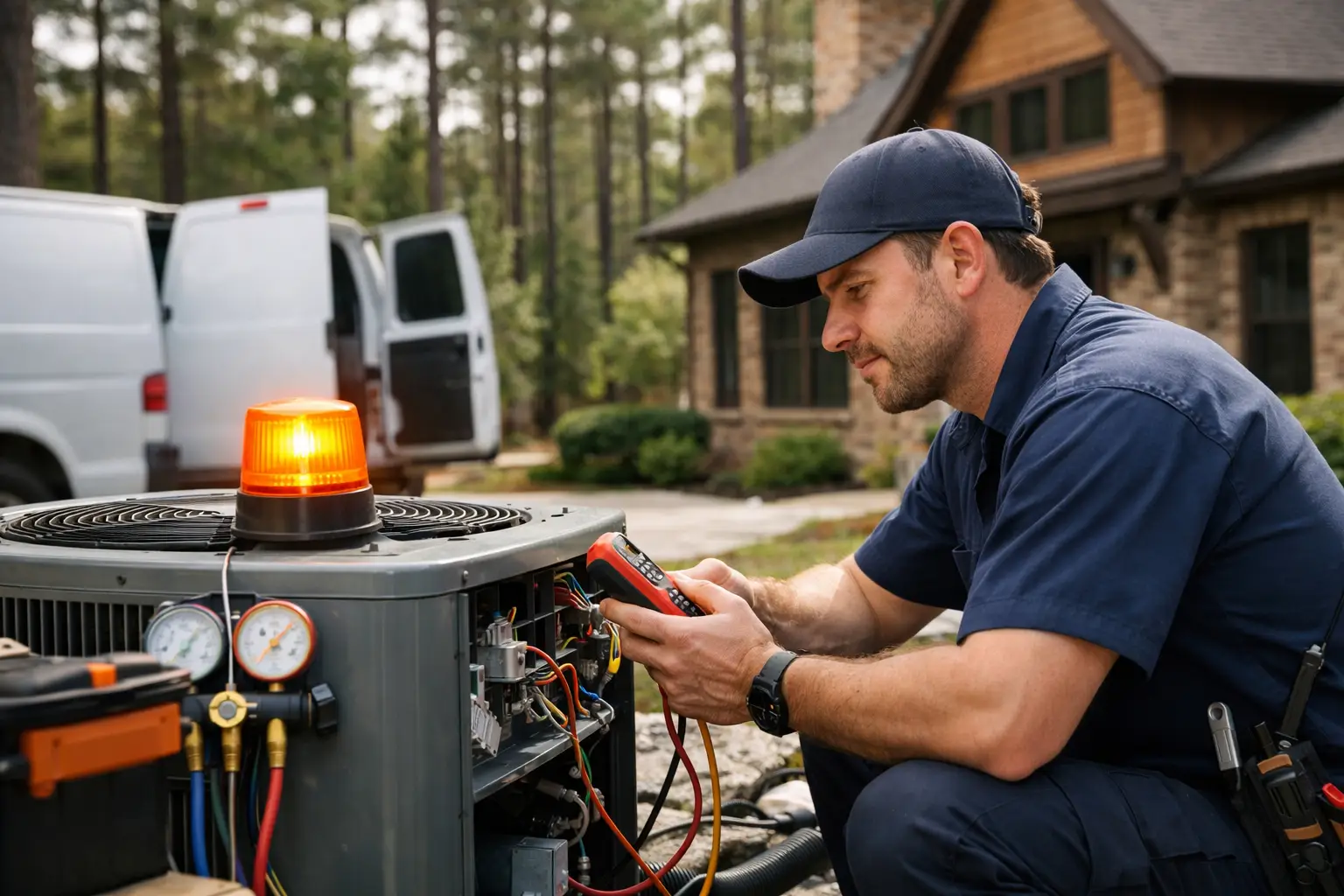
When your AC quits at 8 p.m. in July, the problem stops being an inconvenience and starts affecting sleep, safety, and the whole household. If you are searching for emergency AC repair The Woodlands TX, you probably do not need a long theory lesson – you need to know what counts as an emergency, what you can check safely, and when it is time to call for immediate service.
In Southeast Texas, air conditioning failure can escalate fast. Indoor temperatures rise quickly, humidity builds, and the strain on people, pets, electronics, and even business operations becomes real within hours. That is why emergency service matters. The goal is not just getting cool air back. It is protecting comfort, preventing equipment damage, and restoring normal life with as little downtime as possible.
When emergency AC repair in The Woodlands TX is the right call
Not every AC issue is a midnight emergency, but some clearly are. If your system stops cooling completely during extreme heat, that is a legitimate urgent repair. The same goes for a system that trips breakers repeatedly, leaks heavily, smells like burning wires, or makes loud grinding or banging noises before shutting down.
For homeowners, the urgency often depends on who is in the house. A warm home is more serious when there are infants, older adults, anyone with health conditions, or pets that are vulnerable to heat stress. For property managers and commercial clients, a cooling failure can also affect tenants, staff productivity, customer experience, and sensitive equipment.
There are also gray areas. If the AC is still running but only blowing slightly cool air, the issue may not be dangerous in that moment, but it can still turn into a full shutdown if ignored. Low airflow, frozen coils, and refrigerant-related problems often get worse under continued strain. In those situations, a fast professional diagnosis is usually the smarter move than waiting to see what happens.
What to do before you call
A few quick checks can save time and help rule out simple issues. Start with the thermostat. Make sure it is set to cool, the temperature setting is lower than the current room temperature, and the batteries are not dead if your model uses them.
Next, check the air filter. A badly clogged filter can choke airflow enough to cause poor cooling or even freeze the evaporator coil. If the filter looks packed with dust, replace it. Then inspect your breaker panel. If the AC breaker has tripped once, you can reset it one time. If it trips again, stop there. Repeated tripping usually points to an electrical problem that needs professional service.
Look at the outdoor unit too. If it is buried in debris, branches, or heavy dirt buildup, airflow may be restricted. Clear obvious debris around the unit, but do not open equipment panels or attempt electrical work. If you notice ice on the refrigerant lines or indoor coil, turn the system off and switch the fan setting to on. That can help thaw the ice while you wait for service, but the root problem still needs to be diagnosed.
These checks are practical, not magical. If the system is making alarming noises, giving off burning odors, or showing signs of water damage, skip troubleshooting and call right away.
What happens during an emergency AC repair visit
A good emergency service call should feel organized, not chaotic. The first step is confirming the symptoms, the age of the system, and any recent issues like weak airflow, high electric bills, or short cycling. From there, the technician should test the system methodically rather than guessing.
That usually includes checking thermostat communication, control voltage, contactors, capacitors, motors, drain lines, refrigerant pressures, and temperature split across the system. On a residential unit, the problem may be straightforward – a failed capacitor, clogged drain line, bad contactor, frozen coil, or blower issue. On a commercial system, rooftop equipment can add more complexity, especially when multiple zones or larger controls are involved.
Once the problem is identified, clear communication matters. You should know what failed, whether there is any immediate risk to the system, what repair options are available, and what the pricing looks like before work starts. In an emergency, speed matters, but so does transparency. Fast service is only helpful when it is done correctly.
Common causes of sudden AC failure
In this area, emergency cooling calls often trace back to a handful of recurring problems. Electrical component failure is one of the most common. Capacitors and contactors take a beating in long cooling seasons, and when they fail, the system may stop starting or shut down unexpectedly.
Airflow issues are another big one. Dirty filters, blocked returns, failing blower motors, or collapsed duct sections can push the system beyond normal operating limits. If airflow drops too far, the evaporator coil can freeze, and once that happens, cooling performance falls off fast.
Condensate problems can also trigger emergency service. A clogged drain line may activate a float switch and shut the system down to prevent water damage. That shutdown can feel sudden to the customer, but it is actually the system protecting the property.
Refrigerant leaks are more complicated. A system low on refrigerant may still run for a while, but cooling gets weaker, coils may freeze, and compressor stress increases. Simply topping off refrigerant is rarely the full answer. If there is a leak, it needs to be located and addressed, and sometimes the right long-term decision depends on the age and condition of the equipment.
Repair now or replace soon?
Emergency situations often bring up a hard question – should you repair the unit or start planning for replacement? The answer depends on the system’s age, repair history, efficiency, and the specific failure.
If the issue is a single failed electrical part on a fairly healthy system, repair is usually the obvious path. If the system is older, has a history of refrigerant problems, or is facing a major compressor failure, replacement may be the better investment even if a repair is technically possible.
For homeowners, the key is avoiding panic decisions. For business owners and property managers, it is balancing immediate occupancy needs with long-term operating cost. A trustworthy HVAC contractor will explain both options clearly instead of pushing one answer in every case. Sometimes the fastest repair is the right move. Sometimes it only delays a much bigger problem by a few weeks.
How to reduce the chance of another emergency
The best emergency call is the one you never have to make. Regular maintenance lowers the odds of sudden failure, especially during peak summer demand when systems are under the most stress. That means changing filters on schedule, keeping outdoor units clear, checking drains, inspecting electrical components, and verifying refrigerant performance before the hottest part of the season hits.
For commercial properties, preventive service matters even more because small issues can affect multiple tenants or disrupt operations. Rooftop units, zoning controls, and higher run times create more wear points, and catching those early is usually far less expensive than an after-hours breakdown.
It also helps to pay attention to warning signs. If your system has been running longer than usual, cooling unevenly, making new noises, or producing a sudden spike in energy bills, that is often the early stage of a failure. Calling before the system quits completely gives you more flexibility, better scheduling options, and less chance of being stuck in the heat.
Choosing an emergency AC repair company in The Woodlands TX
When you need help fast, it is tempting to call the first name you find. Speed matters, but qualifications matter too. You want a licensed and insured HVAC company that handles both diagnostics and repairs, communicates clearly, and shows up prepared to solve the problem instead of just confirming that one exists.
Response time is important, but so is professionalism. A strong service experience includes accurate troubleshooting, honest pricing, and repairs that hold up after the truck leaves. For homeowners, that means confidence that your system is safe and cooling properly again. For commercial clients, it means protecting operations and reducing the chance of another disruption a day later.
BluePeak 360 serves customers who need that kind of dependable response – fast when it has to be, thorough every time, and focused on getting the system back to reliable performance.
If your AC has stopped working and the temperature indoors keeps climbing, trust your instincts. A real emergency does not get better by waiting overnight, and a quick professional response can make the difference between a straightforward repair and a much larger problem by morning.