
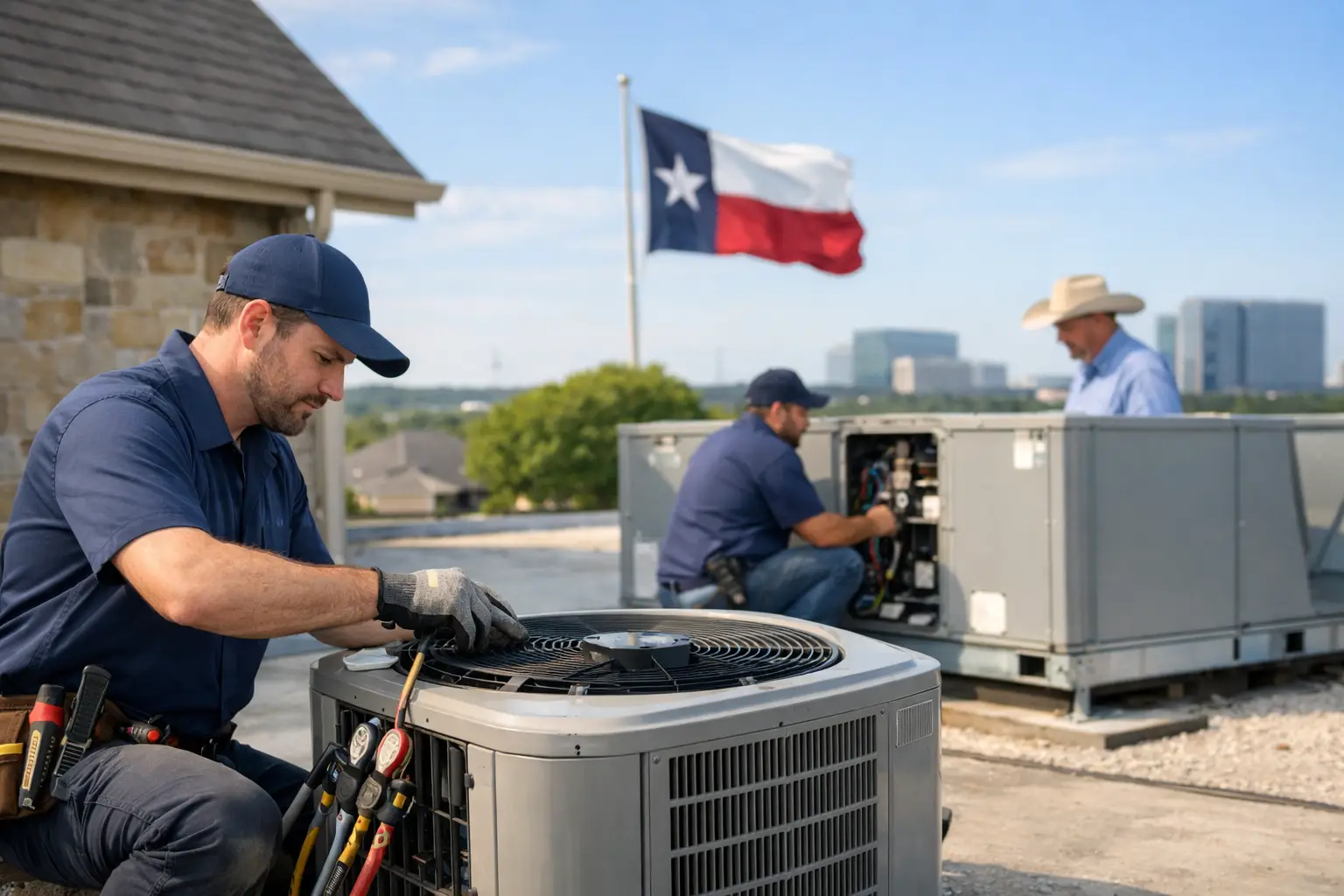
When your AC quits in August or a rooftop unit starts dragging down business operations, hiring a licensed insured HVAC company Texas property owners can rely on stops being a nice extra and becomes the first thing that matters. Credentials are not just paperwork. They affect safety, code compliance, warranty protection, and whether you have any real protection if something goes wrong on your property.
In Texas, HVAC work is not a casual trade. It involves electrical systems, refrigerants, airflow design, equipment sizing, combustion safety, and local code requirements. A contractor who shows up fast but cannot prove licensing or insurance may still offer a lower price, but the risk shifts to you. That is rarely a good bargain for a homeowner, and it is an even worse one for a property manager or commercial operator.
Why a licensed insured HVAC company in Texas matters
A license tells you the company has met state requirements to perform regulated HVAC work. That includes training, testing, and oversight tied to the type of work the contractor performs. Insurance tells you there is financial protection in place if property damage or certain jobsite incidents occur. Those two items work together, but they are not interchangeable.
This matters more in Texas than many people realize because HVAC systems here work hard for long stretches of the year. In hot, humid conditions, small installation mistakes can create big comfort and cost problems. An oversized unit may short cycle and leave humidity behind. A poorly installed system may cool unevenly, wear out faster, or raise utility bills. If the work also fails inspection or causes damage, a cheap repair call can become an expensive correction.
For commercial buildings, the stakes are higher. Downtime affects tenants, staff, customers, inventory, and daily operations. If a contractor is servicing rooftop units, replacing major equipment, or troubleshooting electrical and control issues, credentials are part of basic risk management.
What “licensed” should mean in real terms
When people search for a licensed insured HVAC company Texas residents can trust, they are usually trying to avoid getting burned. That makes sense. But it helps to know what to verify rather than relying on a truck logo or a verbal promise.
A legitimate HVAC contractor should be able to provide license information without hesitation. That is not an awkward question. It is a standard one. You are hiring someone to work on a system that affects indoor comfort, energy use, equipment life, and in some cases health and safety.
Licensing matters most during repairs involving refrigerant handling, full system replacement, new construction or retrofit installations, electrical components, and commercial work. It also matters when permits are needed. If a company avoids that conversation, says permits are unnecessary in every situation, or gets vague when asked for credentials, that is worth paying attention to.
There is also a practical side to licensing. Licensed contractors are generally better positioned to diagnose the whole system instead of just swapping parts until something works. That does not mean every licensed company performs equally well. Experience, training, and service standards still vary. But licensing helps establish a baseline of legitimacy.
What “insured” protects you from
Insurance is where many customers assume more protection than they actually have, so it is smart to ask clear questions. A contractor should carry appropriate business insurance, and they should be willing to confirm it. If a technician damages drywall during an installation, causes a ceiling issue, or there is an accident tied to the work, insurance is part of how those situations get handled.
For homeowners, this is about protecting the house and avoiding unnecessary liability. For commercial clients, it is often about meeting property requirements and reducing exposure across larger jobs or ongoing service agreements.
Insurance does not guarantee flawless work. It does mean there is a mechanism for handling certain losses if something goes wrong. Without it, the burden often lands on the property owner, especially if the contractor disappears, disputes responsibility, or was never properly set up to do business in the first place.
The lowest quote is not always the lowest cost
Texas property owners often compare HVAC bids side by side and focus on the number at the bottom. That is understandable, especially when a repair hits unexpectedly. But a bid from a licensed and insured company may look higher because it reflects real overhead, qualified labor, legal compliance, and accountability.
That does not automatically make the highest-priced company the best one. It does mean you should compare what is included. Ask whether the quote covers diagnostics, equipment model details, labor, warranty terms, permits if needed, thermostat compatibility, startup testing, and cleanup. For replacements, ask whether the system is being sized correctly for the space rather than matched to the old unit without further review.
A lower quote can end up costing more if it leads to repeat repairs, airflow issues, water leaks, comfort complaints, failed inspections, or shortened equipment life. The trade-off is simple. Paying less up front can make sense for a minor fix when the scope is clear. It is riskier when the job affects the full system.
How to tell if an HVAC company is built for real service
Credentials are the starting point, not the finish line. A company can be licensed and insured and still deliver poor communication or inconsistent workmanship. That is why the better question is whether the contractor combines credentials with a professional service process.
Look at how they handle the first conversation. Do they ask smart questions about symptoms, equipment age, and urgency? Do they explain what happens next? Do they give a realistic service window? Do they talk clearly about pricing and approvals before work begins?
On site, professionalism should be obvious. Technicians should inspect the system carefully, explain what they found in plain language, and offer options when appropriate. Sometimes the right answer is a repair. Sometimes it is replacement. Sometimes it depends on age, repair history, efficiency, refrigerant type, and how long you plan to keep the property.
That last point matters. A homeowner planning to stay for ten years may make a different decision than a landlord preparing a property for lease renewal. A business with critical cooling needs may prioritize uptime and maintenance planning over short-term savings. Good contractors understand those differences and do not force every customer into the same recommendation.
Questions worth asking before you book
You do not need to interview a contractor like a lawyer, but a few direct questions can save a lot of trouble. Ask for license details. Ask whether the company is insured. Ask whether they work on your type of equipment, especially if you have a heat pump, zoning system, indoor air quality add-ons, or commercial rooftop units.
You should also ask how they handle emergency service, what kind of warranty applies to labor and equipment, and whether maintenance plans are available after a repair or installation. A dependable company will answer without dodging, overselling, or making everything sound urgent.
It is also fair to ask what happens if a repair does not solve the issue. HVAC diagnosis can be straightforward, but not always. Intermittent electrical problems, airflow restrictions, thermostat failures, and duct issues can overlap. A trustworthy company will explain the uncertainty when it exists instead of pretending every problem has a one-visit answer.
Residential and commercial needs are not the same
One of the easiest mistakes property owners make is assuming all HVAC service companies are equally equipped for homes and businesses. Some are not. Residential service and commercial service overlap in fundamentals, but the equipment, controls, access requirements, and service expectations can be very different.
For homeowners, speed, communication, clean work, and comfort restoration usually lead the list. For commercial clients, scheduling, documentation, system uptime, and long-term service planning often matter just as much as the repair itself. If you manage offices, retail space, mixed-use buildings, or light commercial facilities, you need a contractor who can think beyond the immediate call.
That is one reason many customers look for a local team with broad capabilities instead of piecing together separate vendors. A company that can handle repairs, diagnostics, replacements, maintenance, thermostats, indoor air quality improvements, and commercial equipment support is often easier to work with over time. BluePeak 360 is built around that kind of full-service approach for property owners who want one dependable HVAC partner instead of a rotating list of numbers to call.
Choosing confidence over guesswork
The best time to check credentials is before you need emergency service, not after your system has already failed. If you wait until the house is hot or your building is losing comfort by the hour, rushed decisions get easier and bad ones get more expensive.
A licensed and insured HVAC company gives you something better than a fast fix. It gives you a clearer path to safe work, honest accountability, and better long-term system performance. When you choose a contractor who treats professionalism as part of the service, you are not just paying for labor. You are paying for fewer surprises when comfort matters most.
If you are comparing HVAC companies in Texas, ask the direct questions, verify the basics, and pay attention to how the company responds. The right choice usually sounds organized, transparent, and ready to help before the truck ever pulls into the driveway.