
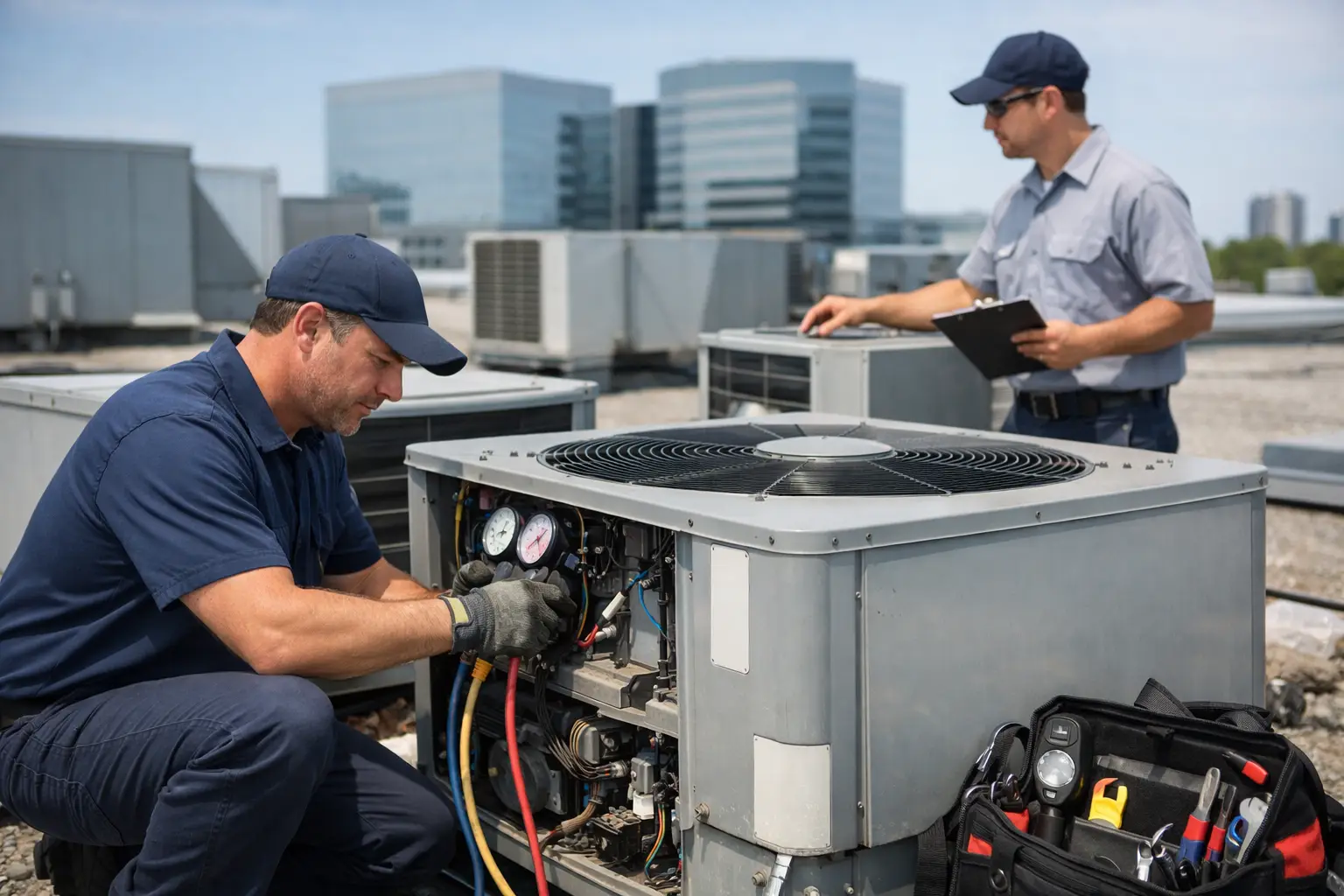
When a rooftop unit fails at 2 p.m. on a July weekday, the problem is rarely just temperature. Employees get distracted, customers get uncomfortable, tenants start calling, and the day turns into damage control. A commercial HVAC preventive maintenance contract is designed to keep that kind of disruption from becoming routine.
For property managers, business owners, and facility teams, the value of a maintenance agreement is not just that someone changes filters and checks refrigerant. It is that your HVAC system gets consistent attention before small issues turn into service calls, emergency expenses, or shortened equipment life. In a market like greater Houston, where heat, humidity, and long cooling seasons push systems hard, that consistency matters.
What a commercial HVAC preventive maintenance contract actually covers
A good contract should be practical, clear, and built around the equipment you have. That usually includes scheduled inspections, performance checks, cleaning, filter replacement, electrical testing, thermostat verification, condensate drain inspection, and review of moving parts and controls. For many commercial sites, it also includes rooftop units, split systems, package units, exhaust components, and other related equipment.
The real purpose is not to create paperwork. It is to create a service rhythm. Instead of waiting for complaints from staff or tenants, your system is evaluated on a schedule that fits the building’s workload and operating hours.
Some contracts are basic and focus on seasonal tune-ups. Others are more comprehensive and include priority scheduling, discounted repairs, detailed reporting, and planned recommendations for aging equipment. Neither option is automatically right for every building. A small office with newer equipment may need a different plan than a restaurant, medical space, retail center, or multi-tenant property with heavier demands and tighter comfort requirements.
Why preventive maintenance pays off
The biggest reason companies choose a commercial HVAC preventive maintenance contract is simple – fewer surprises. Emergency repairs are expensive, but the repair bill is often only part of the cost. There may also be downtime, productivity loss, tenant frustration, inventory concerns, or pressure on staff who now need to solve an urgent comfort problem.
Preventive maintenance helps catch worn belts, dirty coils, weak capacitors, drainage issues, loose electrical connections, and airflow problems before they lead to a failure. Not every issue can be prevented, and no contractor should promise that. Equipment still ages, parts still fail, and heavy use still takes a toll. But routine service improves the odds that problems are identified early, when the fix is smaller and the disruption is manageable.
Efficiency is another major factor. A neglected commercial system has to work harder to deliver the same result. Dirty filters restrict airflow. Fouled coils reduce heat transfer. Refrigerant or control issues can force longer run times. Over months of operation, that can raise utility costs without anyone noticing a clear single cause. Maintenance helps restore performance and gives you a better chance of keeping energy use in line.
There is also the equipment life question. Replacing a commercial system is a major capital expense. Most owners would rather make that decision on a planned timeline than after an avoidable breakdown. Regular service cannot make equipment last forever, but it can reduce unnecessary wear and help you get more dependable years out of what you already own.
What to look for in a commercial HVAC preventive maintenance contract
Not all contracts are equal, and the lowest price is not always the best value. A strong agreement should clearly define the scope of service, the number of visits per year, the equipment covered, and what happens when issues are found. If a contract is vague, it becomes hard to know what you are paying for.
Look for a provider that explains how maintenance is documented. Service notes should give you useful information, not just a checked box. If a technician identifies a worn contactor, an airflow restriction, or a developing drainage issue, that should be communicated in plain language with a recommended next step.
Response time also matters. Maintenance is about prevention, but real buildings still have urgent needs. If your contractor offers priority scheduling or emergency support for contract customers, that can make a meaningful difference when something does go wrong.
It is also worth asking whether the plan is customized. Commercial properties vary widely. A climate-controlled office, a warehouse, a church, and a retail center may all have different occupancy patterns, indoor air quality needs, and operating schedules. A one-size-fits-all plan can leave important gaps.
Red flags that a contract may be too thin
A maintenance contract should not feel like a mystery subscription. If the agreement does not list the actual tasks performed, if visits are too infrequent for your usage, or if every recommendation seems to lead immediately to another charge, take a closer look.
Another red flag is when there is no discussion of your building itself. Good commercial HVAC service starts with questions. How old is the equipment? What are the occupancy hours? Are there recurring hot and cold spots? Has the site had drainage problems, rising electric bills, or repeated repairs? If none of that comes up, the plan may be too generic to be useful.
It is also fair to ask who will be servicing the equipment. Commercial systems require experience. Rooftop units, controls, electrical components, and multi-zone comfort issues are not areas where guesswork helps anyone.
How often should commercial HVAC maintenance happen?
It depends on the equipment and the building. Twice a year is common for many properties, especially with one visit before cooling season and one before heating season. But for facilities with high occupancy, extended hours, process-related loads, or sensitive comfort requirements, more frequent service may be the smarter choice.
Restaurants, server rooms, medical spaces, and buildings with older rooftop units often benefit from closer monitoring. On the other hand, a newer building with lighter use may do well with a simpler schedule, as long as inspections are still thorough.
This is where local conditions matter. In Southeast Texas, cooling systems often carry the load for much of the year. Heat, humidity, pollen, and heavy runtime can accelerate wear. A contract should reflect that reality rather than copy a schedule that might make sense in a milder climate.
The budget question business owners always ask
Yes, a commercial HVAC preventive maintenance contract is an added operating cost. But the better way to evaluate it is against the cost of deferred maintenance.
Without a plan, many buildings fall into reactive service. Nothing gets inspected until someone is uncomfortable or the system stops working. That approach can appear cheaper in the short term, especially if the equipment seems to be running fine. The risk is that you are saving small amounts while exposing the property to larger repair bills, higher utility costs, and more disruption.
That does not mean every business needs the most comprehensive agreement available. Some properties need basic seasonal service and clear reporting. Others need a more involved relationship with regular inspections, repair coordination, and faster support. The right contract is the one that aligns with your equipment, risk tolerance, and occupancy demands.
Choosing the right service partner
A contract only works if the company behind it is dependable. You want a licensed and insured HVAC partner that shows up on time, communicates clearly, and gives honest recommendations. Transparency matters. If technicians explain what they found, what needs immediate attention, and what can be monitored, you can make decisions with confidence instead of pressure.
For local businesses, it also helps to work with a company that understands the pace and climate demands of this region. Commercial systems in Magnolia, The Woodlands, Spring, Tomball, Conroe, and Houston do not get much room for error during peak summer conditions. Fast response and consistent maintenance are not extras. They are part of protecting day-to-day operations.
BluePeak 360 approaches commercial service the same way many business owners run their own operations – be responsive, be clear, and take care of problems before they grow. That is what a maintenance contract should feel like.
A contract should give you control, not just service
The best maintenance agreements do more than schedule visits. They help you plan. You get a clearer picture of equipment condition, likely repair needs, and where efficiency may be slipping. That makes budgeting easier and helps reduce those moments when an HVAC issue suddenly becomes everyone’s top priority.
If you are reviewing options, ask one practical question before anything else: will this contract help me run my building with fewer interruptions and better predictability? If the answer is yes, it is probably worth serious consideration. Comfort problems tend to show up at the worst possible time. A solid maintenance plan gives you a better chance of staying ahead of them.