
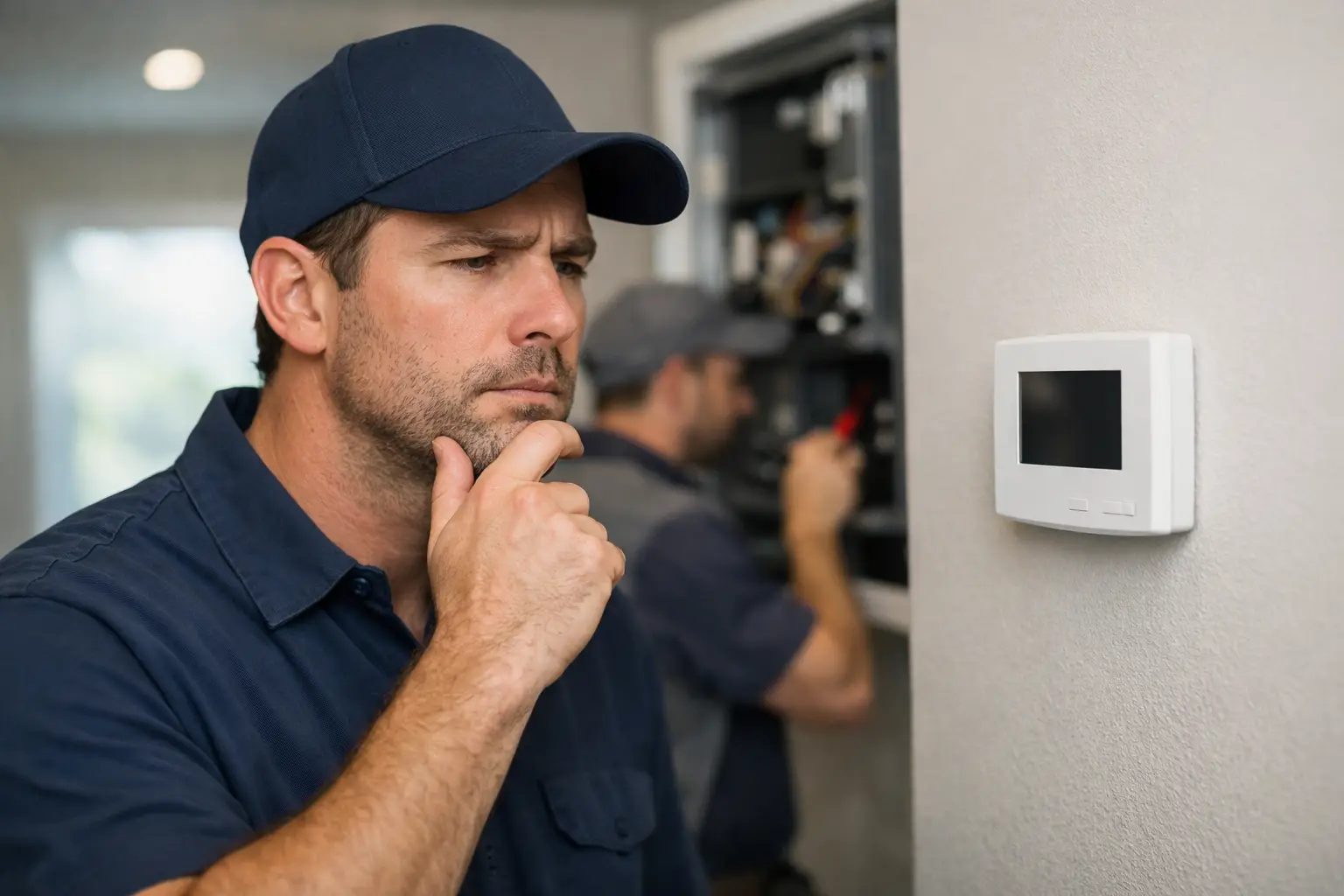
You set the temperature, wait for the air to kick on, and nothing happens. If you are asking, why is my thermostat not working, the problem may be smaller than you think – but it can also point to a larger HVAC issue that should not be ignored.
A thermostat is the control point for your heating and cooling system. When it stops responding, reads the wrong temperature, or fails to turn the system on, comfort drops fast, especially during a Texas heat wave. The good news is that some thermostat problems are simple to identify. Others require professional diagnostics to avoid wasted time, repeat breakdowns, or unnecessary parts replacement.
Why is my thermostat not working if the screen is blank?
A blank thermostat screen usually means the unit is not getting power. In many homes, that points to dead batteries first. If your thermostat uses batteries, replacing them is the fastest thing to check.
If new batteries do not fix it, the issue may be tied to the HVAC system itself. A tripped breaker, a blown low-voltage fuse, loose wiring, or a safety shutoff can all cut power to the thermostat. For example, if your condensate drain line is clogged, some systems shut down to prevent water damage. That can make the thermostat appear dead even though the thermostat is not the root problem.
Older thermostats can also fail internally. If the display is blank, the housing feels loose, or the buttons do not respond, the thermostat may simply be worn out. That is especially common when the unit has been in place for many years or has experienced power surges.
Why is my thermostat not working when the AC or heat will not turn on?
Sometimes the thermostat has power, but the HVAC system still does not respond. In that case, start with settings. It sounds basic, but a thermostat set to off, emergency heat, or the wrong mode is a common reason for a no-cooling or no-heating call.
Check the temperature setting next. If the room is already cooler or warmer than the setpoint, the system may not be getting a call to run. Also make sure the fan is set correctly. Auto means the fan runs only when the system is actively heating or cooling. On means the fan may blow continuously, which can make it seem like the system is working differently than expected.
If the settings look right and nothing starts, the problem may be with communication between the thermostat and the equipment. Loose low-voltage wires, a bad relay, a failed transformer, or control board trouble can all stop the signal. In commercial buildings and larger homes, zoning equipment can add another layer of failure points as well.
When the thermostat reading is wrong
A thermostat that shows the wrong room temperature can cause constant cycling, uneven comfort, and higher utility costs. The sensor may be affected by direct sunlight, nearby lamps, kitchen heat, supply vents, or drafts from a window or door. In those cases, the thermostat is working, but it is reading a bad sample of the room.
Placement matters more than most people realize. A thermostat installed on an exterior wall, too close to a vent, or in a high-traffic area may never give a stable reading. That leads to a system that runs too long or shuts off too early.
Dust inside the thermostat can also affect older models. With smart thermostats, software glitches, Wi-Fi issues, or calibration problems may be part of the problem. It depends on the model and how the system was installed.
A few safe things you can check first
Before assuming the thermostat has failed, there are a few practical checks that can save time.
Make sure the thermostat is set to the correct mode and the setpoint is several degrees beyond the current room temperature. Replace batteries if your model uses them. Check the electrical panel for a tripped HVAC breaker. If your system has a float switch near the drain line, look for signs of water backup around the indoor unit.
You should also check the air filter. A severely clogged filter can create airflow problems that lead to system shutdowns or freezing. In that situation, the thermostat may still be doing its job, but the equipment cannot respond properly.
If you have a smart thermostat, confirm that it is connected and not stuck in a schedule, away mode, or app-based override. Homeowners often think the thermostat is broken when the issue is actually a programming conflict.
Signs the thermostat itself may be failing
Thermostats do wear out. If yours is old, unreliable, or acting inconsistently, replacement may be the better long-term move.
One warning sign is short cycling, where the system turns on and off too frequently without reaching the desired temperature. Another is delayed response, where you adjust the setting but nothing happens for several minutes, or the response is inconsistent. You may also notice the display flickering, settings resetting on their own, or heating and cooling calls happening at the wrong time.
In some homes and commercial spaces, the thermostat is not the only control device in play. Dampers, zone boards, sensors, and equipment controls can mimic thermostat failure. That is why accurate diagnosis matters. Replacing the thermostat without confirming the actual cause can waste money and leave the original problem unresolved.
Wiring problems are more common than people think
Loose, corroded, or damaged wiring can interrupt thermostat operation even when the thermostat appears normal. This can happen after remodeling, pest activity, vibration over time, or a previous installation that was never done correctly.
Low-voltage wiring is not complicated in theory, but troubleshooting it safely and accurately still requires care. Crossing wires, damaging terminals, or working on energized equipment can create bigger issues. If you remove the thermostat cover and see loose wires, corrosion, or anything burnt, that is a good point to stop and call a licensed HVAC technician.
For businesses with rooftop units or multi-zone systems, thermostat and control wiring can be even more complex. A simple comfort complaint in one area may be tied to a larger system control problem.
Smart thermostat issues vs. standard thermostat issues
A standard thermostat usually fails in straightforward ways – no power, bad sensor, worn contacts, or inaccurate readings. Smart thermostats can have those same issues, plus app setup errors, firmware problems, Wi-Fi disconnects, and compatibility issues with older HVAC systems.
That does not mean smart thermostats are a bad choice. In many cases, they improve scheduling, efficiency, and comfort control. But they do need proper setup. If a smart thermostat was recently installed and problems started right after, installation or wiring compatibility should be high on the list.
This is especially true with heat pumps, variable-speed systems, dual-fuel setups, or commercial applications. A thermostat can be high-tech and still be the wrong fit for the equipment.
When the issue is not the thermostat at all
One of the most common service call outcomes is this: the thermostat is fine, but the HVAC system has another fault. A failed capacitor, clogged drain line, frozen evaporator coil, dirty condenser, bad contactor, or blower motor issue can all make it seem like the thermostat stopped working.
That is why thermostat problems should be looked at as system problems until proven otherwise. The thermostat is the part you see and touch, so it gets the blame first. But the actual issue may be deeper in the air handler, furnace, condenser, or rooftop unit.
In hot weather, delays matter. Running a stressed system with an unresolved fault can increase wear and push a manageable repair into a larger one.
When to call a professional
If you have checked the settings, changed the batteries, verified the breaker, and the thermostat still is not working correctly, it is time for a proper diagnosis. The same goes for blank screens, repeated shutdowns, wiring concerns, or any sign that the problem involves more than a simple setting issue.
A professional can test voltage, inspect controls, verify thermostat communication, and determine whether the problem is the thermostat, the wiring, or the HVAC equipment itself. That saves guesswork and helps avoid replacing parts that were never bad.
For homeowners and property managers, fast answers matter. Comfort, equipment protection, and energy use are all tied to how well that control system works. BluePeak 360 handles thermostat and HVAC diagnostics with the same focus we bring to every repair call – clear communication, professional service, and solutions that make sense for the system you actually have.
If your thermostat has stopped responding, do not assume it is just a small annoyance. Sometimes it is a quick fix. Sometimes it is your system asking for attention before a bigger breakdown follows.