
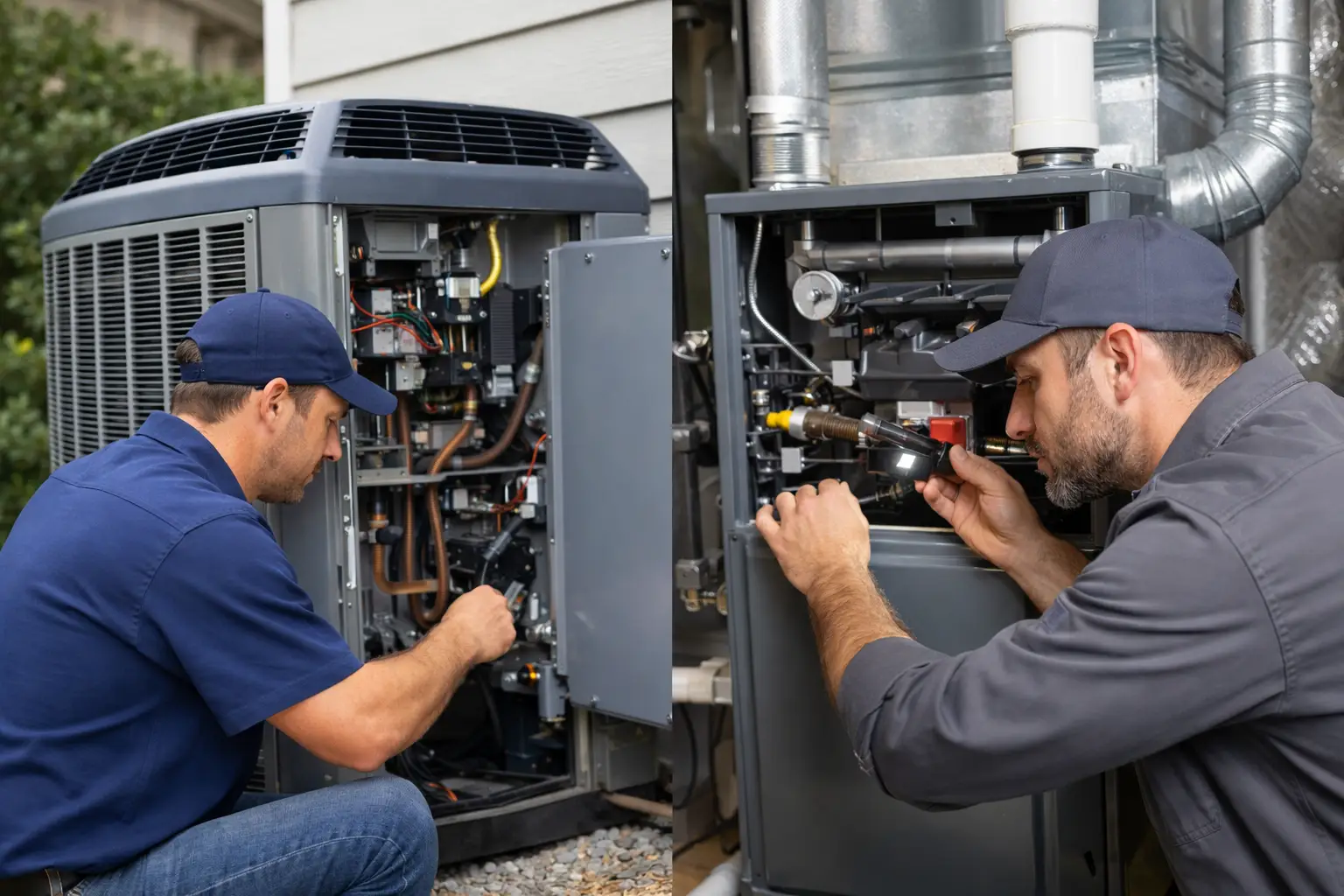
A winter cold snap in Texas has a way of settling the debate fast. When temperatures drop and your building needs steady heat, the question of heat pump vs furnace stops being theoretical. It becomes about comfort, operating cost, repair risk, and whether your system is built for the way our region actually uses HVAC.
For many property owners, the answer is not as simple as picking the newer technology or the cheaper installation. A heat pump and a furnace produce heat in different ways, perform differently as outdoor temperatures change, and make more or less sense depending on your existing setup, utility costs, and long-term plans for the property.
Heat pump vs furnace: the core difference
A furnace creates heat. In most homes and commercial spaces, that means burning natural gas or using electric resistance heat, then pushing warm air through ductwork. A heat pump does not create heat in the same way. It moves heat from one place to another. In heating mode, it pulls heat from outdoor air and transfers it indoors.
That difference matters because moving heat is usually more efficient than generating it. It is one reason heat pumps have become a serious option for many buildings, especially in milder climates. But efficiency on paper is only part of the story. Real-world performance depends on weather, equipment sizing, duct condition, insulation, and how often the system has to run during peak conditions.
Why climate matters so much
In the Houston area and surrounding communities, cooling demand usually outweighs heating demand by a wide margin. That shifts the conversation. In colder northern climates, a furnace often has the clear edge because it can deliver strong, reliable heat during extended freezes. In Southeast Texas, winter conditions are usually moderate enough that a heat pump can handle heating effectively for much of the season.
That said, Texas weather is not always mild. We can go from a comfortable afternoon to a hard freeze quickly. During those colder stretches, a furnace often provides hotter supply air and faster recovery, especially in older homes or drafty buildings. A heat pump may still work, but it can take longer to bring the indoor temperature back up, and supplemental heat may be needed.
This is why a blanket recommendation rarely works. The right choice depends on how your building performs when outdoor conditions are less than ideal.
Where a heat pump has the advantage
A heat pump can be a very smart fit when energy efficiency is a top priority and winters are relatively short. Since it also provides cooling, it acts as a two-in-one system. For many homeowners, that means replacing both the heating and cooling function with one matched setup.
In a climate like ours, that can be appealing. You get efficient air conditioning during the long cooling season and lower-cost electric heating during milder winter weather. Newer heat pumps are also much better than older models. Variable-speed systems, improved compressors, and better controls have made them quieter, more consistent, and more capable in lower temperatures than many people expect.
For commercial spaces, a heat pump can also make sense where gas service is limited, rooftop equipment is being upgraded, or the goal is to simplify mechanical systems while improving efficiency. The key is making sure the load calculation and system selection are done correctly. An undersized or poorly configured heat pump can leave occupants uncomfortable and drive up complaints quickly.
Where a furnace still wins
A furnace remains a strong option when dependable heating output is the top concern. Gas furnaces produce very warm air, which many people notice right away. The space tends to feel warmer faster, and recovery after a temperature setback is usually quicker than with a heat pump.
That matters in larger homes, buildings with more air leakage, or properties where occupants expect immediate warmth. It also matters during cold snaps, when a furnace can continue delivering strong performance without the same drop-off a heat pump may experience as outdoor temperatures fall.
There is also the question of utility costs. In some cases, natural gas can make furnace operation more cost-effective than electric heat during winter. That depends on local rates, the efficiency of the equipment, and how often the system runs. A high-efficiency gas furnace paired with a separate AC system can still be the better long-term value for some properties.
Installation cost vs operating cost
One of the biggest mistakes people make is focusing only on purchase price. The better question is total cost over time.
A furnace installation may look more affordable if a property already has gas service and a compatible AC system plan. A heat pump may cost more up front depending on the equipment type, electrical needs, and whether duct or thermostat upgrades are required. But lower operating costs can offset that initial difference over the years.
The reverse can also happen. If a building needs backup heat, electrical upgrades, or higher-end equipment to meet comfort expectations, a heat pump system may not deliver the savings someone expects. That is why comparing quotes without comparing scope can lead to bad decisions. Equipment efficiency ratings, duct performance, controls, and labor quality all affect what the system will actually cost you after installation day.
Comfort is not just about temperature
When customers compare a heat pump vs furnace, they often think only about whether the space gets warm enough. Comfort is broader than that. It includes how evenly the building heats, how long the system runs, how noisy it is, and how dry or stuffy the air feels.
A heat pump typically runs longer cycles at lower intensity, which can create more even temperatures from room to room. Many people like that steady operation. A furnace tends to heat in shorter, hotter bursts. That can feel more dramatic, which some homeowners prefer, especially on very cold mornings.
Indoor air quality can also factor in. Any forced-air system depends on clean filters, proper airflow, and duct condition. If those basics are neglected, neither option will perform the way it should. In commercial buildings, poor airflow balance can turn a good heating system into a comfort problem fast.
The hybrid option many Texas properties should consider
There is a middle ground that deserves more attention: a dual-fuel system. This setup combines a heat pump with a gas furnace. The heat pump handles heating during milder weather, when it operates efficiently, and the furnace takes over when temperatures drop low enough that gas heat makes more sense.
For many properties in Texas, this can be the best of both worlds. You get efficient cooling and shoulder-season heating from the heat pump, plus strong backup performance from the furnace during freezes. It is not the right fit for every budget, but for owners planning to stay in the property long term, it can be a practical solution.
What to ask before you replace either system
Before choosing a system, it helps to step back from brand names and ask a few practical questions. How old is the current equipment, and is the ductwork in good shape? Does the building already have natural gas? Are winter heating bills a concern, or is summer energy use the bigger issue? Is this a forever property, a rental, or a commercial building where downtime carries a cost?
You also need to think about response time and service support. Even the best system will eventually need maintenance or repair. That is why installation quality and ongoing service matter as much as equipment choice. A properly sized system installed by licensed technicians will almost always outperform a higher-end unit installed poorly.
For property owners in Magnolia, The Woodlands, Spring, Tomball, Conroe, Houston, and nearby areas, local climate experience should be part of the recommendation. A contractor who understands how Southeast Texas systems work through long cooling seasons, humidity swings, and sudden winter events can help you avoid a system that looks good on paper but underperforms when you need it most.
So which one should you choose?
If your priority is energy-efficient year-round performance in a relatively mild climate, a heat pump is often a strong choice. If you want maximum heating power during cold weather and already have gas available, a furnace may be the better fit. If you want efficiency without giving up cold-weather confidence, a dual-fuel setup may be worth serious consideration.
The best decision usually comes from looking at the full picture – your building, your usage, your utility costs, and your comfort expectations. A good HVAC recommendation should feel specific, not generic. When the system matches the property and the installation is done right, you are not just buying equipment. You are buying fewer surprises when the weather turns.