
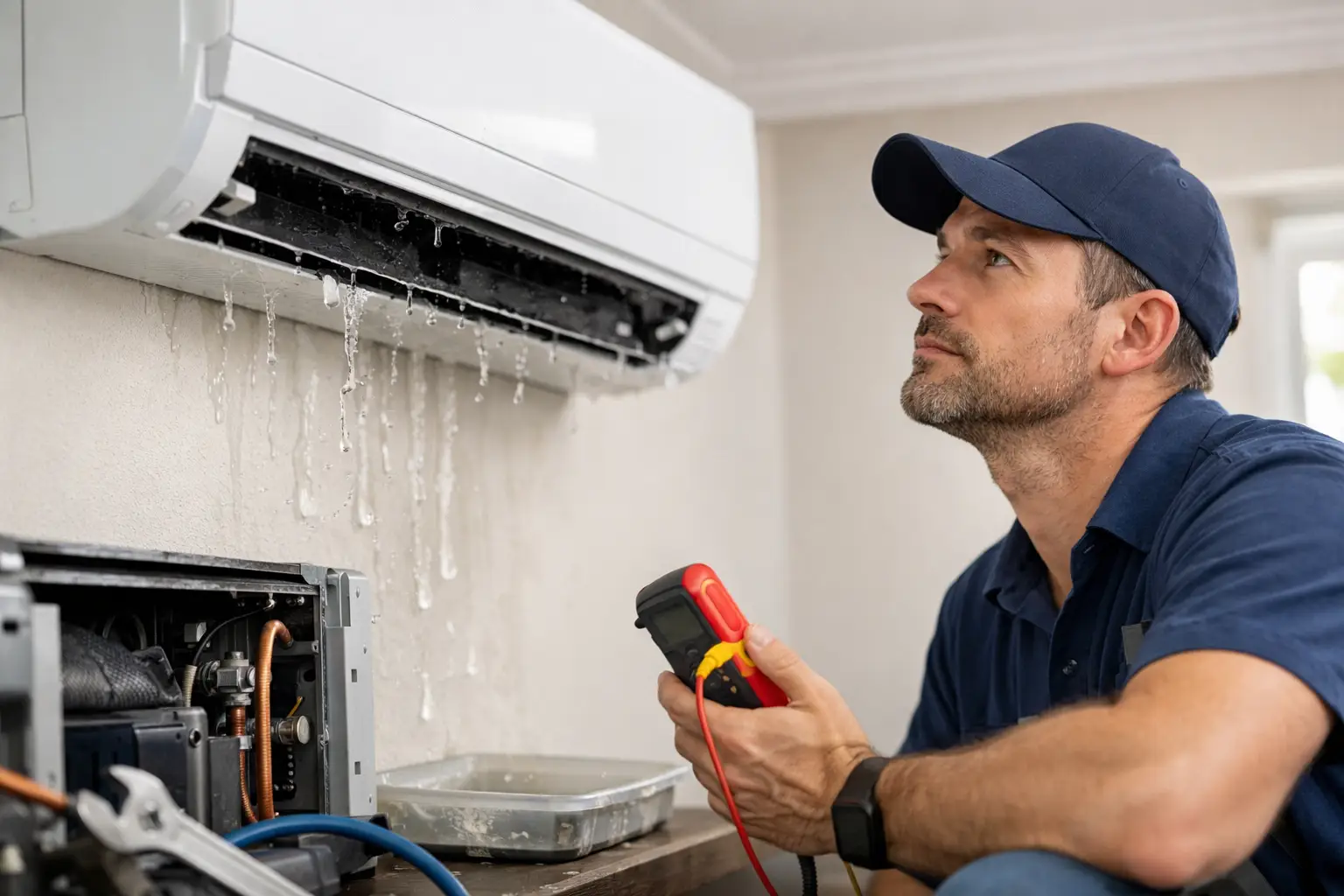
A puddle near your indoor air handler is easy to dismiss until it reaches flooring, drywall, inventory, or electrical components. If you are asking, “why is AC leaking water,” the answer is usually related to condensation that is not draining where it should. Your AC naturally removes humidity from indoor air, especially during a long Texas cooling season. That water must travel safely through a drain system. When something blocks, freezes, cracks, or backs up, it can end up inside your home or business.
A small amount of water beneath the outdoor condenser can be normal. Water dripping from a ceiling, closet air handler, attic unit, or rooftop equipment drain is not. Acting early can prevent a manageable HVAC repair from becoming a water-damage project.
Why Is AC Leaking Water Indoors?
Your evaporator coil gets cold as it absorbs heat from the air moving through your system. Warm, humid air passing across that coil creates condensation, much like a cold drink sweating on a hot day. The condensate collects in a drain pan and flows out through a condensate line.
In Magnolia, Houston, and surrounding communities, high humidity means an AC can produce several gallons of condensate in a day. Any restriction in that pathway can cause water to overflow. The location of the leak, whether the system is cooling normally, and whether you see ice all help point to the cause.
A clogged condensate drain line
A clogged drain line is one of the most common reasons for an indoor AC water leak. Algae, mold-like growth, dust, rust particles, and debris can build up in the line over time. Eventually, water cannot drain quickly enough and backs up into the pan or air handler.
You may notice standing water in the drain pan, a musty smell around the unit, or a safety float switch that has shut the system off. Some systems have a visible PVC drain pipe near the outdoor unit. A slow drip from that pipe during cooling is usually a good sign. No drainage combined with an indoor leak often suggests a blockage.
Clearing a line can involve a wet/dry vacuum at the exterior drain outlet, but forcing tools or harsh chemicals through the line can damage fittings or push a clog deeper. A technician can clear the line properly, inspect the trap and vent, and confirm the drain is flowing before the system is returned to service.
A dirty air filter or blocked airflow
A neglected filter does more than reduce indoor air quality. It restricts airflow across the evaporator coil. Without enough warm air moving over the coil, the coil can freeze. When it later thaws, the amount of melting water may overwhelm the drain pan and spill into the cabinet or surrounding area.
Check your filter first. If it is visibly loaded with dust, replace it with the correct size and type for your system. Avoid choosing an overly restrictive filter just because it has the highest rating. Some systems need a specific balance between filtration and airflow. If you see ice on refrigerant lines or the indoor coil cabinet, turn the cooling system off and set the thermostat fan to ON if it will run. Do not chip ice off the coil. Schedule a diagnosis before restarting cooling.
A frozen evaporator coil
Dirty filters are not the only cause of a frozen coil. Low refrigerant, a failing blower motor, dirty coils, closed supply vents, or ductwork problems can also reduce heat transfer and cause icing. The visible water is the result of the thaw, but the underlying airflow or refrigerant issue still needs to be corrected.
Low refrigerant does not simply get used up. If a system is low, it may have a leak that requires repair. Adding refrigerant without identifying the problem may restore cooling briefly, but it does not protect the equipment or prevent the issue from returning.
A cracked, rusted, or misaligned drain pan
Drain pans can corrode or crack with age. An attic air handler may have both a primary pan inside the unit and a secondary emergency pan underneath it. A damaged primary pan can leak slowly until water appears on a ceiling or wall below. A damaged secondary pan is even more urgent because it means the backup protection has failed.
A pan can also overflow if the air handler is not level, a drain connection is loose, or the system was installed without the proper slope. These issues are best handled by an HVAC professional, particularly when the equipment is in an attic, above finished space, or near electrical wiring.
A failed condensate pump
Some homes and commercial spaces use a condensate pump because gravity alone cannot carry water to an approved drain location. The pump collects condensate and periodically pumps it away. If its float sticks, motor fails, discharge tube kinks, or power supply is interrupted, water can overflow from the pump reservoir.
This problem can look like a drain-line clog, so it is worth checking whether your system has a small pump near the air handler. If the pump is full and not running, turn the AC off to limit additional overflow and arrange service.
Is Water Around the Outdoor Unit Normal?
Often, yes. During humid weather, water can drip from the outdoor condenser or from a nearby drain termination while the AC runs. Defrost cycles on heat pumps can also create water outdoors during heating operation. A shallow puddle on a patio or pad is generally not a concern if it drains away from the foundation and no water is entering the building.
The concern changes if the outdoor unit is sitting in deep standing water, the pad is sinking, or drainage is washing soil away. Poor site drainage can affect electrical components, stability, and long-term equipment condition. For commercial properties, water around rooftop drains and curbs deserves prompt attention as well, since roof drainage issues can affect more than the HVAC unit.
What to Do When Your AC Is Leaking Water
Start by protecting the area. Move furniture, boxes, electronics, and stored items away from the leak. Place a shallow container or towels beneath the drip only if doing so is safe. If water is near electrical panels, outlets, or exposed wiring, avoid the area and contact a qualified professional.
Next, turn the thermostat from COOL to OFF if water is actively leaking from the indoor unit. This stops additional condensation and reduces the chance of a larger overflow. If you suspect the coil is frozen, leave the system off long enough to thaw. Do not keep running an AC that is leaking from the air handler just to maintain comfort. That choice can damage ceilings, insulation, flooring, and equipment.
You can then inspect the air filter and replace it if it is dirty. Look for obvious loose drain connections or a full condensate pump reservoir, but do not disassemble the unit or remove access panels unless you are trained to do so. Air handlers contain sharp metal edges and electrical components, and a quick DIY attempt can turn a simple drain issue into a larger repair.
When a Leak Needs Professional HVAC Service
Call for service promptly when water is coming through a ceiling, the system repeatedly trips off, you see ice, the drain pan is rusted, or the leak returns after you replace the filter. The same applies when your AC is not cooling well, makes unusual sounds, or has a musty odor. Those symptoms can signal a frozen coil, refrigerant issue, blower problem, or hidden drainage failure.
For property managers and business owners, an AC leak should be treated as both an equipment concern and a building-protection concern. Water near tenant spaces, offices, retail inventory, server rooms, or electrical equipment can create a disruption far beyond the original HVAC problem. Fast diagnostics help limit downtime and clarify whether the source is the HVAC system, plumbing, or roof drainage.
BluePeak 360 provides professional HVAC service with a personal touch for homeowners and businesses that need clear answers, transparent recommendations, and responsive repair. A technician can identify the source of the leak, correct the drainage or cooling issue, and verify that the system is operating safely before leaving.
Preventing Future AC Water Leaks
Most condensate problems are preventable with routine maintenance. Changing filters on schedule keeps airflow steady, while seasonal service allows a technician to clean the condensate drain, inspect pans and float switches, check the evaporator coil, and catch refrigerant or blower concerns before they cause a freeze-up.
The right maintenance interval depends on your system, pets, occupancy, filter type, and how hard the equipment runs. In the greater Houston area, long cooling seasons and humid conditions make regular drain-line attention especially worthwhile. A dry floor around your air handler is not just a convenience. It is a sign that your cooling system is managing moisture the way it should.