
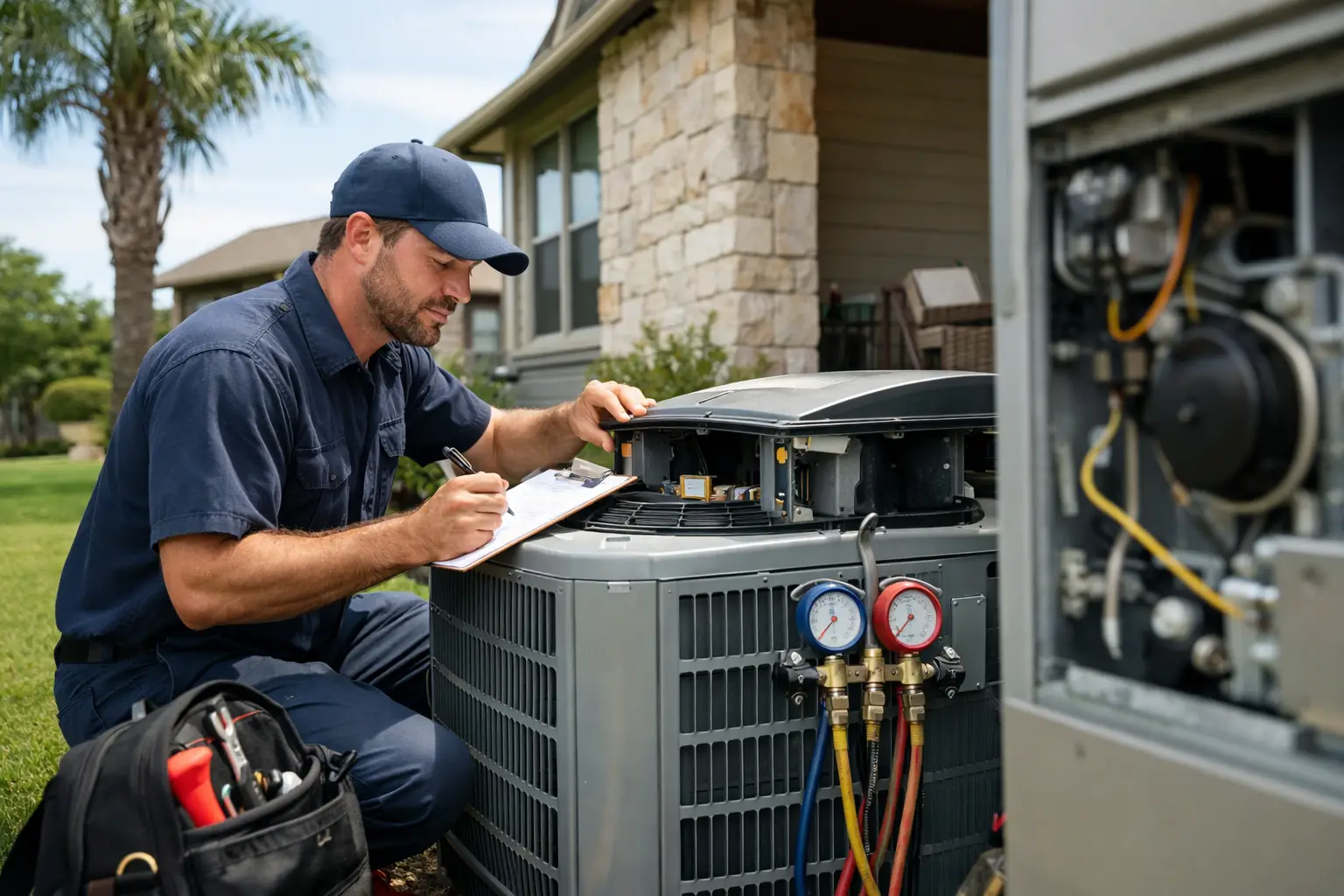
A sudden 95-degree afternoon is a bad time to learn that your air conditioner has a weak capacitor, a clogged drain line, or a thermostat that is not reading the room correctly. A seasonal HVAC tune up checklist gives homeowners and property managers a practical way to prepare before Texas heat or an unexpected cold front puts the system under pressure.
Some maintenance is safe and useful to handle yourself. Other work requires a licensed HVAC technician with the training and tools to test electrical components, refrigerant performance, combustion safety, and equipment operation. The goal is not to take apart your system. It is to catch simple issues early, keep airflow moving, and know when to schedule professional service.
Why Seasonal HVAC Maintenance Matters in Texas
In Magnolia, The Woodlands, Spring, Tomball, Conroe, and Houston, cooling systems often run hard for long stretches. That workload exposes small problems quickly. A dirty filter can raise static pressure, a blocked condensate drain can cause water damage, and a worn electrical part can leave a system unable to start on the hottest day of the year.
Heating maintenance matters too, even though winter is shorter. A furnace or heat pump that sits unused for months can develop issues that only appear when the first cold night arrives. Seasonal service helps protect comfort, manage energy use, and extend the useful life of major equipment.
For businesses, the stakes can be higher. Inconsistent temperatures can affect employees, customers, tenants, inventory, and daily operations. Preventive attention to rooftop units, split systems, and thermostats helps facility managers avoid disruptions instead of reacting to an emergency call.
Seasonal HVAC Tune Up Checklist: What You Can Check
A homeowner checklist should focus on visible conditions, basic operation, and habits that support the equipment. Set a reminder at the start of spring and again before heating season.
Replace or inspect the air filter
Check the filter every month during heavy cooling or heating use. Many homes need a replacement every one to three months, but the right interval depends on the filter type, pets, construction dust, allergies, and how often the system runs.
A filter that looks gray and loaded with dust should be replaced. Do not assume a more restrictive filter is always better. High-filtration filters can improve particle capture, but a system that was not designed for them may experience reduced airflow. Use the filter size and rating recommended for your equipment, or ask an HVAC professional before making a significant change.
Clear the space around the outdoor unit
Your outdoor condenser needs room to release heat. Remove leaves, grass clippings, loose debris, and stored items from around the unit. Keep shrubs and plants trimmed back so air can move freely through the coil.
Do not cover the unit tightly during the cooling season, and do not push tools through the coil fins. Bent fins and damaged wiring can create a larger repair than the cleanup was meant to prevent. If the coil is visibly packed with dirt or cottonwood, schedule professional cleaning rather than using high water pressure.
Check vents, returns, and airflow
Walk through the home while the system is running. Make sure supply vents and return grilles are not blocked by furniture, rugs, curtains, or boxes. Closing many vents to force more air into one room usually creates pressure problems and does not solve the underlying comfort issue.
Pay attention to rooms that are consistently warmer, colder, stuffier, or more humid than the rest of the building. Uneven temperatures can result from duct leaks, insulation gaps, poor return-air design, thermostat placement, or an aging system. These symptoms are useful information for a technician during a tune-up.
Test the thermostat before the weather changes
Switch the thermostat to cooling in spring and heating in fall, then verify that the equipment starts and delivers the expected air temperature. Replace thermostat batteries if applicable, confirm the clock and schedule are correct, and make sure the thermostat is not exposed to direct sunlight or heat from appliances.
Smart thermostat settings can reduce unnecessary runtime, but aggressive setbacks are not always ideal. In humid Texas weather, allowing indoor temperatures to climb too high while no one is home may make the system work harder to pull down both temperature and humidity later. A moderate schedule is often the better approach.
Look for drain line warning signs
During cooling season, your system removes moisture from indoor air. That water must drain correctly. Check around the indoor unit, drain pan, and nearby ceiling or wall areas for moisture, stains, or musty odors. If your system has a visible drain outlet, notice whether it is draining when the AC runs.
Do not ignore a float switch that shuts the system down. It is preventing an overflow. A clogged condensate line needs to be cleared properly, and recurring clogs may point to a drainage, insulation, or maintenance issue.
What a Professional HVAC Tune-Up Should Include
A complete tune-up goes beyond a quick visual check. Licensed technicians can inspect areas that homeowners should not attempt to service, particularly electrical compartments, refrigerant circuits, gas heating components, and internal blower assemblies.
A professional visit typically includes inspection and testing of the following:
- Electrical connections, capacitors, contactors, relays, and safe voltage operation
- Refrigerant performance and signs of leaks or improper system charge
- Indoor and outdoor coil condition, blower performance, and airflow restrictions
- Condensate drainage, safety switches, and water-management concerns
- Thermostat calibration, temperature split, system controls, and overall cycle operation
- Furnace ignition, burners, venting, heat exchanger condition, and carbon monoxide safety when applicable
The exact work depends on the type, age, and condition of the equipment. A heat pump needs attention in both heating and cooling modes. A gas furnace requires combustion and venting checks. Commercial rooftop units may need belt inspection, economizer testing, and more detailed controls review.
Transparent service matters here. If a technician recommends a repair, ask what component is failing, what symptoms it causes, whether the repair is urgent, and what could happen if it is delayed. A clear explanation makes it easier to distinguish a necessary repair from an upgrade that can wait.
Spring Checklist: Prepare for Cooling Season
Schedule AC maintenance before the first sustained heat wave, ideally in early spring. This timing gives you a chance to address worn parts before demand increases and service schedules become crowded.
Start by replacing the filter and clearing the outdoor unit. Then run the cooling system long enough to listen for unusual noises, such as buzzing, grinding, rattling, or repeated clicking. Check that cool air is reaching each occupied room and that the outdoor unit is operating without excessive vibration.
If you notice ice on refrigerant lines, weak airflow, warm supply air, frequent cycling, a burning smell, or water near the indoor equipment, turn the system off and request service. Continuing to run a struggling AC can turn a minor problem into compressor damage or a major water issue.
Fall Checklist: Prepare for Heating Season
Before the first cold spell, test the heat setting during a mild day. A brief dusty smell can be normal when heating equipment first runs after a long break. A persistent burning odor, gas smell, loud booming sound, or a furnace that repeatedly shuts down is not normal and should be evaluated promptly.
Confirm that carbon monoxide detectors are installed outside sleeping areas and that their batteries and test functions are current. This is especially important for homes with gas furnaces, fireplaces, or other fuel-burning appliances. Carbon monoxide safety is not a DIY diagnostic task – treat alarms seriously and follow emergency guidance if one activates.
For heat pumps, listen for abnormal noises and verify that the system changes modes correctly. Defrost cycles can be normal in cold, damp conditions, but frequent icing or poor heating performance deserves professional attention.
When a Tune-Up Is Not Enough
Maintenance improves reliability, but it cannot reverse every age-related problem. Consider a repair evaluation or replacement estimate if your system needs frequent repairs, struggles to keep up, produces persistent humidity problems, or has rising energy costs without an obvious explanation.
Age matters, but it is not the only factor. A well-maintained system may be worth repairing, while a newer unit with major compressor or refrigerant issues may require a more careful cost comparison. The best decision depends on repair cost, remaining equipment life, efficiency goals, warranty status, and the comfort needs of the home or building.
BluePeak 360 provides professional HVAC service with a personal touch for homeowners and businesses that need clear answers before small seasonal issues become urgent repairs. A scheduled tune-up offers a calm, practical starting point – and gives your system its best chance to carry you through the next stretch of Texas weather.