
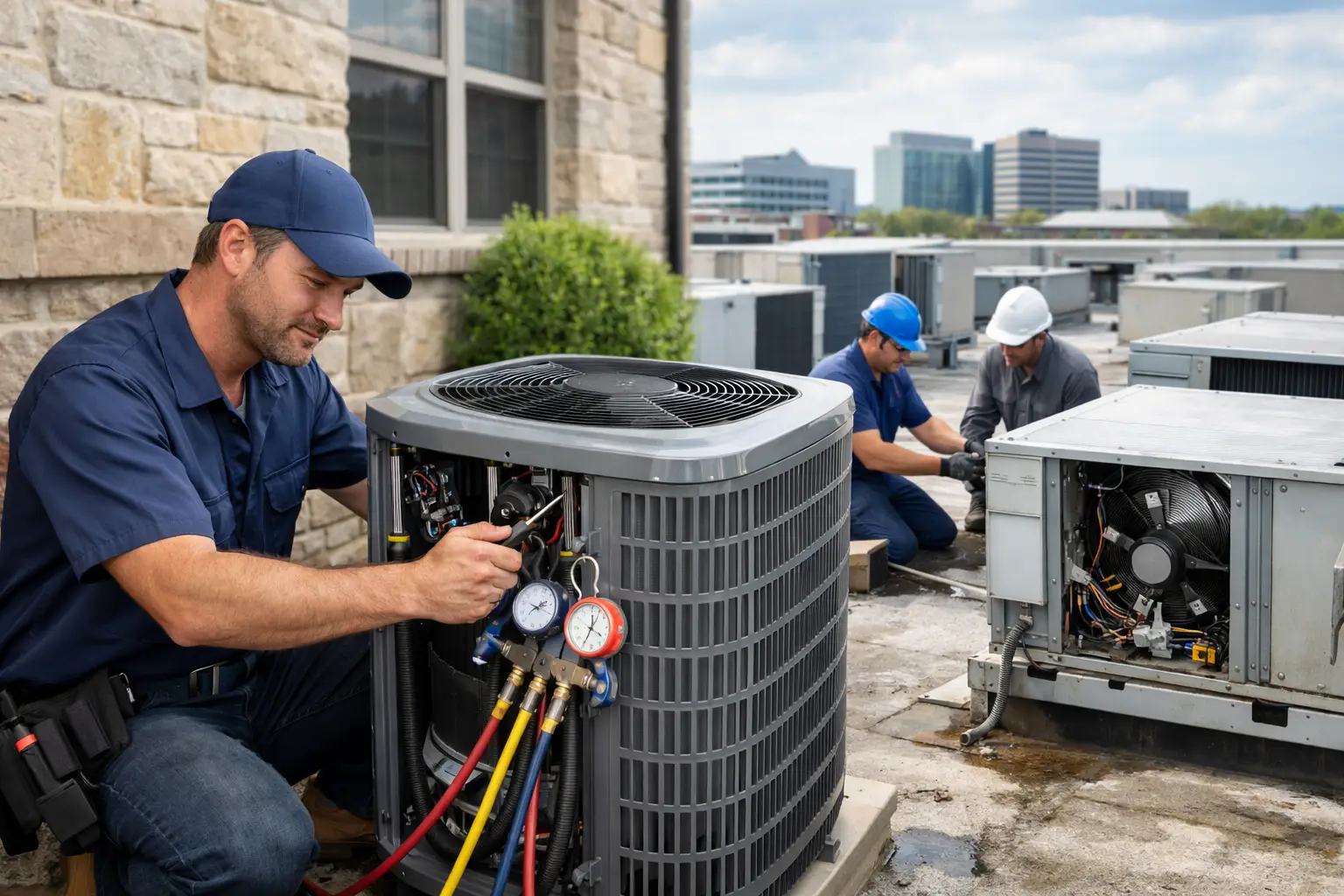
When a Houston-area AC system quits during a 100-degree week, the question is rarely whether you need service. The question is how quickly a qualified technician can get there, what the repair will cost, and whether the problem could have been prevented. This HVAC service contract guide explains what a service agreement should do for your home or business, what it should not promise, and how to choose a plan worth keeping.
An HVAC contract is not just a discount card. A well-written agreement creates a routine for inspecting, cleaning, and testing equipment before small issues turn into no-cooling calls, water damage, or costly component failures. For commercial properties, it also creates clearer expectations around scheduling, documentation, and response when comfort affects employees, customers, tenants, or operations.
What an HVAC Service Contract Actually Covers
Most service contracts center on preventive maintenance. The contractor visits on a scheduled basis, typically once or twice a year, to inspect the heating and cooling system and complete seasonal tune-up work. In Texas, two visits are often practical: one before the heavy cooling season and another before heating season.
During a proper maintenance visit, a technician may inspect electrical connections, test system operation, check refrigerant performance, examine drains, clean accessible components, assess airflow, inspect filters, and identify worn parts. The exact scope depends on the equipment and the agreement. A heat pump, gas furnace, ductless system, rooftop unit, and conventional split AC system do not all require the same tasks.
Many plans also include priority scheduling, reduced diagnostic fees, or preferred pricing on repairs. Those benefits can be valuable during peak summer demand, but they are different from repair coverage. Read the agreement closely to determine whether labor, replacement parts, refrigerant, after-hours service, or emergency dispatch are included, discounted, or billed separately.
A maintenance agreement is not a warranty
This distinction prevents many unpleasant surprises. A manufacturer warranty generally covers qualifying defective parts for a defined period, subject to registration and other terms. An extended labor warranty may cover some repair labor. A service contract usually covers maintenance visits and may provide repair discounts, but it does not automatically pay for a failed compressor, blower motor, circuit board, or refrigerant leak repair.
No maintenance plan can guarantee that a component will never fail. It can reduce risk by finding loose wiring, restricted drainage, dirty coils, declining capacitor performance, and other concerns early. That is meaningful value, especially in a climate where systems run hard for much of the year.
The HVAC Service Contract Guide: Terms to Compare
The best plan is not always the cheapest annual plan. Compare what happens before, during, and after a problem occurs. A low upfront price may make sense for a newer, simple residential system. A larger property with multiple units, tenant obligations, or high cooling demands may need broader service terms and documented maintenance instead.
Start with the visit schedule. Confirm the number of planned visits, the season when they occur, and whether unused visits expire. Ask whether the contractor contacts you to schedule or whether you are responsible for calling. A contract only protects equipment if maintenance is actually completed.
Next, look at the maintenance checklist. “Tune-up” can mean very different things from one provider to another. The agreement should describe the major inspections and cleaning tasks, not rely on a vague promise of a seasonal check. For commercial equipment, ask whether the checklist includes rooftop unit filters, belts, condensate systems, economizer components where applicable, electrical controls, and operating data.
Response terms deserve equal attention. Priority service may mean your call goes ahead of non-members, but it may not mean immediate dispatch. If emergency service matters to your household or business, ask about after-hours availability, typical dispatch procedures, and whether overtime rates apply. For commercial clients, clarify whether the contract offers a stated response target or simply preferred scheduling.
Finally, compare the financial terms. Confirm the annual or monthly price, payment timing, cancellation policy, automatic renewal language, and the price of additional visits. If the plan offers repair discounts, ask whether they apply to parts, labor, diagnostics, equipment replacement, or all of the above. A transparent contractor should be able to explain those numbers plainly before you sign.
Questions That Reveal the Fine Print
A contract should make service easier, not harder to understand. Before agreeing to one, get direct answers to the following questions:
- What equipment is covered by the agreement, including model numbers or unit locations?
- How many maintenance visits are included each year, and what work is performed at each visit?
- Are diagnostic fees, repair labor, parts, refrigerant, filters, and after-hours calls included or discounted?
- What conditions are excluded, such as inaccessible equipment, code upgrades, ductwork, drain repairs, or pre-existing problems?
- Does priority service have a defined response time, and what happens during a severe weather event or peak demand period?
- Can the agreement transfer to a new homeowner, tenant, or building owner if the property changes hands?
Exclusions are not automatically a red flag. Some exclusions are necessary because every system and property has different conditions. The concern is unclear language. If the contract says a repair is “not covered” without explaining what that means, request clarification before relying on the plan during an emergency.
Residential Contracts: Focus on Reliability and Predictable Costs
For homeowners, a service agreement is most useful when it makes routine care easy. Busy families often remember maintenance only after the house feels warm, the thermostat is not responding, or water appears near the indoor unit. Scheduled visits help prevent that pattern.
A residential plan should fit the age and condition of the system. A newer unit may mainly need standard inspections, cleaning, and warranty documentation. An older system may benefit from closer monitoring, but a contract should not be used to delay an obvious replacement decision. If repair costs are rising, efficiency is poor, and breakdowns are becoming frequent, ask for clear repair-versus-replacement options instead of spending year after year on temporary fixes.
Also consider indoor air quality needs. Filter changes, humidity concerns, duct conditions, and thermostat settings can affect comfort even when the outdoor unit is operating. These services may not be part of a base contract, so ask whether they can be added when needed.
Commercial Contracts: Protect Operations, Not Just Equipment
Commercial HVAC service contracts require more detail because downtime carries a larger cost. A restaurant, medical office, retail space, warehouse, multifamily property, or office building may have several systems with different ages and maintenance needs. Comfort complaints can quickly become tenant issues, lost business, or disruptions to staff productivity.
A useful commercial agreement should identify every covered unit and establish a maintenance frequency based on equipment use, occupancy, and environment. Rooftop units exposed to heat, debris, and weather may need more attention than a lightly used office system. Properties with extended operating hours or critical cooling requirements may also need a more specific emergency service plan.
Documentation matters. Ask whether the contractor provides service reports, repair recommendations, equipment condition notes, and records that help with capital planning. Those records can help a property manager budget for replacements rather than being surprised by several failures at once.
When a Contract May Not Be the Right Fit
A contract is not mandatory for every situation. If you are selling a property soon, replacing the entire system immediately, or managing a building with an internal maintenance team that handles most routine work, a standard plan may offer limited value. Even then, professional inspections can still be useful before major seasonal demand.
The key is to avoid buying a plan solely because it promises a discount. Choose it because the maintenance scope, service access, and pricing terms solve a real problem for your property. A dependable contractor should be willing to recommend a simpler option when that is the better fit.
For homeowners and property managers in Magnolia, The Woodlands, Spring, Tomball, Conroe, and Houston, the right agreement starts with a clear conversation about the equipment you have and the reliability you need. BluePeak 360 can review your system, explain maintenance options without pressure, and help you build a service plan around practical priorities. Before the next stretch of extreme heat, choose a contract that gives you clear expectations, qualified service, and a plan for keeping comfort on track.