
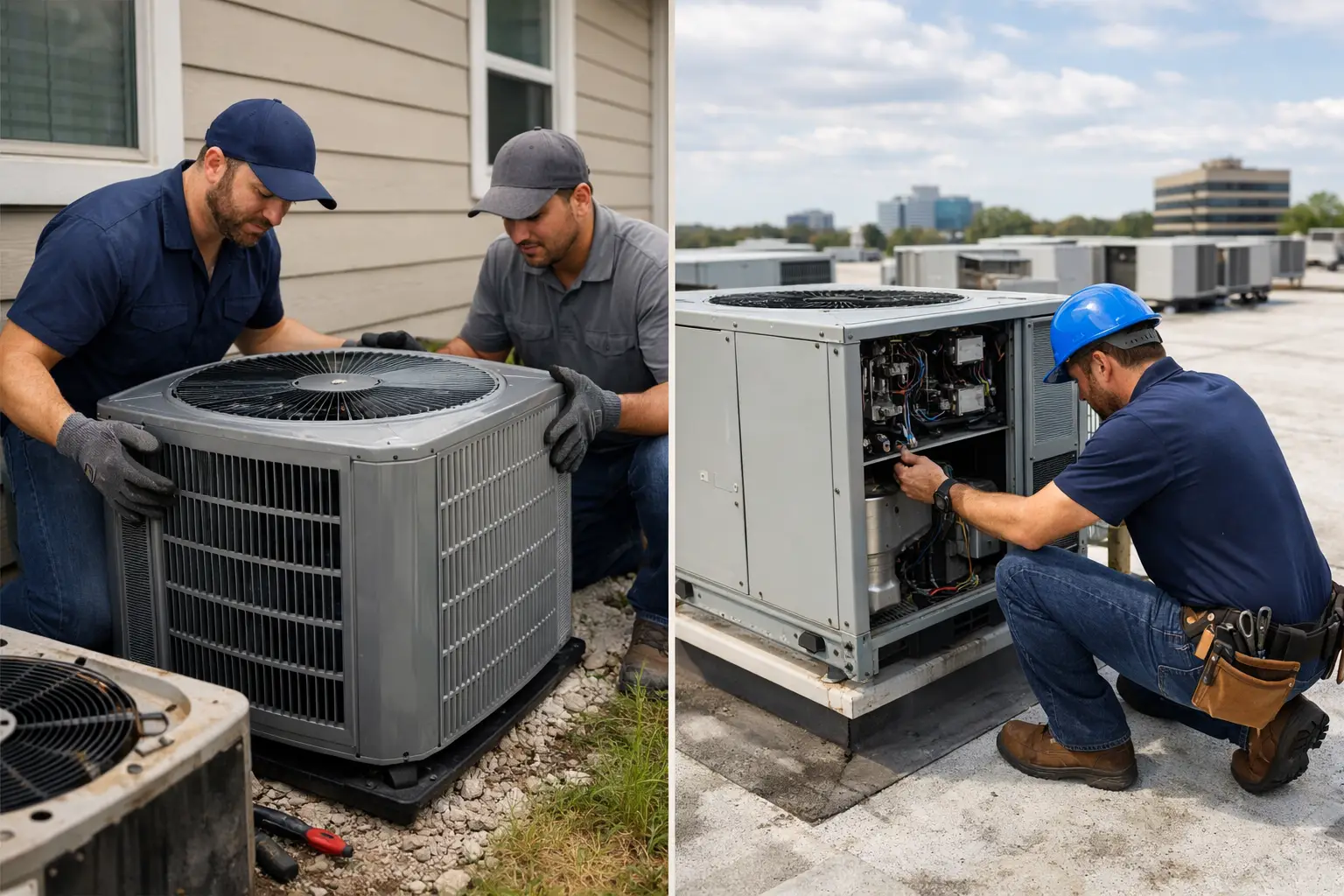
A failing HVAC system rarely quits at a convenient time. It usually shows up as uneven cooling, rising utility bills, repair calls that keep stacking up, or a unit that cannot keep up when Texas heat hits hard. If you are wondering how to choose HVAC replacement, the goal is not just to buy new equipment. The goal is to choose a system that fits the building, the workload, and your budget without creating new problems.
That sounds simple, but replacement decisions go sideways all the time. People buy by tonnage alone, chase the highest efficiency sticker without looking at payback, or replace only part of the system when the real issue is poor overall performance. A smart replacement starts with the building and ends with a clear installation plan.
How to choose HVAC replacement without overspending
The first step is knowing whether replacement is actually the better move. If your current system is under 10 years old and the repair is minor, fixing it may still make sense. If it is 12 to 15 years old, uses R-22 refrigerant, breaks down frequently, or struggles to maintain temperature, replacement often becomes the more cost-effective option.
For commercial properties, the decision usually comes down to reliability and operating cost. Downtime affects tenants, staff, customers, and inventory. For homeowners, comfort and monthly utility bills tend to drive the decision. In both cases, repeated repairs can become a warning sign that the system is past the point of good value.
Age alone should not make the decision for you. Installation quality, maintenance history, duct condition, and how hard the system has been working matter just as much. A well-maintained unit may have some life left. A poorly installed one may need replacement much sooner.
Start with sizing, not brand names
One of the biggest mistakes in HVAC replacement is choosing equipment that is too large or too small. Bigger is not better. An oversized system can short cycle, leave humidity behind, and wear out faster because it turns on and off too often. An undersized system may run constantly and still fail to keep up.
Proper sizing should come from a load calculation, not a guess based on the old unit. If the existing system never cooled evenly or always ran nonstop in summer, replacing it with the same size may repeat the same problem. Square footage is only one piece of the equation. Insulation, window exposure, ceiling height, duct leakage, occupancy, and building use all affect the right system size.
This matters even more in the Houston area, where heat and humidity put serious demand on cooling equipment. A system that looks fine on paper can still underperform if the home or building has airflow issues or poor duct design.
Why the ductwork matters
New equipment cannot fix bad ductwork by itself. If ducts are leaking, undersized, poorly routed, or clogged with years of buildup, your new system may still struggle. That can show up as hot spots, noisy airflow, weak cooling, or higher operating costs than expected.
Before committing to replacement, ask whether the duct system should be inspected as part of the job. Sometimes a duct repair or redesign is the difference between a system that performs well and one that disappoints right away.
Efficiency matters, but so does payback
Most buyers look at SEER2 ratings quickly, and that makes sense. Higher-efficiency systems can lower energy costs, especially in a climate with long cooling seasons. But the highest-rated system is not automatically the best choice for every property.
A better question is this: how long will you own the property, and how much run time does the system see? If you plan to stay in your home for years, investing in higher efficiency may make strong financial sense. If this is a rental property or a building with tighter capital limits, a mid-range high-efficiency option may offer a better balance.
Two-stage and variable-speed systems also deserve attention. They usually cost more up front, but they often deliver better comfort, quieter operation, and improved humidity control. In many Texas homes and businesses, that comfort difference is noticeable. Still, if budget is the main concern, a properly installed single-stage system can outperform a premium unit that was installed poorly.
Look beyond the equipment sticker
Efficiency on paper assumes the system is installed correctly. Refrigerant charge, airflow, duct performance, thermostat setup, and system matching all affect real-world results. That is why installation quality has such a direct impact on energy use and equipment life.
If one estimate is dramatically cheaper than the others, it is worth asking what has been left out. Shortcuts usually do not show up on day one. They show up later as comfort issues, callbacks, and avoidable wear.
Choose the right type of system for the space
Residential and commercial replacement decisions often look different. A homeowner may be comparing a split system, heat pump, or furnace and AC combination. A commercial property manager may be evaluating rooftop units, zoning needs, ventilation requirements, or building schedule demands.
The right answer depends on how the space is used. A family home needs steady comfort, humidity control, and quiet performance. An office may need dependable cooling during operating hours with minimal disruption. A retail business may prioritize customer comfort and reliability. A warehouse may have a completely different load profile.
If you are replacing an older system, this is a good time to ask whether the current setup still makes sense. Building use changes over time. Renovations, added square footage, occupancy shifts, and upgraded insulation can all affect what the best replacement should be now.
How to compare HVAC replacement estimates
A low price is not a full answer. When reviewing estimates, look for what is included and what is assumed. A professional proposal should explain the equipment being installed, the efficiency rating, warranty details, labor scope, thermostat options, and whether permits, drain updates, electrical work, or duct modifications are part of the job.
It should also be clear whether the quote covers a full system replacement or only selected components. Replacing only the outdoor unit while leaving an older indoor coil or air handler can create compatibility issues, lower efficiency, and reduce performance. In some cases, partial replacement is appropriate. In many cases, it is a short-term decision that limits long-term value.
The installer matters as much as the equipment. Look for licensed and insured professionals with experience in both diagnostics and replacement work. Fast response matters, especially when a system fails during peak season, but clear communication matters too. You want to know what is being recommended, why it fits your property, and what to expect during installation.
Questions worth asking before you sign
Ask how the system was sized. Ask whether ductwork was evaluated. Ask what efficiency level makes sense for your usage, not just what the top option costs. Ask what warranty coverage applies to parts and labor. Ask how the installation team will protect the property and test system performance after startup.
These are not small details. They tell you whether the contractor is selling a box or providing a real replacement solution.
Comfort features that may be worth the upgrade
Replacement is also the right time to think about system features you may have been missing. Better filtration, upgraded thermostats, zoning, and indoor air quality accessories can improve comfort and control. Not every add-on is necessary, but some provide real value depending on the building.
For example, if one area is always too warm, zoning may help. If allergies, dust, or indoor air quality concerns are part of the conversation, filtration and air purification may be worth reviewing. If the building sits empty for long periods, programmable or smart thermostat control can improve efficiency.
That said, features should solve actual problems. Extra technology is only useful if it makes the space more comfortable, more efficient, or easier to manage.
A good replacement decision balances today and tomorrow
The best HVAC replacement is not always the cheapest estimate or the most expensive system. It is the one that fits the property, handles the local climate, and gives you dependable performance without surprises. That means looking at sizing, ductwork, efficiency, building use, installation quality, and support after the job is complete.
For homeowners and business owners alike, the strongest replacement decisions usually come from slowing down just enough to ask better questions. A professional HVAC service with a personal touch can help you sort through those answers clearly. When the system is chosen carefully, you do not just get new equipment. You get more predictable comfort when you need it most.