
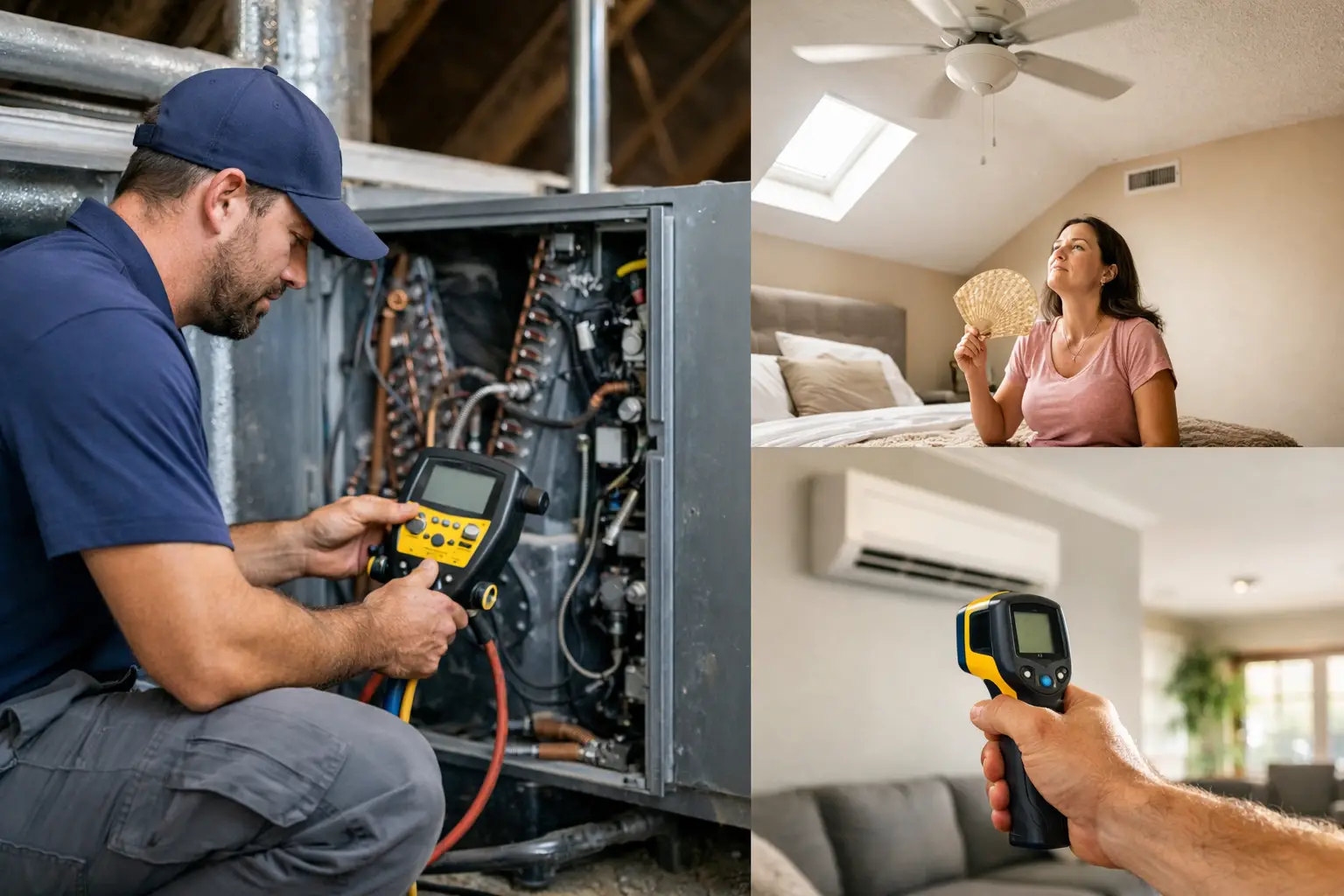
A bedroom that feels stuffy while the living room feels like a refrigerator is more than a minor comfort issue in a Texas summer. It can point to restricted airflow, poor insulation, duct leakage, or an AC system that is no longer sized or operating properly. Knowing how to troubleshoot uneven home cooling helps you rule out simple fixes before a small comfort problem turns into higher utility bills or unnecessary strain on your equipment.
Start With the Room, Not the Thermostat
Begin by comparing the uncomfortable room with a room that cools normally. Keep interior doors open during this check, especially if your home has a central return grille in a hallway or common area. A closed bedroom door can restrict the path air needs to travel back to the return, reducing supply airflow even when the vent is open.
Check the supply vent in the warm room. You should feel a steady stream of cool air when the system is running. If airflow is weak, make sure furniture, curtains, rugs, or stored items are not blocking the grille. Also confirm that the register damper is fully open. Some dampers are adjusted accidentally during cleaning, painting, or moving furniture.
If the room receives heavy afternoon sun, has large windows, sits above a garage, or is located at the end of a long hallway, it may naturally carry a higher cooling load. That does not mean you should accept a major temperature difference. It does mean the solution may involve more than adjusting the thermostat.
Check the Easy Airflow Issues First
A dirty air filter is one of the most common reasons for uneven cooling. When a filter becomes loaded with dust, pet hair, and debris, it limits the amount of air the blower can pull through the system. Rooms farthest from the indoor unit often show the problem first.
Inspect the filter and replace it if it looks gray, visibly clogged, or has been in place longer than the manufacturer recommends. In many homes, filters need attention every one to three months. Households with pets, construction dust, allergies, or frequent system use may need more frequent replacement.
Next, inspect every visible supply register and return grille. Supply vents deliver conditioned air into a room. Return grilles pull air back to the system to be cooled again. Both need clear space around them. Closing several vents to force more air into one room is usually not a good fix. It can increase pressure in the duct system, reduce overall efficiency, and contribute to coil or blower problems.
If your home has multiple thermostat zones, verify that the thermostat and dampers for the affected zone are set correctly. A zoning system can provide excellent room-to-room control, but a failed zone damper, thermostat issue, or wiring problem can leave one part of the house consistently warmer than another.
How to Troubleshoot Uneven Home Cooling at the Thermostat
Your thermostat controls the whole system based on the temperature where it is installed. If it is located near a kitchen, sunny window, exterior door, or supply vent, it may sense a temperature that does not reflect the rest of the home.
First, confirm the thermostat is set to cool and the fan setting is on Auto. Leaving the fan in the On position can circulate air between cooling cycles, which may make some rooms feel warmer or more humid. Then compare the thermostat reading with a separate thermometer placed in the problem room for at least 15 minutes. A difference of a few degrees between rooms can be normal, especially in larger homes. Persistent differences of five degrees or more deserve closer attention.
For homes with smart thermostats, review scheduling and room-sensor settings. A sensor may be prioritizing the wrong area of the home at certain times of day. Adjusting schedules can help when a bedroom is used primarily at night or a home office heats up during the afternoon.
Do not lower the thermostat dramatically to compensate for one hot room. The AC will run longer, but it may not solve the airflow or heat-gain issue causing the imbalance. It can also raise energy use and create overcooling in the rooms closest to the thermostat.
Look for Signs of Duct Problems
Ductwork is often hidden in attics, walls, and crawl spaces, so problems can go unnoticed for years. Leaky, disconnected, crushed, or poorly insulated ducts can send cooled air into unconditioned areas instead of the rooms where you need it.
Warning signs include weak airflow from one or more vents, a room that never matches the rest of the house, unusually dusty rooms, whistling noises, and higher summer energy bills. In the Houston area, attic duct problems are especially costly because hot attic temperatures can quickly warm air moving through poorly insulated ducts.
You can visually inspect accessible duct sections for obvious disconnections, torn insulation, or kinks. Avoid stepping on or moving flexible ducts in the attic, since they can be easily damaged. Professional HVAC diagnostics may include static-pressure testing, airflow measurements, and a closer inspection of dampers and duct connections. These tests identify whether the issue is actually duct-related instead of relying on guesswork.
Consider Insulation, Windows, and Air Leaks
Sometimes the air conditioner is doing its job, but the room is gaining heat faster than the system can remove it. This is common in upstairs rooms, bonus rooms over garages, rooms with west-facing windows, and additions that were not designed with the original HVAC system in mind.
Feel around windows and exterior doors for noticeable drafts. Check whether weatherstripping is worn and whether window coverings are open during peak sun. Closing blinds or curtains during the hottest part of the day can reduce solar heat gain, though it will not correct a serious HVAC issue.
Attic insulation matters as well. If ceiling insulation is thin, uneven, or damaged by moisture, heat can transfer into rooms below for hours. Air sealing and insulation improvements can reduce the cooling load, but they should be evaluated alongside HVAC performance. Adding insulation will not restore airflow from a failing blower or disconnected duct.
Know When the AC System May Be the Cause
Uneven cooling can also signal equipment trouble. A dirty evaporator coil, failing blower motor, refrigerant issue, frozen coil, or oversized or undersized system can prevent your home from cooling evenly.
Watch for ice on the refrigerant line or indoor equipment, water around the air handler, frequent cycling, unusually loud operation, or air that is not consistently cool at the vents. Turn the system off and schedule service if you see ice. Continuing to run a frozen system can damage the compressor and create a more expensive repair.
System sizing deserves a professional evaluation. An oversized unit may cool the thermostat area too quickly and shut off before distant rooms are comfortable or humidity is properly removed. An undersized unit may run for long periods and still struggle during the hottest hours. The right answer depends on the home’s layout, insulation, window exposure, duct design, and occupancy, not just square footage.
When to Call an HVAC Professional
Call for service when a clean filter, open vents, and thermostat review do not improve the issue, or when airflow is weak in several rooms. You should also call promptly if you notice ice, water leaks, burning odors, electrical concerns, or a system that cannot keep up with normal summer temperatures.
A qualified technician can measure temperature split, static pressure, refrigerant performance, blower operation, and duct airflow. That approach helps separate a simple maintenance concern from a repair, duct modification, zoning adjustment, insulation improvement, or replacement recommendation. For homeowners and property managers in Magnolia, The Woodlands, Spring, Tomball, Conroe, and Houston, BluePeak 360 provides clear HVAC diagnostics and transparent recommendations based on what the system actually needs.
Comfort should not depend on avoiding certain rooms or constantly changing the thermostat. Addressing uneven cooling early protects your equipment, helps control energy costs, and gives every room a better chance of staying comfortable when Texas heat is at its worst.