
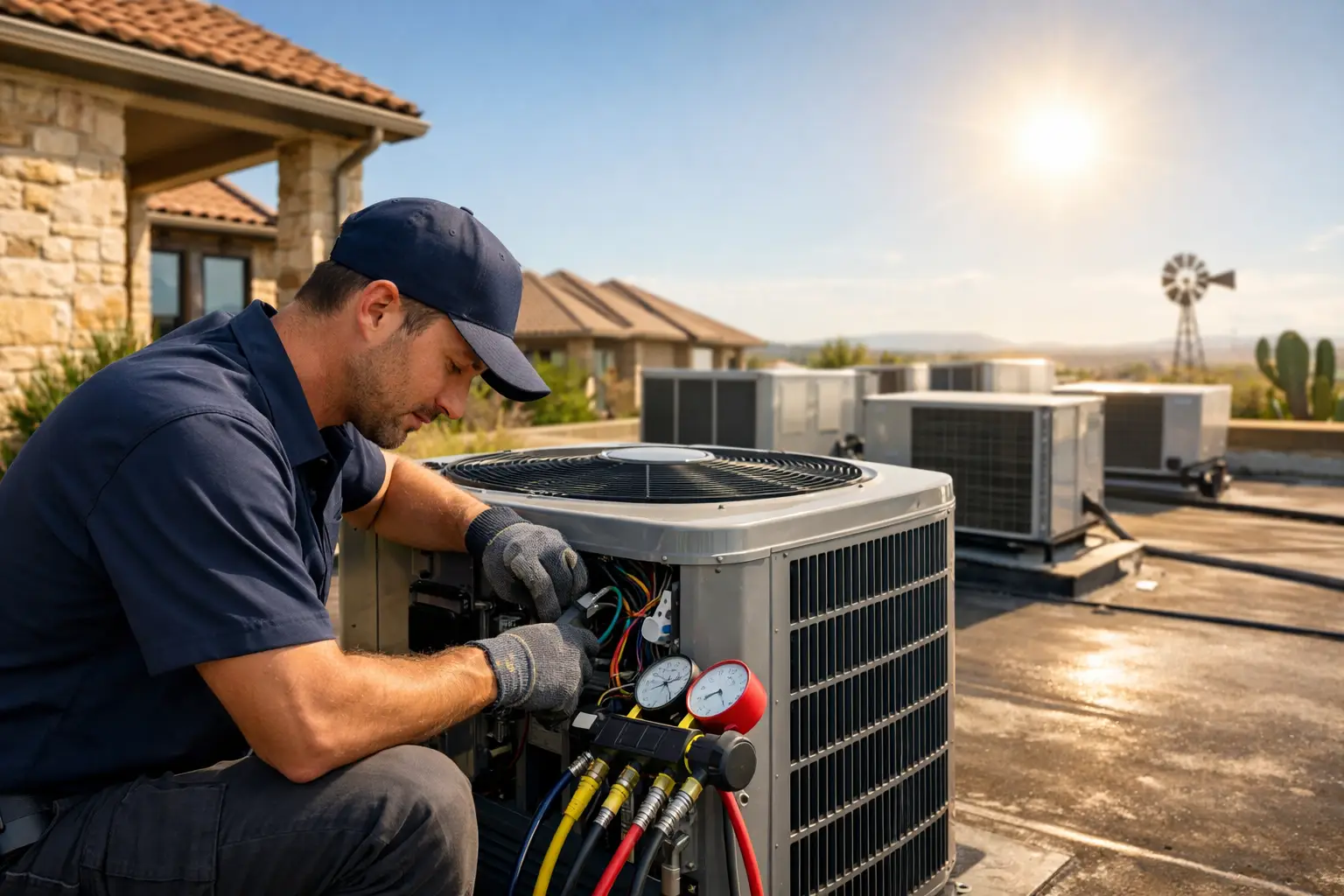
When your AC runs from late spring through well into fall, the best hvac system for texas heat is not just the one with the biggest name or the highest sticker price. It is the system that can handle long cooling cycles, high humidity, heavy demand, and the way your home or building actually uses air every day. In Texas, the wrong setup can leave you with hot rooms, high utility bills, and equipment that wears out faster than it should.
For most properties in the Houston-area climate, there is no one-size-fits-all answer. A well-matched high-efficiency central air system is often the right choice for homes, while some businesses benefit more from packaged rooftop units or zoned systems. What matters most is proper sizing, humidity control, duct design, and installation quality.
What makes Texas heat harder on HVAC systems?
Texas heat is not just about a high afternoon temperature. In places like Magnolia, The Woodlands, Spring, and greater Houston, HVAC systems also fight humidity, long summers, warm nights, and sudden demand spikes. That means your cooling system may run for hours at a time without much of a break.
This is why a system that performs well in a milder climate may not feel nearly as effective here. If the unit is undersized, it may struggle all day and still not hit the thermostat setting. If it is oversized, it may cool the air too quickly without removing enough moisture, leaving the building cold and clammy at the same time.
The best HVAC setup for Texas needs to do two jobs well. It has to cool consistently, and it has to control humidity. If it only does one of those jobs, comfort suffers.
Best HVAC system for Texas heat in most homes
For many Texas homeowners, the best HVAC system for Texas heat is a high-efficiency split central air system paired with a variable-speed air handler or furnace and a properly matched indoor coil. This type of system gives you strong whole-home cooling, better moisture removal, and more even temperatures from room to room.
Variable-speed equipment is especially useful in hot, humid climates because it can run at lower speeds for longer periods. That usually means steadier indoor temperatures, better humidity control, and less stop-and-start strain on the equipment. It also tends to be quieter than older single-stage systems.
A two-stage system can also be a smart middle ground. It costs less than a fully variable setup, but it still handles part-load conditions better than a basic single-stage unit. For homeowners who want better comfort without pushing to the top end of the budget, that can be a very practical choice.
Single-stage systems still have a place, especially in smaller homes, rental properties, or replacement projects where budget matters most. But in Texas heat, they usually offer the least comfort control. They turn on at full power, shut off, and repeat that cycle all day. That can lead to more temperature swings and weaker dehumidification.
Heat pump or traditional AC with furnace?
This is where the answer depends on the property.
In much of Texas, heat pumps make a lot of sense. Winters are generally mild enough that a heat pump can handle both cooling and heating efficiently for much of the year. If you want an all-electric solution, a modern heat pump can be an excellent fit.
A traditional split system with an air conditioner and gas furnace is still a strong option, especially if natural gas is already available and winter heating performance matters to you. Many homeowners are comfortable with this setup because it is familiar, dependable, and widely serviceable.
For pure cooling performance in summer, both can work well when properly installed. The bigger question is how you want the system to perform in heating season, what utility costs look like in your area, and whether your existing setup makes one replacement path more cost-effective than the other.
SEER ratings and efficiency – what actually matters
It is easy to focus only on high efficiency numbers, but the highest SEER rating is not automatically the best value for every building. In Texas, efficiency matters because cooling costs add up fast. Still, the return on that investment depends on how long you plan to stay in the property, how much you use the system, and whether the rest of the house supports efficient operation.
A high-efficiency system installed on leaky ductwork or paired with poor insulation will not perform the way it should. You may pay more upfront and still feel disappointed.
For many homes, a mid- to high-efficiency system strikes the best balance. It reduces energy use, improves comfort, and avoids overpaying for features that may not produce meaningful savings in your specific situation. For larger homes, homes with long cooling seasons, or commercial spaces with heavy occupancy, stepping up in efficiency can make more financial sense.
Why sizing matters more than most people think
One of the biggest mistakes in HVAC replacement is assuming bigger is better. It is not.
An oversized unit may blast cold air quickly, but it often short-cycles. That means it turns on and off too often, which can increase wear, waste energy, and leave humidity behind. The space may reach the thermostat setting without ever feeling truly comfortable.
An undersized unit has the opposite problem. It may run constantly and still fall behind during the hottest part of the day.
The right system should be selected based on the building itself, not just square footage. Window exposure, insulation levels, ceiling height, duct design, occupancy, and air leakage all matter. A proper load calculation is one of the clearest signs that an HVAC contractor is focused on long-term performance rather than a quick equipment swap.
Ductwork and airflow can make or break the system
A good air conditioner cannot fix bad airflow. If your ductwork is leaking, poorly sized, or badly laid out, even the best equipment will struggle.
This shows up in ways people notice every day. One bedroom stays hot. The upstairs never catches up. The office feels muggy by midafternoon. Utility bills rise even though the system is running nonstop.
In Texas homes and commercial buildings, airflow problems are common and often overlooked during replacement. Before choosing equipment, it is worth looking at the full system. Sometimes the best upgrade is not just a new condenser. It is a combination of new equipment, duct improvements, and better return air design.
Best HVAC system for Texas heat in commercial buildings
For commercial properties, the best hvac system for texas heat often depends on building type and occupancy. A small office, retail space, restaurant, warehouse, and multi-tenant property all have different cooling loads and ventilation demands.
Packaged rooftop units are a common choice because they are practical, serviceable, and well-suited for many commercial applications. When properly sized and maintained, they provide reliable cooling without taking up indoor space.
For some commercial buildings, zoning is just as important as raw cooling capacity. Different parts of the building may have different heat loads depending on equipment, sunlight, occupancy, or hours of use. A one-temperature-fits-all system may keep one area comfortable while another struggles.
Business owners and property managers should also think beyond installation cost. Downtime, repair access, maintenance planning, and energy use all affect the total cost of ownership.
Features worth paying for in Texas
Not every add-on is necessary, but a few features tend to earn their keep in this climate.
Variable-speed blowers are useful because they improve airflow and humidity control. Smart thermostats can help manage schedules, reduce waste, and provide better visibility into system behavior. Enhanced filtration and indoor air quality products may also be worth considering, especially in homes with allergies, pets, or high dust levels.
For some properties, zoning is a major comfort upgrade. If you have multiple floors, large glass exposure, or rooms that are rarely used, zoning can reduce hot and cold spots and limit overcooling in low-use areas.
The key is to choose features that solve real comfort or cost problems, not features that simply sound advanced.
What to ask before replacing your system
Before you invest in a new unit, ask how the system is being sized, whether the ductwork has been evaluated, and what type of humidity control the new setup will provide. You should also ask what efficiency level makes financial sense for your usage and whether your thermostat and electrical setup are compatible.
For commercial projects, ask about service access, maintenance requirements, parts availability, and how the system will affect operations during peak business hours.
Clear answers matter. So does transparent pricing. A good recommendation should fit the building, the budget, and the way the space is used.
The best HVAC system for Texas heat is the one that is designed for your property instead of sold as a generic upgrade. If your current system struggles through another Texas summer, it may be time to look beyond brand names and focus on sizing, airflow, humidity control, and installation quality. That is where comfort lasts.