
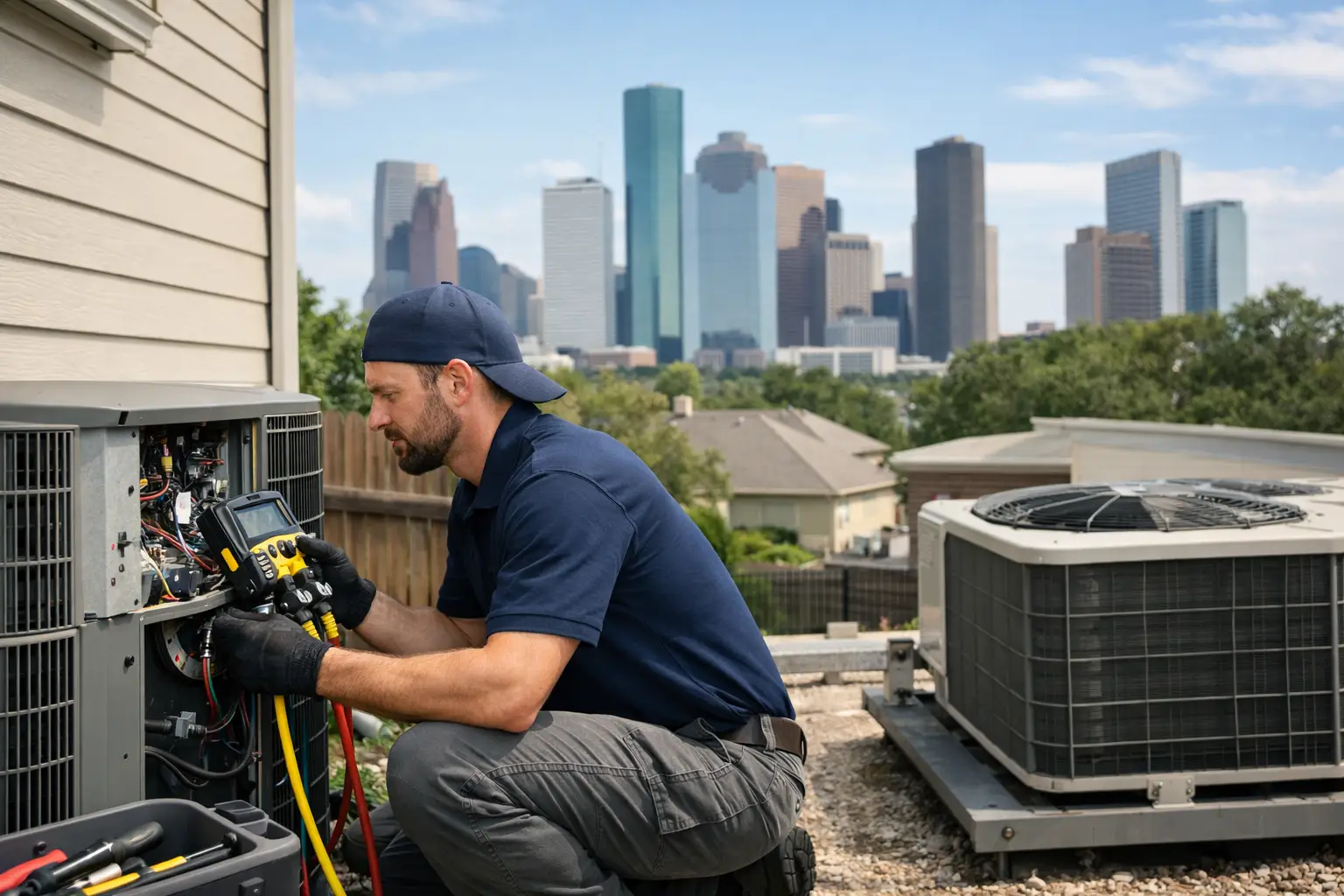
A Houston AC problem rarely arrives at a convenient time. It often starts with a house that will not cool after work, a bedroom that stays warm all night, or a business that becomes uncomfortable during operating hours. When you need ac repair Houston TX residents and property managers can depend on, acting early can protect your comfort, your equipment, and your budget.
Texas heat puts serious demand on air conditioning systems for much of the year. A minor issue such as restricted airflow or a failing electrical part can turn into a complete system shutdown when the equipment is running hard. The right response is not always an immediate replacement, but it should be a professional diagnosis before the problem gets worse.
AC Repair Houston TX Problems That Need Fast Service
Some air conditioning issues are clearly urgent. If the system will not turn on, is blowing warm air, trips the breaker, leaks heavily, or produces a burning smell, turn it off and arrange service. Continuing to run a struggling unit can damage major components and may create an electrical or water-related hazard.
Warm air is one of the most common calls, but it does not point to just one repair. The cause may be a thermostat setting, a dirty filter, a failed capacitor, a refrigerant issue, a frozen evaporator coil, or a compressor problem. A qualified technician should test the system rather than guess at the source. Replacing a part without confirming the underlying issue can lead to repeat breakdowns and unnecessary expense.
Water around an indoor unit also deserves prompt attention. Condensate drains work hard in Houston’s humidity, and a clogged drain line can cause water to back up into the drain pan or nearby building materials. In some systems, a safety switch shuts the equipment down to prevent overflow. That shutdown may feel sudden, but it is often preventing a more costly repair.
Unusual sounds matter as well. Rattling can indicate loose hardware, while buzzing may involve electrical components. Grinding, squealing, or metal-on-metal sounds can point to motor or blower issues. Noises do not automatically mean the system needs replacement, but they are a reason to schedule service before a small mechanical issue damages other parts.
Signs Your AC Is Losing Performance
Not every repair need is an emergency. Many systems show warning signs over days or weeks, giving homeowners and facility managers time to schedule a diagnostic visit before the next heat wave. The key is recognizing that reduced performance is not something you should simply accept as normal.
Watch for rooms that stay warmer than the rest of the building, weak air coming from vents, longer cooling cycles, or humidity that feels higher than usual indoors. An AC system should cool consistently and remove a meaningful amount of moisture from the air. When it cannot do both, the cause could range from duct leakage and airflow restrictions to equipment that is improperly sized or needs repair.
A sudden jump in utility costs is another useful clue. Higher bills can reflect hotter weather and longer run times, but a sharp increase without a clear weather-related reason deserves attention. Dirty coils, worn capacitors, low refrigerant from a leak, and blower problems can all force a unit to consume more electricity while delivering less comfort.
Frequent thermostat adjustments are also worth noticing. If occupants constantly lower the setting because the space never reaches the selected temperature, the thermostat may not be the real problem. The HVAC system could be short cycling, losing capacity, or failing to move air correctly through the home or building.
What a Professional AC Diagnostic Should Include
A proper diagnosis is more than looking at the thermostat and recommending a new unit. The technician should inspect the equipment, verify electrical operation, evaluate airflow, check temperature differences, examine the condensate system, and look for visible signs of wear or leakage. Refrigerant concerns require careful testing because refrigerant is not simply used up under normal operation. If the level is low, there may be a leak that needs to be identified and addressed.
The outdoor condenser and indoor air handler must be considered together. A problem in one part of the system can affect performance everywhere else. For example, a dirty evaporator coil can restrict airflow and cause freezing, while a weak blower motor can leave rooms uncomfortable even if the outdoor unit appears to be running.
For customers, clear communication is part of good service. You should understand what failed, what caused the symptom, what the repair involves, and what the expected cost is before work begins. Transparent pricing helps you make a confident decision, especially when the repair is unexpected.
Repair or Replacement: How to Make the Right Call
A repair is often the practical choice when the system is relatively new, the issue is isolated, and the equipment has been maintained. Components such as capacitors, contactors, drain switches, fan motors, and thermostats can frequently be repaired or replaced without replacing the entire system.
Replacement becomes a stronger consideration when repairs are recurring, the system is near the end of its expected service life, or the equipment uses an outdated refrigerant. Efficiency also matters. An aging unit that runs constantly may cost more to operate and still fail to keep the property comfortable during Houston’s hottest months.
There is no single age at which every air conditioner should be replaced. Equipment condition, repair history, installation quality, maintenance records, and the needs of the property all matter. A dependable contractor should explain both paths honestly, including the likely life remaining after a repair and the benefits of upgrading to a properly sized high-efficiency system.
Commercial AC Repairs Require a Different View
For a business, AC downtime affects more than comfort. It can impact employees, customers, tenants, inventory, equipment, and daily operations. Rooftop units and larger commercial systems may also have multiple zones, controls, and ventilation requirements that need to be evaluated as part of the repair.
Property managers should pay attention to recurring hot spots, tenant complaints, unusual operating noise, drainage issues, and equipment that runs outside normal schedules. These are often early indicators of a larger issue. Prompt service can help avoid an after-hours failure, but preventive maintenance is what provides the strongest protection against disruption.
Commercial customers benefit from a contractor that can handle diagnostics, repairs, rooftop equipment, replacement planning, and ongoing maintenance under one service relationship. That makes it easier to track equipment history and make informed budget decisions over time.
Steps to Take Before the Technician Arrives
You can safely check a few basics before requesting service. Confirm that the thermostat is set to cool and that the temperature setting is below the current indoor temperature. Check that the air filter is not heavily clogged, and make sure the outdoor unit is free of leaves, grass clippings, and other visible debris. If a breaker has tripped once, do not keep resetting it repeatedly.
Avoid opening electrical panels, adding refrigerant, or trying to thaw a frozen coil with heat. Those shortcuts can create safety risks or hide the real problem. If the unit is leaking, making loud mechanical sounds, or blowing warm air continuously, switching it off may prevent further damage while you wait for service.
When you call, share the symptoms you have noticed, when they began, whether the system is running, and whether any water, ice, odors, or breaker trips are involved. Those details help the technician arrive prepared and focus the diagnostic process.
Keep Your System Ready for Houston Heat
The best time to address air conditioning performance is before a breakdown puts your household or business under pressure. Routine maintenance helps identify weak electrical parts, dirty coils, drain problems, and airflow restrictions while repairs are usually simpler. It also gives your technician a record of the system’s condition from season to season.
For homeowners and businesses in Houston and nearby communities, BluePeak 360 provides professional HVAC service with a personal touch, including fast diagnostics, repairs, maintenance, and emergency availability. If your AC is showing warning signs, schedule service before the next hot afternoon turns a manageable repair into a no-cooling emergency.