
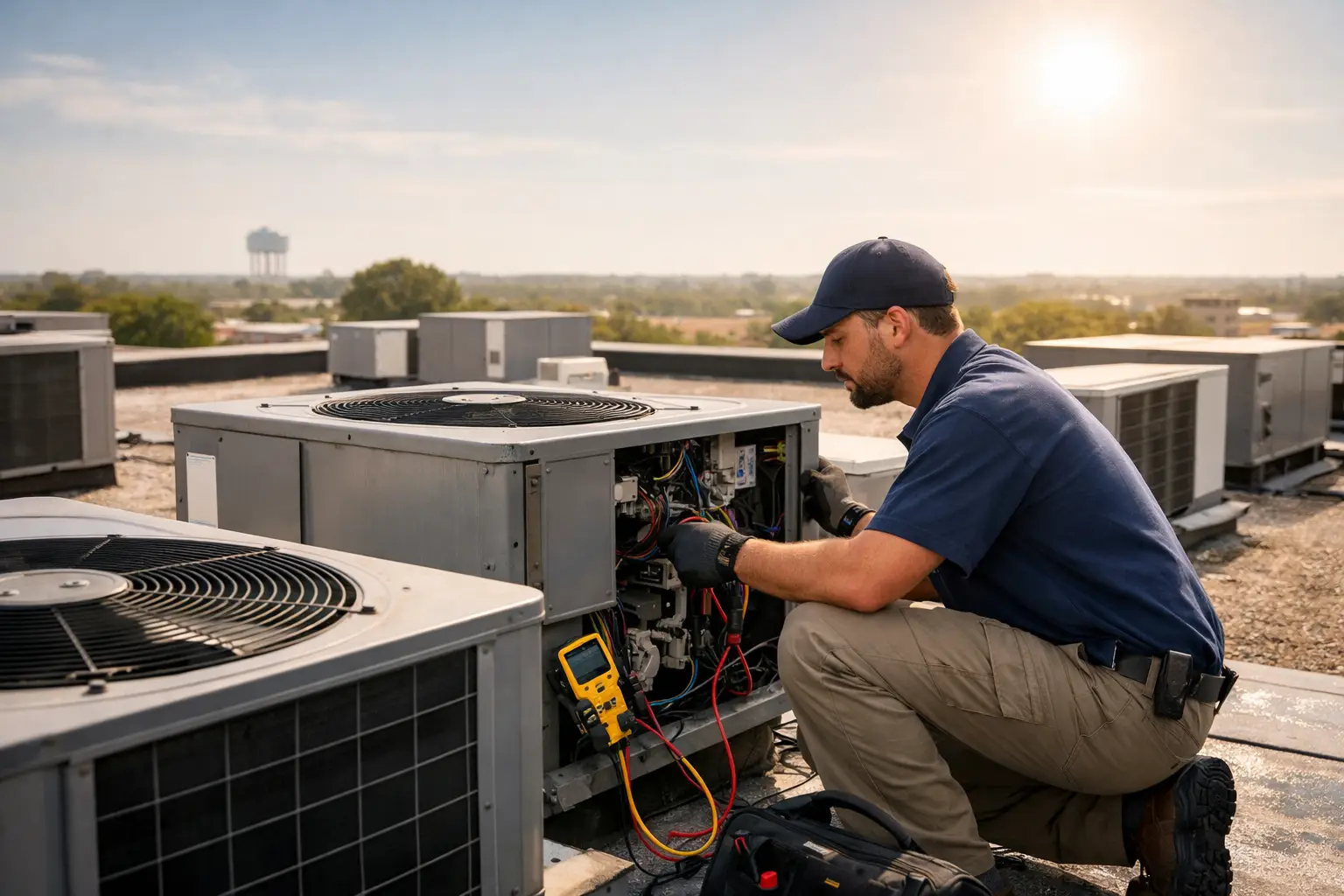
A rooftop unit can keep an entire office, retail space, restaurant, or multifamily property comfortable, but it does its work in one of the harshest places possible: the roof. In Greater Houston, intense sun, high humidity, windblown debris, storms, and long cooling seasons all add wear. Knowing how to maintain rooftop units helps facility managers prevent surprise shutdowns, protect energy efficiency, and avoid turning a small repair into an urgent replacement.
Rooftop unit maintenance is not a one-time task. It is a planned process that combines regular visual checks, safe housekeeping, filter changes, professional cleaning, electrical testing, and timely repairs. The goal is straightforward: keep air moving, heat transferring, water draining, and every safety control operating as designed.
How to Maintain Rooftop Units Before Problems Start
The most valuable maintenance work happens while the unit is still cooling and heating normally. Waiting for poor airflow, warm supply air, water leaks, or unusual noises usually means the system has already been working under stress.
For commercial properties, establish a maintenance calendar based on the equipment’s age, operating hours, building use, and the manufacturer’s requirements. A lightly used office unit may need a different schedule than a rooftop unit serving a busy restaurant, warehouse, medical office, or tenant space with extended hours. In Texas, spring service before peak cooling demand and fall service before heating season are a sensible baseline. High-use equipment may need more frequent visits.
A clear service record matters, too. Document filter changes, repairs, refrigerant findings, belt replacements, electrical readings, and recurring comfort complaints. That history helps a technician identify patterns before they become failures and gives property owners a better basis for budgeting repairs or replacement.
Keep Airflow Clear and Consistent
Restricted airflow is one of the fastest ways to reduce performance and raise operating costs. When a rooftop unit cannot move enough air across its evaporator coil, it may struggle to cool, run longer than necessary, freeze up, or put extra strain on the blower motor and compressor.
Change filters on the right schedule
Check filters monthly and replace them when they are loaded with dust or as the equipment and building conditions require. A fixed 90-day schedule is not always enough. Construction activity, heavy foot traffic, pets in mixed-use spaces, kitchen exhaust conditions, and seasonal pollen can clog filters much sooner.
Use the correct filter size and recommended MERV rating. Higher-efficiency filtration can improve indoor air quality, but an overly restrictive filter can hurt airflow if the unit was not designed for it. This is a good example of why maintenance depends on the specific equipment, not just a generic checklist.
Inspect outdoor air openings and return paths
Leaves, plastic bags, nests, loose insulation, and roof debris can block louvers, outside-air dampers, return openings, or condenser coil surfaces. Keep the area around the unit clean and preserve clear access for service. Do not stack materials against the curb or place equipment where it limits technician access.
Inside the building, report rooms with weak airflow, hot spots, or new odors. Those symptoms can point to a dirty filter, blower issue, damper problem, duct leak, thermostat concern, or a failing component that needs prompt attention.
Clean Coils and Protect Heat Transfer
Rooftop units depend on clean coils to move heat effectively. The evaporator coil absorbs heat from indoor air, while the condenser coil releases that heat outdoors. Dirt on either surface acts like insulation, forcing the system to work harder for less cooling.
Condenser coils on the roof are especially vulnerable to cottonwood, pollen, dust, grass clippings, and airborne grime. A visual inspection may show debris on the coil face, but buildup can also sit deeper between the fins. Professional coil cleaning uses appropriate methods and pressure so the fins are not bent or damaged.
Avoid spraying a rooftop unit with a high-pressure washer. That can flatten coil fins, force water into electrical components, and create more problems than it solves. Likewise, do not use harsh chemicals without confirming they are appropriate for the coil and surrounding components.
A licensed HVAC technician should inspect coil condition during preventive service, clean it when needed, and verify the unit’s operating temperatures and pressures afterward. Cleaning without testing can miss the actual reason a unit is underperforming.
Check Drainage Before Humidity Creates Damage
In cooling mode, rooftop units remove moisture from the air. That moisture must leave through the condensate drain system. A clogged drain line or pan can lead to water leaks, ceiling damage, microbial growth, and humidity problems inside the building.
During routine checks, look for standing water in the drain pan, overflow marks, algae buildup, or signs of leaking at the roof curb and drain connections. Condensate issues are often more noticeable during Houston’s humid months, when the system is running longer and pulling more moisture from the air.
Drain maintenance should include clearing the line, inspecting traps where applicable, and confirming that water drains correctly. If a unit repeatedly develops drain clogs, ask a technician to identify the cause rather than simply clearing it each time. Poor pitch, a damaged line, missing trap, or persistent debris may be contributing to the problem.
Inspect Electrical Parts, Belts, and Moving Components
Electrical failures can shut down a rooftop unit with little warning. During professional maintenance, technicians should inspect wiring, contactors, capacitors, relays, disconnects, terminals, and safety controls for wear, overheating, corrosion, or loose connections. Electrical testing is not a DIY task. Rooftop units contain high voltage components, and improper work can cause injury or equipment damage.
Belt-driven blower assemblies also need attention. Worn, cracked, loose, or overly tight belts can reduce airflow and damage bearings. A technician can check belt condition and alignment, lubricate components when the equipment calls for it, and listen for bearing or motor noise that signals a developing issue.
This is where preventive maintenance often pays for itself. Replacing a worn belt or weak capacitor during a scheduled visit is usually far less disruptive than dealing with a no-cooling call on a hot afternoon.
Verify Controls, Thermostats, and Economizers
A rooftop unit can be mechanically sound and still waste energy if its controls are not operating correctly. Thermostats, sensors, staging controls, time schedules, and building automation settings all affect comfort and runtime.
Check that the thermostat is accurate, set to a practical schedule, and located away from heat-producing equipment or direct sunlight. For commercial systems, confirm that occupied and unoccupied schedules match actual building hours. A unit running overnight in an empty space can quietly add significant operating cost.
Many commercial rooftop units use economizers to bring in outdoor air when conditions are favorable. A stuck damper, failed actuator, or inaccurate sensor can affect ventilation, humidity, comfort, and energy use. Economizer operation should be inspected by a trained professional, especially when tenants report stuffiness or inconsistent temperatures.
Treat Roof Access and Storm Checks as Safety Work
Rooftop maintenance involves fall risks, electrical hazards, moving parts, and heavy equipment. Building owners and staff can safely handle basic observations from approved access areas, but climbing onto a roof or opening electrical panels should be left to qualified personnel with the right training and safety equipment.
After major storms, arrange a visual inspection for loose panels, damaged coil guards, standing water around the curb, shifted duct connections, or debris against the unit. Storm damage is not always obvious from the ground, and small openings can allow water into electrical sections or insulation.
Keep rooftop access controlled and make sure curbs, walk pads, railings, and service clearances remain usable. Safe access helps technicians complete thorough maintenance instead of working around avoidable obstacles.
Know When to Schedule Professional Rooftop Unit Service
Call for service promptly if the unit is short cycling, making new noises, tripping breakers, leaking water, producing weak airflow, failing to hold set temperature, or causing an unusual rise in utility costs. These issues do not always mean replacement is necessary, but they do call for HVAC diagnostics before a minor fault affects larger components.
BluePeak 360 provides rooftop unit maintenance and repair for businesses and property managers throughout Magnolia and the greater Houston area. A professional visit should include more than a quick filter change. The technician should inspect the unit’s overall condition, test its operation, explain any concerns clearly, and provide transparent recommendations based on the equipment’s actual needs.
A dependable rooftop unit should not demand constant attention from your team. Give it a planned maintenance schedule, respond quickly to changes in performance, and let qualified service professionals handle the technical and safety-critical work. That approach keeps your building more comfortable when the Texas heat is at its worst.