
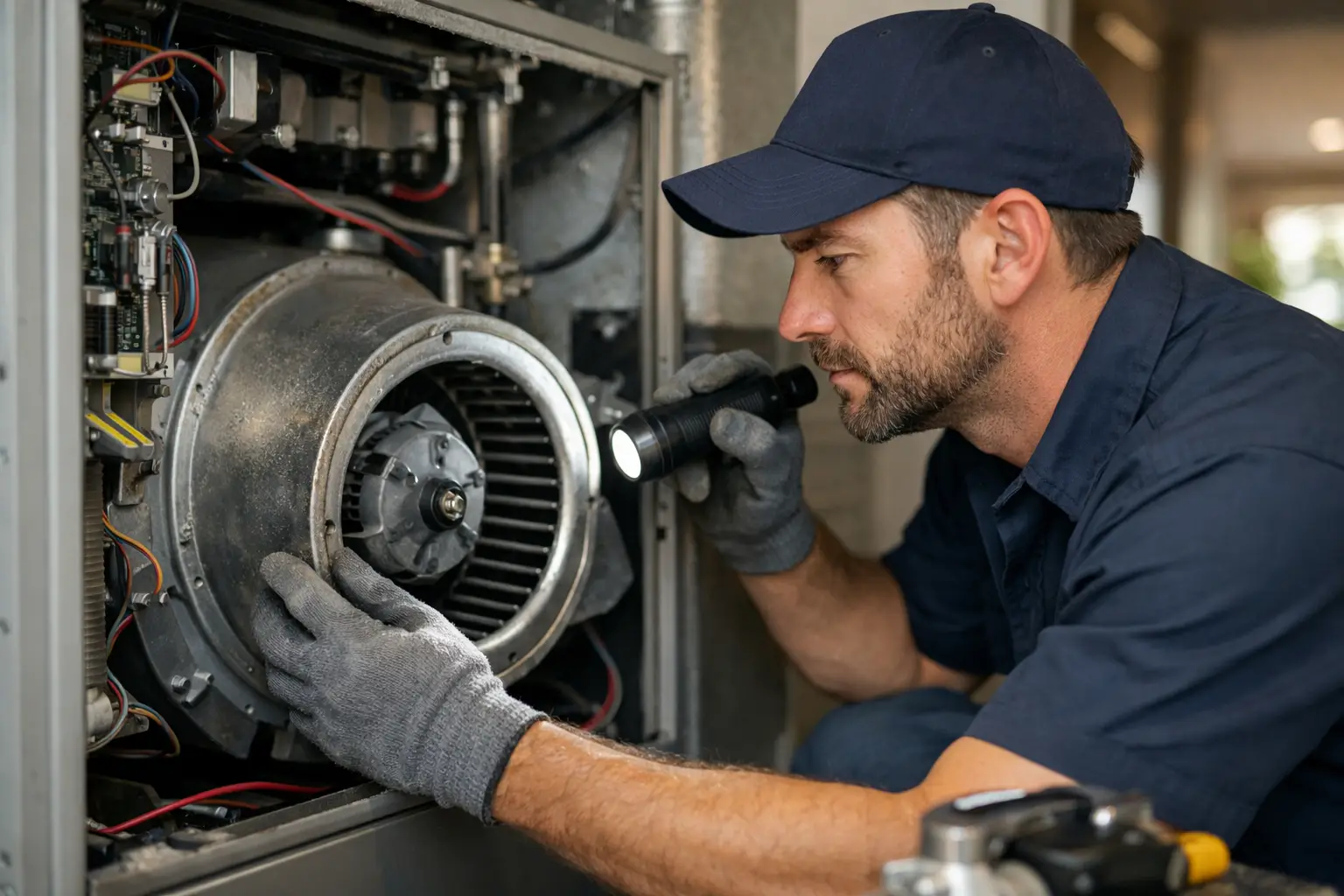
Your thermostat may say the system is running, but the rooms still feel warm, stuffy, or uneven. That frustrating mismatch is often one of the first signs blower motor failing issues can create. The blower motor is the part of your HVAC system that moves conditioned air through the ductwork. When it cannot do its job, even a healthy air conditioner or furnace cannot deliver the comfort you expect.
For homeowners and property managers, recognizing the warning signs early can prevent a minor repair from turning into a no-cooling emergency. In the Houston area, where AC systems work hard for long stretches of the year, reduced airflow deserves prompt attention.
What the blower motor does
The blower motor is typically located inside the indoor air handler or furnace cabinet. It powers a fan that pulls air through the return grille and filter, pushes it across the evaporator coil during cooling, and sends it through your supply vents.
This is different from the fan in the outdoor AC unit. A problem outside can also affect cooling, but a failing indoor blower motor usually shows up as weak airflow, inconsistent room temperatures, unusual sounds from the indoor unit, or a system that runs without moving much air.
Signs your blower motor is failing
A blower motor can fail suddenly, but it often gives clues first. Pay attention to changes in airflow, sound, electrical behavior, and system cycling.
1. Weak airflow from supply vents
Weak airflow is one of the most common symptoms. You may feel a small amount of air at nearby vents while rooms farther from the air handler receive very little. Your system may run longer than usual because cooled or heated air is not circulating effectively.
A clogged filter, blocked return vent, leaking ductwork, or a dirty evaporator coil can create similar symptoms. That is why a professional diagnosis matters. However, if the filter is clean and airflow remains weak throughout the home or building, the blower motor, capacitor, control module, or wheel may be the cause.
2. No airflow even though the system is on
If you hear the indoor unit start but no air comes through the vents, shut the system off and arrange service. A completely failed motor is one possibility. A failed capacitor, loose electrical connection, damaged relay, or safety switch issue can also prevent the blower from starting.
Do not keep restarting the equipment in hopes that it will catch. Repeated attempts can strain electrical components, and continued operation without adequate airflow can contribute to coil freeze-ups or overheating.
3. Loud rattling, screeching, or grinding
Your HVAC system should make a steady, familiar sound when it starts and runs. Rattling can point to a loose blower wheel or mounting hardware. Squealing or screeching may indicate worn bearings or a belt issue on some older systems. Grinding is a more serious warning that the motor bearings may be failing.
A brief sound at startup does not always mean the motor is at the end of its life, but a new or worsening noise should not be ignored. Turn the system off if the sound is severe, especially if it comes with a burning odor or reduced airflow.
4. Burning or electrical smells
A hot, dusty smell can occur when a heater is first used after a long break. But a persistent burning, acrid, or electrical odor is different. An overheating blower motor, failing capacitor, damaged wiring, or debris contacting the motor can create that smell.
Treat electrical odors as a safety concern. Shut off the HVAC system at the thermostat and, if necessary, the breaker. Then have a licensed HVAC technician inspect the equipment before running it again.
5. The blower runs intermittently
Does the airflow come and go? Does the blower start only after several attempts, or stop before the thermostat reaches the set temperature? Intermittent performance can signal an aging motor, a weak capacitor, a failing blower control board, or an electrical connection problem.
This symptom may be especially noticeable during the hottest part of the afternoon, when the system is under the greatest load. Waiting for an intermittent issue to become a full failure can leave a home, tenant space, or business without cooling when service demand is highest.
6. Higher utility bills without a clear reason
When a blower motor struggles to turn the fan at the proper speed, your HVAC system may run longer to meet the thermostat setting. That longer runtime can increase electricity use while comfort declines.
Higher bills alone do not prove a blower motor failure. Poor insulation, duct leaks, refrigerant issues, dirty coils, and an aging AC system can all affect efficiency. Still, a sudden cost increase paired with weak airflow is a good reason to schedule diagnostics.
7. Your system overheats or freezes up
During heating season, inadequate airflow can cause a furnace to overheat and trip a safety limit switch. The burners may shut down while the blower continues, or the system may cycle repeatedly without heating the home properly.
During cooling season, low airflow across the evaporator coil can allow the coil to freeze. You may notice ice on refrigerant lines, water around the indoor unit after thawing, or warm air from vents. Turn the cooling system off if you see ice. Running it harder will not solve the problem and may increase the risk of equipment damage.
8. The blower keeps running after the system stops
A blower that never shuts off is not always a failed motor. First, check whether the thermostat fan setting is switched from “Auto” to “On.” When set to On, the blower is designed to run continuously.
If the setting is on Auto and the fan still runs long after the cooling or heating cycle ends, the issue could involve the blower relay, control board, thermostat wiring, or motor module. Continuous operation adds wear and can make indoor humidity harder to control during a Texas summer.
What you can check safely before calling
A few simple checks can help rule out common airflow problems. Make sure the thermostat is set correctly and the fan is on Auto. Check the air filter and replace it if it is visibly dirty or overdue for replacement. Confirm that return grilles and supply vents are open and not blocked by furniture, rugs, boxes, or equipment.
After that, avoid opening electrical panels or attempting to test capacitors and wiring yourself. HVAC motors can involve high voltage, stored electrical charge, and components that are easy to misdiagnose. If you notice burning smells, grinding, repeated breaker trips, ice, or no airflow, turn the system off and request service.
Repair or replacement: what determines the right answer?
The right solution depends on what failed and the age of the system. A capacitor, relay, loose connection, or blower wheel repair may be relatively straightforward. A worn motor can often be replaced, particularly when the rest of the HVAC equipment is in good condition.
For older equipment with multiple recurring issues, it may make more financial sense to discuss a broader repair-versus-replacement decision. Variable-speed blower motors can improve comfort and efficiency, but their replacement cost can be higher than that of a standard single-speed motor. A technician should explain the diagnosis, available options, expected cost, and whether the repair addresses the underlying issue.
For commercial properties, the same principle applies, but downtime can affect staff, customers, tenants, and equipment. Prompt inspection is often the least disruptive choice when a rooftop unit or air handler begins showing airflow problems.
Preventing blower motor trouble
No maintenance plan can prevent every component failure, but routine service reduces avoidable strain. Clean filters on schedule, keep return openings clear, and schedule seasonal HVAC maintenance. During a maintenance visit, technicians can inspect electrical connections, measure motor performance, check the blower wheel, and identify restricted airflow before it becomes a breakdown.
If your system is making new noises, blowing weakly, or failing to keep up, BluePeak 360 can provide clear HVAC diagnostics and straightforward repair recommendations. Acting while the system is still operating may give you more options and help protect your comfort when the next Texas heat wave arrives.