
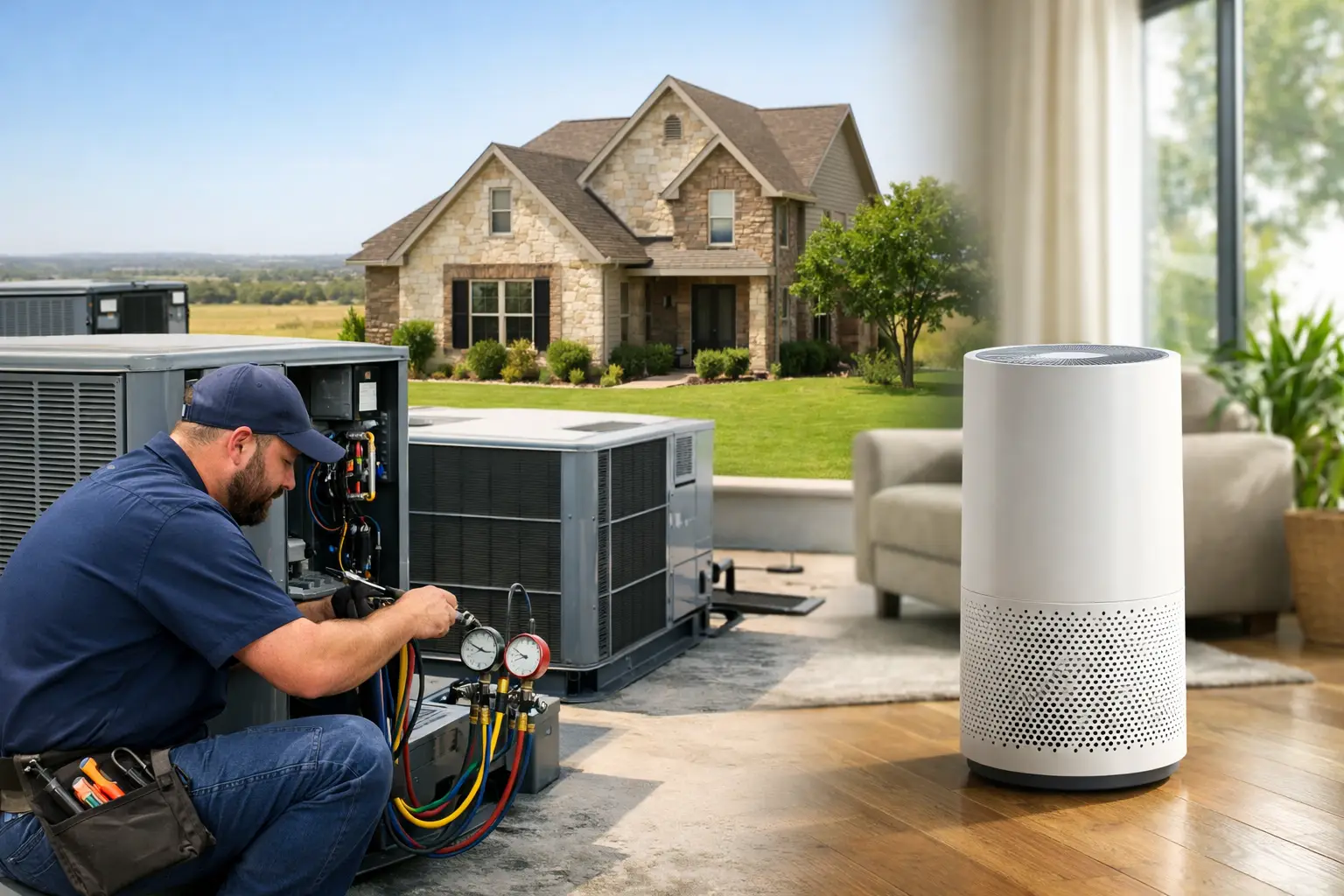
A home can feel cool and still have unhealthy indoor air. If dust returns a day after cleaning, rooms smell musty, allergies worsen indoors, or humidity makes everything feel sticky, your HVAC system may be part of the problem. This air quality improvement guide explains the practical steps homeowners, property managers, and business owners can take to improve the air moving through their spaces.
In Magnolia, The Woodlands, Houston, and nearby communities, air quality is closely tied to long cooling seasons and high outdoor humidity. The goal is not to eliminate every particle from the air. It is to control the contaminants, moisture, and ventilation issues that make a building less comfortable and harder on its HVAC equipment.
Start With What Is Affecting Your Air
Indoor air problems usually come from a combination of sources rather than one obvious cause. Common contributors include dust and pet dander, outdoor pollen, cleaning chemicals, cooking particles, mold spores, smoke, and moisture. A dirty HVAC system can circulate some of those pollutants from room to room, but it is rarely the only source.
Pay attention to patterns. A stale odor that appears when the AC starts may point to moisture near the evaporator coil or drain system. Dust collecting near supply vents can mean the filter is overloaded, ductwork is leaking, or return air is pulling particles from an attic or crawlspace. Condensation on windows, peeling paint, and clammy rooms are signs that indoor humidity needs attention.
For commercial properties, complaints from employees or tenants are useful evidence. If one area consistently feels stuffy, smells unusual, or causes comfort concerns, the issue may involve airflow balance, ventilation, filtration, or equipment performance in that zone.
Use the Right Filter and Replace It on Schedule
A clean, properly sized air filter is one of the simplest air quality improvements available. It captures particles before they build up on the blower, coil, and duct system. It also protects the equipment that keeps your home or business cool through a Texas summer.
Filter selection is a trade-off. Higher-efficiency filters can capture smaller particles, including more pollen, dust, and pet dander. But a filter that is too restrictive for the system can reduce airflow, strain the blower, and contribute to frozen coils or uneven cooling. The best choice depends on your equipment, household needs, and whether anyone has allergies, asthma, or other respiratory sensitivities.
Most standard 1-inch filters should be checked monthly and often replaced every one to three months. Homes with pets, construction nearby, frequent door traffic, or heavy AC use may need more frequent changes. Commercial systems may use different filter types and replacement intervals, so maintenance should follow the equipment design and occupancy level.
Do not judge a filter by appearance alone. If airflow seems weaker, rooms are taking longer to cool, or the filter has been in place through a long stretch of high use, replacing it is usually a smart first step.
Control Humidity Before It Becomes a Mold Problem
Houston-area humidity can make indoor air feel uncomfortable even when the thermostat is set correctly. Ideally, indoor relative humidity should generally stay between 30% and 50%. When it remains above that range, dust mites and mold are more likely to thrive, and occupants may notice musty odors or a damp feeling in the air.
Your air conditioner removes moisture as it cools, but it must be correctly sized, properly maintained, and run long enough to do that job. An oversized system can cool the space quickly and shut off before removing enough humidity. A system with a dirty coil, clogged drain, refrigerant issue, or poor airflow may also struggle to manage moisture.
Start by confirming that bathroom and kitchen exhaust fans vent outdoors and are used consistently. Repair plumbing leaks promptly, especially under sinks, near water heaters, and around roof penetrations. Keep the condensate drain line clear, because standing water in the drain pan or line can lead to odors, overflow damage, and biological growth.
If humidity stays high despite normal AC operation, a whole-home dehumidifier may be worth evaluating. This is particularly helpful in homes with persistent moisture concerns, large families, or rooms that never seem to feel dry. For businesses, moisture control can protect inventory, finishes, and occupant comfort while reducing the risk of mold-related disruptions.
Keep HVAC Components Clean and Draining Properly
The air handler is not just a box that pushes air. Its filter, blower, evaporator coil, drain pan, and drain line all affect airflow and indoor conditions. When these components are neglected, cooling efficiency and air quality can both suffer.
A maintenance visit should include more than changing a filter. A qualified technician can inspect the coil for buildup, check the condensate system, verify airflow, look for signs of duct leakage, and identify issues that could be circulating moisture or contaminants. This preventive work is often less disruptive and less expensive than waiting for an odor, water leak, or breakdown during peak heat.
Avoid spraying fragrances or household disinfectants into vents to mask a problem. They may cover an odor temporarily, but they do not correct the source. If you smell mildew, burning, sewage, or a strong chemical odor when the system runs, turn off the equipment if necessary and arrange a professional inspection. Burning odors and suspected gas leaks require immediate attention.
Improve Ventilation Without Inviting More Humidity Inside
Fresh outdoor air can dilute indoor pollutants, but ventilation in Southeast Texas has to be managed carefully. Opening windows on a mild day can be pleasant. Leaving them open during a humid afternoon may bring in moisture, pollen, and outdoor pollutants that make the indoor environment worse.
Mechanical ventilation is often the better long-term solution, especially in newer, tightly sealed homes and commercial buildings. Exhaust fans remove moisture and odors at the source. Fresh-air ventilation equipment can introduce controlled outdoor air, while systems such as energy recovery ventilators may help limit the energy penalty associated with cooling and dehumidifying that air.
The right approach depends on the building. A small older home with leaky ductwork has different needs than a tightly constructed home or an office with many occupants. An HVAC assessment can identify whether the priority is better exhaust, controlled fresh air, duct repair, humidity management, or a combination of these measures.
Consider Air Cleaners for Specific Needs
Portable air purifiers and whole-home air cleaning equipment can be useful additions, but they should not replace basic maintenance. Their value depends on the pollutant you are trying to address and the size of the space.
For particles such as dust, pollen, smoke, and pet dander, filtration is usually the focus. A portable unit should be sized for the room where people spend the most time, such as a bedroom, nursery, office, or conference room. Whole-home solutions work through the HVAC system and may be a better fit for households with widespread allergy concerns or facilities that need consistent coverage.
Odors and certain gases require a different approach. Activated carbon can help with some odor and volatile organic compound concerns, but source control matters more. If cleaning products, smoke, new furnishings, or a garage connection are creating odors, remove or reduce the source whenever possible.
Be cautious with devices that intentionally produce ozone. Ozone can irritate the lungs, particularly for people with asthma or respiratory conditions. Ask what a proposed air-quality product does, what it targets, how it is installed, and what maintenance it requires before making a decision.
Do Not Ignore Duct Leaks and Dirty Return Areas
Leaky ducts can pull hot, dusty attic air into the system or send cooled air into spaces where it does no good. Leaks near return ducts are especially concerning because they can draw unfiltered air into the HVAC equipment. That can increase dust indoors, reduce comfort, and raise energy use.
Duct cleaning is not automatically needed for every property. It may be reasonable after major remodeling, pest activity, visible mold concerns that have been properly evaluated, or excessive debris in the duct system. However, cleaning ducts without fixing moisture, leaks, poor filtration, or source contamination often produces short-lived results.
A better first step is to have the return side, duct connections, insulation, and accessible ductwork inspected. Sealing leaks and correcting airflow problems can improve both system performance and the cleanliness of the air being delivered.
Build Better Daily Habits Around the HVAC System
Small habits make a noticeable difference over time. Vacuum with a HEPA-equipped vacuum when possible, wash bedding regularly, use kitchen exhaust while cooking, and keep supply and return vents unobstructed. Store paint, fuel, pesticides, and strong chemicals outside the living or occupied space whenever possible.
For property managers and business owners, establish a clear filter-change schedule and document maintenance. Promptly investigate water stains, recurring odors, and tenant reports of uneven comfort. These are often early warnings of an HVAC, drainage, or building-envelope issue.
If you have concerns about carbon monoxide, install properly placed carbon monoxide alarms and have fuel-burning equipment inspected. Carbon monoxide is odorless and cannot be identified by how the air feels. This is a safety issue, not a comfort issue.
When to Call an HVAC Professional
Schedule an inspection when humidity stays high, odors return after cleaning, airflow is weak, allergy symptoms are worse indoors, or the system produces water around the air handler. Call sooner if you see visible mold near HVAC components, suspect a gas or electrical issue, or have an AC system that is not cooling reliably.
BluePeak 360 can evaluate the HVAC conditions that affect comfort and indoor air quality, from filtration and drainage to airflow, equipment performance, and air-quality upgrades. A clear diagnosis gives you a better path forward than guessing at products or repeatedly treating the symptoms.
Cleaner indoor air is usually built through steady maintenance and targeted corrections, not a single device. Start with the filter, humidity, drainage, and airflow, then make upgrades based on what your building actually needs.