
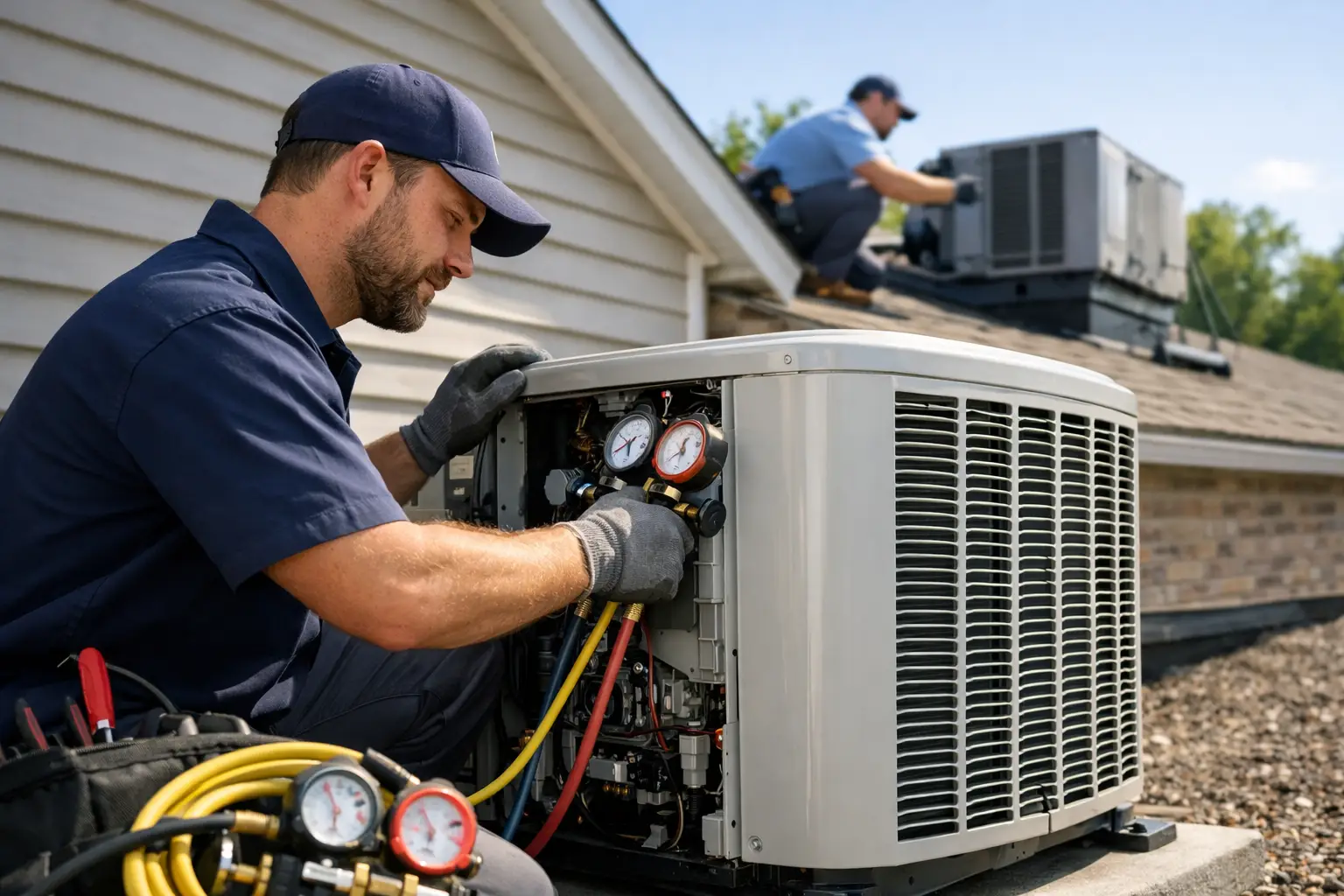
The first 90-degree day in Texas has a way of exposing every AC problem at once. A system that seemed fine in spring can suddenly start blowing warm air, running nonstop, or driving up your electric bill. If you’re wondering how to prepare AC for summer, the best time is before the heat settles in and your system has to work at full capacity.
A little preparation can prevent a lot of frustration. It can also help you catch small issues early, when they are usually easier and less expensive to fix. For homeowners, that means better comfort and fewer surprise repairs. For commercial properties, it means fewer tenant complaints, less downtime, and better control over operating costs.
How to prepare AC for summer before temperatures spike
Start with the air filter. This is the easiest step, and it makes a bigger difference than many people expect. A dirty filter restricts airflow, which forces your system to run longer and puts extra strain on components. If the filter is clogged enough, it can even contribute to frozen coils or uneven cooling.
Check the filter size and replacement schedule recommended for your system. Some homes need a new filter every 30 days, especially if there are pets, construction dust, or allergy concerns. Others can go longer. The key is not guessing. Pull it out, inspect it, and replace it if it looks dirty.
Next, look at the thermostat settings. Make sure the system is set to cool, the temperature is accurate, and the schedule matches your household or business hours. If you have an older manual thermostat, summer may be a good time to upgrade to a programmable or smart model. Better scheduling can reduce unnecessary runtime, but it only helps if the thermostat is reading correctly and communicating properly with the system.
Then walk outside to the condenser unit. Leaves, weeds, grass clippings, and debris often build up around it during the off-season. Clear at least two feet of space around the unit so it can breathe. If airflow around the condenser is blocked, heat transfer suffers, and your AC has to work harder than it should.
You can also inspect the condenser fins for visible dirt buildup. A light rinse with a garden hose can help remove surface debris, but avoid using high pressure because it can bend the fins. If the unit looks heavily soiled or damaged, a professional cleaning is the safer move.
Check the parts homeowners and managers often miss
Summer AC prep is not just about what you can see from the yard or hallway. Some of the most common early-season issues come from overlooked components inside the system.
Your condensate drain line is one of them. As the AC removes humidity from indoor air, that moisture has to drain away properly. If the line is clogged, water can back up and trigger a safety shutoff or cause leaks around the indoor unit. In a humid climate, that is more than an inconvenience. It can lead to water damage and indoor air quality problems.
The evaporator coil also matters, even though most people never see it. When airflow is poor or dust gets past the filter, the coil can get dirty. That reduces efficiency and cooling performance. Cleaning an evaporator coil is not usually a DIY job, especially if access is limited or the buildup is significant.
Electrical connections deserve attention too. Loose wires, worn contactors, and aging capacitors may not show obvious signs until the first serious heat wave. Then the system struggles to start, short cycles, or stops cooling entirely. This is one reason a professional inspection before summer is worth considering. It is not just maintenance for maintenance’s sake. It is a chance to spot weak points before they fail under pressure.
How to tell if your AC is not ready for summer
Some systems need more than a basic tune-up. If your AC has already been sending warning signs, summer prep should include a closer evaluation.
Watch for weak airflow at the vents, uneven temperatures from room to room, unusual noises, or an AC that runs for long periods without reaching the set temperature. A spike in utility bills can be another clue, especially if your usage habits have not changed. These symptoms do not always mean major repairs are needed, but they do mean the system is not operating as efficiently as it should.
Age matters here too. If your system is more than 10 to 15 years old, it may still cool the space, but that does not mean it is ready for another high-demand season without service. Older units often lose efficiency gradually, so the decline is easy to miss until summer arrives and the gaps become obvious.
For commercial systems, the warning signs can look a little different. Hot and cold zones, inconsistent office comfort, humidity complaints, and rooftop units that struggle in the afternoon heat are all signs that service should happen before occupancy and temperature demands increase. Waiting until the system fails can disrupt business operations fast.
A professional AC tune-up does more than basic cleaning
If you want the most reliable answer to how to prepare AC for summer, schedule a seasonal inspection and tune-up. A qualified HVAC technician can test the system in ways a quick visual check cannot.
A proper service visit typically includes checking refrigerant levels, measuring airflow, inspecting electrical components, cleaning key parts, testing thermostat operation, and confirming the system is cycling correctly. The technician can also identify worn components that may still be functioning but are close to failure.
This is where experience matters. An AC can technically turn on and still be underperforming. It might be cooling, but not cooling efficiently. It might be maintaining temperature, but only by running longer than necessary. A tune-up helps separate normal operation from hidden strain.
For property managers and business owners, preventive service is even more valuable when multiple systems are involved. One neglected unit can create comfort complaints, maintenance headaches, and higher energy costs across the property. Routine inspections give you better control over timing and budgeting.
When repairs make sense and when replacement is smarter
Summer prep sometimes uncovers bigger decisions. If your system needs a minor part, coil cleaning, or thermostat correction, repair is usually straightforward. But if the unit is older, breaking down often, or using outdated refrigerant, replacement may be the better long-term move.
This is where honesty matters. Not every older system needs to be replaced immediately, and not every repair is worth making. It depends on the age of the equipment, the repair cost, the system’s efficiency, and how dependable it has been. If a major repair is approaching the cost of a significant down payment on a new unit, it is reasonable to compare both options carefully.
High-efficiency systems can lower monthly cooling costs, but the savings depend on your building, insulation, duct condition, and how long you plan to stay in the property. A newer unit is not a magic fix for every comfort issue. If ductwork leaks, airflow is poor, or the thermostat is in the wrong location, those problems need attention too.
Don’t forget airflow inside the building
A prepared AC system still needs a building that supports good airflow. Closed or blocked vents, dirty return grilles, and furniture pushed against registers can limit performance. In homes, that often shows up as one bedroom that never gets cool enough. In commercial spaces, it can mean conference rooms or storefront areas that stay uncomfortable during business hours.
Ceiling fans can help reduce the load on your AC by improving air circulation, but they do not lower room temperature on their own. They help people feel cooler, which can allow for a slightly higher thermostat setting. Good insulation and sealed windows also matter more than many people realize, especially during long stretches of extreme heat.
If your AC seems to be working hard but comfort still falls short, the issue may not be the equipment alone. Sometimes the smartest summer prep is a broader look at the entire cooling setup.
Make summer prep part of your routine
The best time to prepare your AC is before you need emergency service. In areas like Magnolia, The Woodlands, Spring, Tomball, Conroe, and Houston, that window can close quickly once temperatures rise. Scheduling maintenance early gives you more flexibility and a better chance to address problems before the busiest part of the season.
If you handle the basics yourself, start with the filter, thermostat, vents, and outdoor unit. If your system is older, showing warning signs, or cooling a larger home or commercial property, a professional inspection is the safer call. BluePeak 360 works with both residential and commercial customers who want reliable cooling without the guesswork.
Summer is hard enough on an AC system without asking it to start the season already behind. A little attention now can mean steadier comfort, lower stress, and fewer surprises when the heat is not giving anyone a break.