
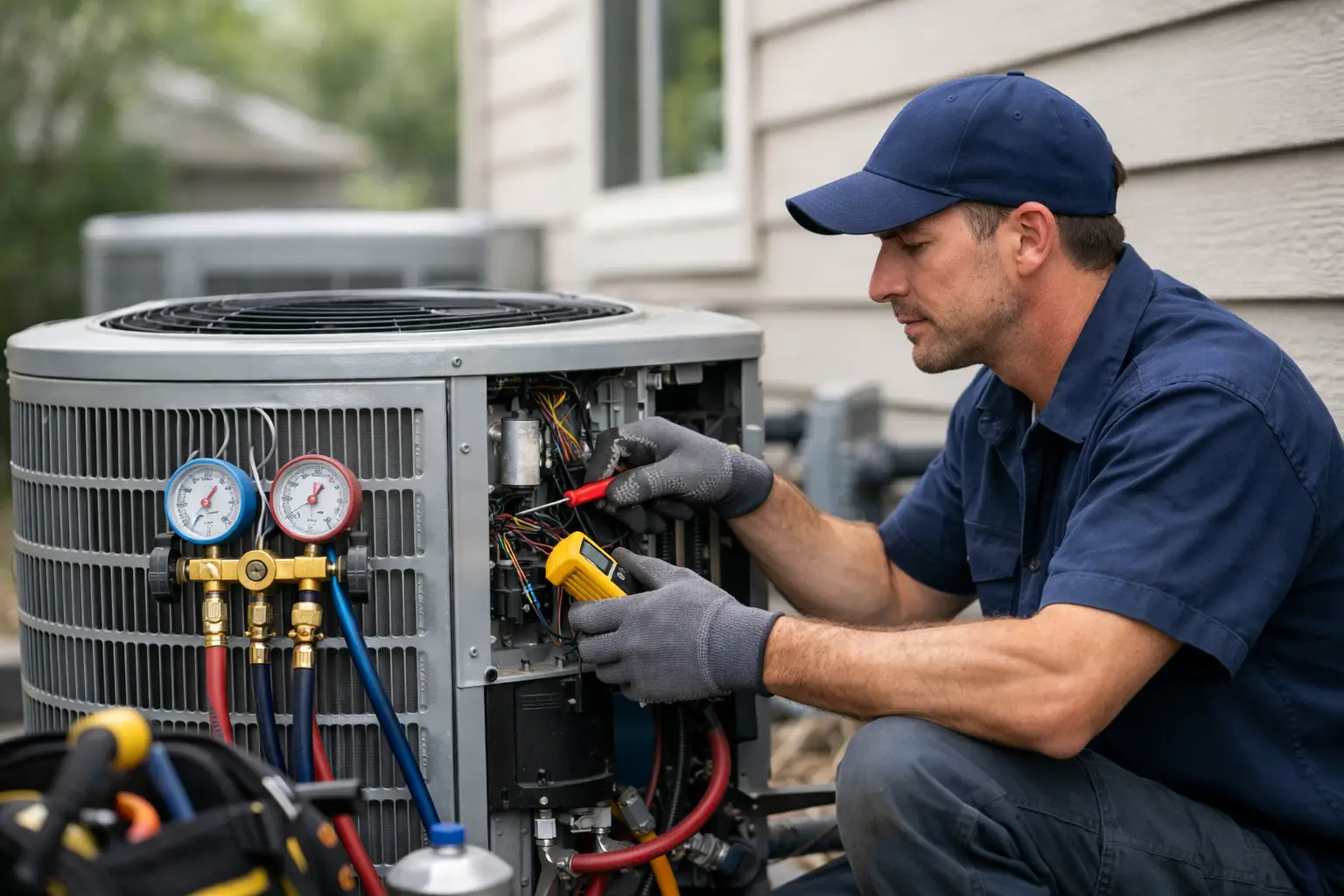
When your system quits on a 95-degree Texas afternoon, ac repair stops being a chore on your list and becomes the only thing that matters. The real question is not just how fast you can get cool air back. It is whether the problem is being diagnosed correctly, repaired safely, and fixed in a way that protects the rest of the system.
That matters because air conditioners rarely fail all at once without warning. In many homes and commercial buildings, there are signs for days or even weeks before a full breakdown. Weak airflow, odd sounds, higher utility bills, warm spots, short cycling, or a thermostat that never seems to hit the set temperature all point to trouble. Catching those signs early can mean the difference between a straightforward service call and a much more expensive repair.
What ac repair usually involves
A lot of people use the term ac repair to describe any cooling problem, but the actual work can range from simple to complex. Sometimes the issue is a failed capacitor, a clogged drain line, a dirty condenser coil, or a thermostat problem. Those repairs are often manageable when found early and handled by a qualified technician.
Other times, the problem goes deeper. A refrigerant leak, blower motor failure, damaged contactor, frozen evaporator coil, or compressor issue can affect system performance in a bigger way. In commercial properties, rooftop units add another layer of complexity because access, controls, and multiple zones can all influence the diagnosis.
This is why good repair work starts with diagnostics, not guesswork. Replacing parts without confirming the actual cause can waste time and money. A dependable HVAC contractor should test components, verify electrical performance, inspect airflow, and check whether one failure may have caused stress somewhere else in the system.
Signs you should schedule ac repair now
Some cooling issues can wait a day or two. Others should not. If your system is blowing warm air, tripping breakers, leaking water indoors, making grinding or buzzing noises, or turning on and off every few minutes, it is smart to get service scheduled quickly.
There are also quieter warning signs that homeowners and property managers sometimes ignore. If one room stays hot while the rest of the building feels comfortable, the issue might be airflow, duct leakage, zoning, or an equipment problem beginning to show itself. If humidity indoors suddenly feels worse, your AC may still be running but not removing moisture the way it should. That often signals reduced performance, not normal summer conditions.
For businesses, the timing matters even more. A struggling unit can affect staff comfort, customer experience, equipment performance, and tenant satisfaction long before it stops working completely. Fast response is not just convenient in those situations. It protects operations.
Why air conditioners break down
In the Houston-area climate, AC systems work hard for long stretches of the year. Heat, humidity, long run times, and heavy demand all add wear. Even a well-installed system will need service over time.
The most common causes are not always dramatic. Dirty filters restrict airflow and can contribute to frozen coils. Electrical parts wear out from repeated cycling. Condensate drains clog. Outdoor units collect debris that reduces heat transfer. Low refrigerant from a leak causes poor cooling and can damage the compressor if left alone.
Age also plays a role, but older does not always mean beyond repair. A ten-year-old system with a minor electrical issue may still have plenty of useful life. On the other hand, a newer system that was oversized, poorly maintained, or installed incorrectly may develop recurring problems much sooner than expected. That is why the answer is rarely one-size-fits-all.
Should you repair or replace?
This is one of the most common questions in HVAC, and the honest answer is that it depends on the condition of the system, not just the age. A trustworthy contractor should walk you through both options clearly.
If the repair is modest, the equipment is otherwise reliable, and energy bills have stayed reasonable, repair often makes sense. If the system needs major component replacement, uses outdated refrigerant, breaks down repeatedly, or struggles to keep up even after service, replacement may be the better long-term value.
For commercial properties, the calculation can include downtime, tenant expectations, and operating costs. For homeowners, it often comes down to comfort, reliability, and whether you want to keep putting money into a system that may continue to fail during peak season.
The key is transparency. You should know what failed, what the repair includes, what it will cost, and whether there are broader concerns that could affect performance later.
What to expect from a professional ac repair visit
A professional service call should feel organized from the start. Clear scheduling, arrival communication, and a technician who explains what they are seeing all matter. When your AC is down, you do not want vague answers or pressure. You want clarity.
During the visit, the technician should inspect the system as a whole, not just the loudest symptom. That includes checking thermostat operation, electrical components, refrigerant pressures when appropriate, condensate drainage, airflow, coils, motors, and overall system performance. In many cases, the visible problem is only part of the story.
Once the issue is identified, the repair recommendation should be straightforward. You should understand whether the fix restores full performance, whether additional wear is present, and whether the repair is urgent or preventative. Transparent pricing is part of that experience. Nobody likes surprise charges, especially during an emergency call.
Licensed and insured service also matters more than many people realize. Air conditioning systems combine electricity, refrigerant, drainage, and moving mechanical parts. A poor repair can create safety issues, shorten equipment life, and lead to repeat failures that cost more than getting the job done right the first time.
A few problems you should not try to fix yourself
There is nothing wrong with checking the thermostat setting, replacing a dirty filter, or making sure the breaker has not tripped. Those are reasonable first steps. But beyond that, DIY ac repair can go sideways quickly.
Refrigerant handling requires proper licensing and equipment. Electrical diagnosis involves live components. Opening the wrong panel or replacing the wrong part can create bigger problems than the original failure. Even something that seems simple, like a frozen coil, is usually a symptom rather than the root cause.
If your system is not cooling properly, the best move is often to shut it down before more damage occurs and call a qualified HVAC technician. That is especially true if you smell burning, hear metal-on-metal noise, or see water collecting where it should not.
How maintenance reduces repair calls
Most people do not think about their AC until it stops. That is understandable, but preventive maintenance is still one of the best ways to reduce repair frequency and improve efficiency.
Routine service helps catch worn electrical parts, drainage problems, airflow restrictions, coil buildup, and refrigerant issues before they become mid-season emergencies. It also gives you a clearer picture of system health, which helps with budgeting and planning. For commercial buildings, maintenance is even more valuable because it lowers the risk of disruptions during business hours.
Not every repair can be prevented. Parts wear out. Storms happen. Systems age. But regular inspection and cleaning give your equipment a better chance of making it through the hottest months without surprise failures.
Choosing the right HVAC company for ac repair
When the house is hot or a business is losing comfort fast, it is tempting to call the first number you find. But service quality matters. You want a contractor who responds quickly, diagnoses accurately, communicates clearly, and stands behind the work.
Look for licensed and insured technicians, straightforward pricing, and experience with both standard residential systems and more complex commercial equipment if that applies to your property. Ask whether emergency service is available. Ask what the technician will inspect. Ask whether repair and replacement options will both be explained if the issue turns out to be bigger than expected.
In Magnolia, The Woodlands, Spring, Tomball, Conroe, Houston, and nearby communities, fast response matters because the climate does not give cooling systems much room for error. BluePeak 360 approaches ac repair the way it should be handled – with urgency, technical accuracy, and a clear explanation of what your system needs.
If your AC is showing signs of trouble, waiting usually does not make the fix easier or cheaper. A prompt diagnosis today can save you from a full breakdown tomorrow, and that is often the smartest repair decision you can make.