
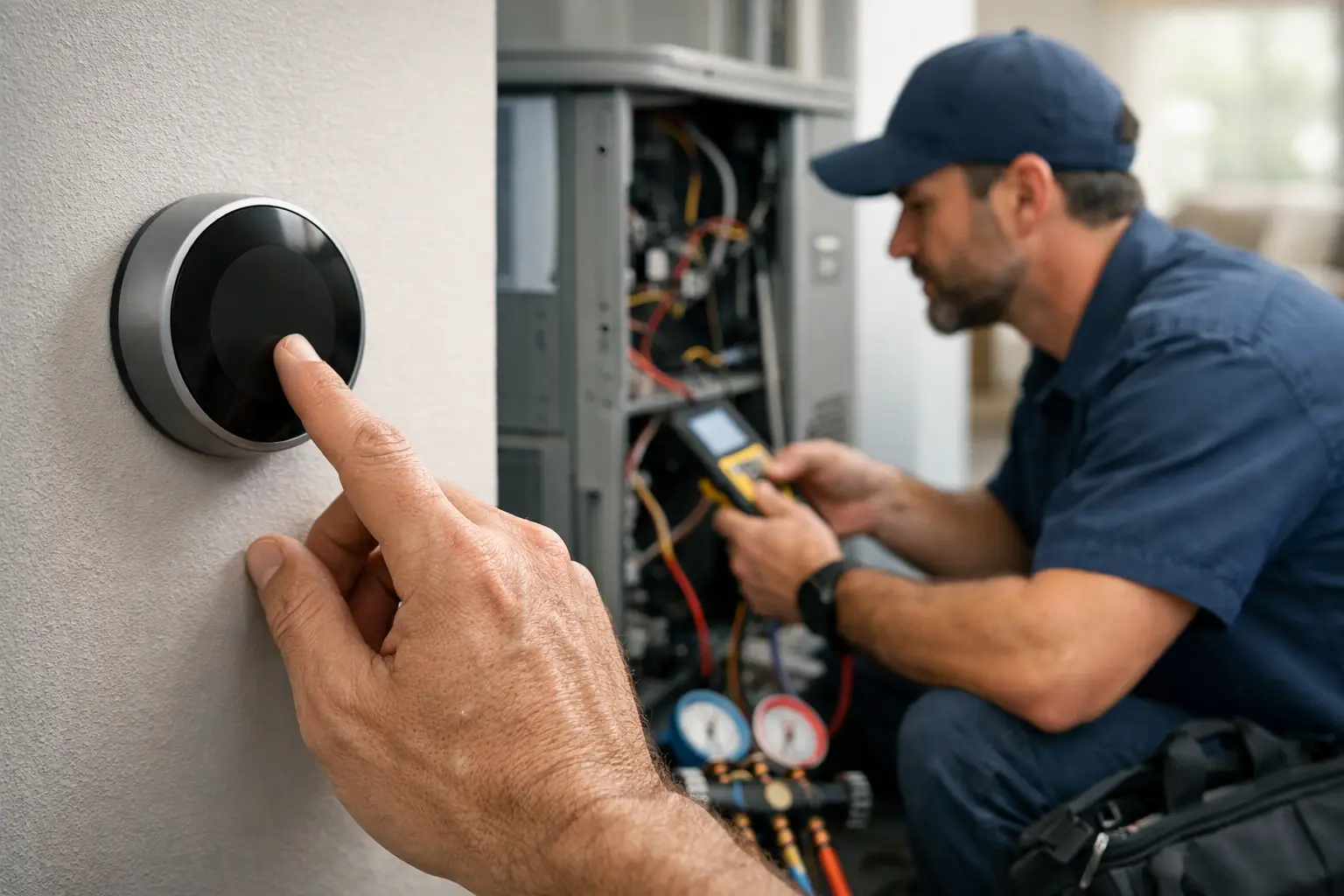
You notice the house getting warmer, walk over to the wall, and the screen is blank or the settings do nothing. When the thermostat not working ac not turning on problem shows up in Texas heat, it does not take long for a small issue to turn into a major comfort problem.
The good news is that this symptom does not always mean you need a full system replacement. Sometimes the fix is simple, like dead batteries or a tripped breaker. Other times, the thermostat is only the first sign of a larger electrical or system control issue. Knowing the difference can save time, prevent damage, and help you decide when it is safe to troubleshoot and when it is time to bring in a licensed HVAC technician.
Why a thermostat problem can stop the AC completely
Your thermostat is the control center for the cooling system. It tells the air conditioner when to start, when to stop, and what temperature to maintain. If the thermostat loses power, has bad wiring, misreads room temperature, or fails internally, the AC may never get the signal to run.
That said, the thermostat is not always the true cause. An air conditioner can also stay off because of a blown fuse, float switch shutdown, breaker issue, transformer failure, or safety control triggered somewhere else in the system. That is why a thermostat not working, AC not turning on situation needs a little methodical troubleshooting instead of guesswork.
Start with the thermostat itself
If the display is blank, first check the simplest possibility – power. Many thermostats use batteries even when they are wired into the home. Replace the batteries with fresh ones and see if the display returns. If it does, reset your cooling mode, lower the set temperature, and wait a few minutes.
If the thermostat has power but the AC still does not respond, make sure it is actually set to Cool and not Heat, Off, or Fan Only. Then set the temperature at least 3 to 5 degrees below the current room temperature. Some thermostats also have a built-in delay that prevents the system from restarting immediately, so a short wait is normal.
Check for programming issues too. Smart thermostats and programmable models can create confusion if schedules were changed, vacation mode was activated, or the device lost its Wi-Fi settings after a power interruption. In some cases, a reset helps. In other cases, the thermostat appears functional but still fails to call for cooling because the internal controls have gone bad.
Signs the thermostat itself may be failing
A thermostat can look fine on the wall and still be the problem. You may notice the screen flickering, settings changing on their own, inaccurate room temperature readings, or an AC system that starts and stops at the wrong times. Older thermostats can also lose calibration over time.
If the thermostat is loose, crooked, or warm from direct sunlight, that can affect how it reads indoor temperature. Placement matters more than many people realize. A thermostat near a window, kitchen, or supply vent may think the house is cooler or warmer than it really is.
Check the electrical side before assuming the AC is broken
If your thermostat is not working and the AC is not turning on, the next place to look is the electrical panel. A tripped breaker can cut power to the indoor unit, the outdoor condenser, or both. Reset it once if needed, but if it trips again, stop there. Repeated breaker trips usually point to a deeper electrical or mechanical problem that needs professional diagnosis.
You should also check the emergency shut-off switch near the indoor air handler or furnace, if your system has one. These switches can be bumped accidentally during cleaning or storage. If the indoor unit has no power, the thermostat may stop working or fail to control the system properly.
In many homes and commercial properties, a low-voltage issue is also possible. HVAC systems rely on a transformer to step power down for the thermostat and control board. If that transformer fails, the thermostat may go blank and the AC will not start. This is not usually a DIY repair because testing low-voltage components safely requires the right tools and training.
A clogged drain line can shut the system down
This is one of the most overlooked causes of a thermostat not working ac not turning on complaint. Your air conditioning system removes humidity as it cools. That moisture drains away through a condensate line. If the line clogs, water can back up and trigger a float switch that shuts the system off to prevent overflow and water damage.
When that happens, homeowners often think the thermostat failed because the AC suddenly stops responding. In reality, the thermostat may be working exactly as it should, but the system is being held off by a safety device.
You may notice water near the indoor unit, a full drain pan, or musty odors around the air handler. In some cases, clearing the drain line restores operation. In others, the shutdown is tied to a larger maintenance issue, especially if the system has gone a long time without service.
Dirty filters and airflow problems can create confusing symptoms
A severely clogged air filter usually does not make the thermostat go blank, but it can create enough strain to shut the system down or cause poor performance that feels like the thermostat is not responding. Restricted airflow can lead to coil freezing, short cycling, and overheated components.
If your thermostat says the AC is on but very little cooling is happening, check the filter before doing anything else. If it is packed with dust, replace it. Then give the system time to stabilize. Once a coil has frozen, it may need several hours to thaw before normal cooling returns.
This is where trade-offs matter. Replacing a filter is simple and worth doing. Continuing to force the system to run with poor airflow is not. What seems like a control issue can become a compressor or blower repair if the root cause is ignored.
When the outdoor unit is the real problem
Sometimes the thermostat works, the indoor fan runs, and the AC still does not cool because the outdoor condenser never comes on. If that happens, the issue may be a failed capacitor, contactor, disconnect, wiring problem, control board issue, or compressor fault.
From inside the building, this can look like a thermostat problem because the temperature keeps rising even though the settings are correct. But the thermostat can only send the signal. It cannot force a failed outdoor component to start.
If you hear humming, clicking, or complete silence from the outside unit, that is useful information for a technician. It does not confirm the exact repair, but it helps narrow the problem faster.
When you can troubleshoot safely and when to call
There are a few safe steps most property owners can take. Replace thermostat batteries, confirm settings, check the air filter, inspect the breaker panel, and make sure the drain line has not caused an obvious safety shutdown. Those are practical first checks that do not involve opening panels or handling electrical components.
Beyond that, it is smart to stop. Thermostat wiring, control boards, capacitors, contactors, and transformers are not good trial-and-error repairs. The wrong move can damage equipment, create a shock risk, or turn a smaller repair into a more expensive one.
For homeowners, the biggest concern is comfort and preventing system damage. For property managers and commercial clients, downtime also affects tenants, staff, customers, and daily operations. In either case, fast diagnosis matters.
Preventing thermostat and AC startup problems
The best way to avoid this issue is regular maintenance. A professional inspection can catch weak electrical parts, drain line buildup, dirty coils, thermostat calibration problems, and developing airflow issues before they stop the system on a hot day.
It also helps to replace filters on schedule, keep the area around the thermostat clear, and pay attention to small warning signs. If the thermostat occasionally goes blank, if the AC starts inconsistently, or if breakers trip even once during heavy use, those are worth checking early.
In the Magnolia and greater Houston area, cooling systems work hard for much of the year. That added runtime means small problems tend to show up sooner and hit harder when outdoor temperatures climb. Preventive service is not just about efficiency. It is about keeping the system reliable when you need it most.
If your thermostat is not working and the AC is not turning on
Start with the basics, but do not assume the thermostat is always the real failure. This symptom can point to anything from dead batteries to a condensate safety switch to a larger electrical issue inside the system. A careful diagnosis is what separates a quick fix from wasted time.
If the simple checks do not solve it, getting professional HVAC service with a personal touch is the fastest way back to a cool, dependable space. The sooner the real cause is identified, the sooner your home or business can get back to normal.