
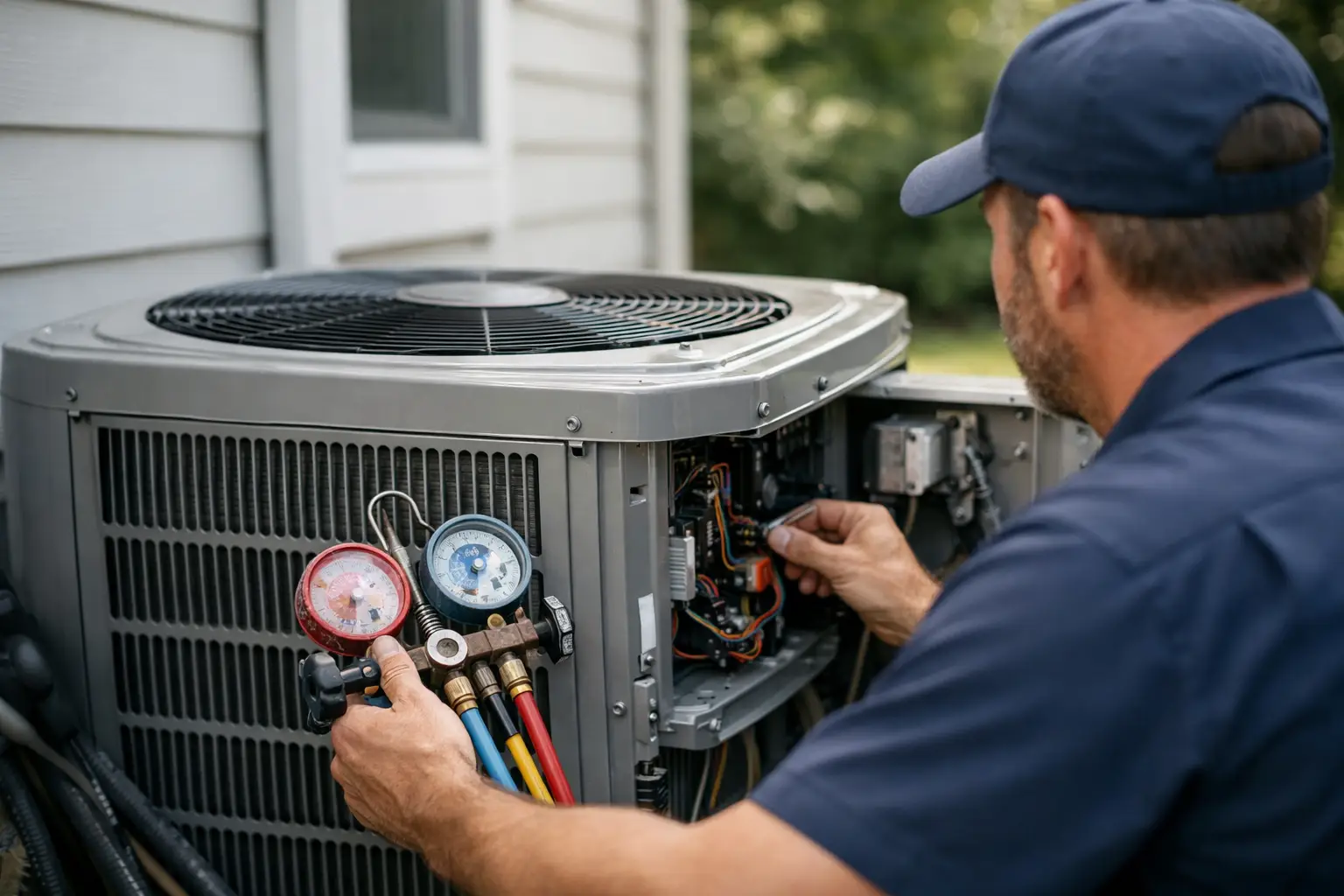
You notice it first around mid-afternoon. The thermostat says one number, but the house feels five degrees warmer, the airflow seems weak, and the system keeps running without catching up. If you are wondering what causes AC to stop cooling, the answer can range from a simple thermostat setting to a serious mechanical failure that needs professional repair.
In Southeast Texas, that difference matters fast. When an air conditioner stops cooling during a stretch of high heat and humidity, comfort drops quickly, energy bills climb, and the strain on the system usually gets worse the longer it runs.
What causes AC to stop cooling in the first place?
An air conditioner cools by moving heat out of your home, not by creating cold air from nothing. For that process to work, the thermostat, air filter, blower, evaporator coil, condenser, refrigerant charge, electrical components, and drain system all have to do their part. When one piece falls out of balance, cooling performance drops.
Sometimes the issue is obvious, like a tripped breaker or a clogged filter. Other times, the system may still run but fail to cool properly because of low refrigerant, a frozen coil, or a failing capacitor. That is why the same symptom – warm air from the vents – can come from very different causes.
Start with the easiest problems first
Before assuming the worst, it makes sense to check the basics. A thermostat set to heat, fan-only, or the wrong schedule can make it seem like the AC has failed when it is really a control issue. Dead thermostat batteries can also interrupt normal operation.
A dirty air filter is another common cause. When airflow is restricted, the system cannot move enough air across the coil to cool the home effectively. In some cases, restricted airflow can even cause the evaporator coil to freeze, which makes cooling drop even further.
Your electrical panel is worth a quick look too. If the indoor unit has power but the outdoor condenser does not, the system may blow air that feels room temperature or warm. That can happen when a breaker trips, a disconnect is off, or an electrical component fails.
Airflow problems are a major reason AC stops cooling
Poor airflow is one of the most frequent answers to what causes AC to stop cooling. Even if the equipment itself is capable of cooling, air has to move freely through the system and into the rooms.
A clogged filter is the most common airflow issue, but it is not the only one. Closed supply vents, blocked return grilles, dirty blower components, collapsed ductwork, and leaking ducts can all reduce performance. In homes and commercial spaces, airflow problems often show up as hot spots, weak vent output, longer run times, and rooms that never seem to cool evenly.
This is where it depends on the age and condition of the system. A newer, well-sized unit may tolerate a minor airflow issue for a while before you notice it. An older system already operating near its limit will usually show symptoms much faster.
Low refrigerant or a refrigerant leak
If the AC is running but not cooling well, low refrigerant is a strong possibility. Refrigerant is the substance that carries heat out of the building. If the charge is low because of a leak, the system loses cooling capacity and often runs longer trying to reach the thermostat setting.
Signs of low refrigerant can include warm or mildly cool air from the vents, ice on the indoor coil or refrigerant lines, hissing sounds near the system, and rising electric bills. This is not a maintenance item like changing a filter. Refrigerant does not get used up under normal operation, so if it is low, there is usually a leak that needs to be found and repaired.
Adding refrigerant without fixing the leak is a temporary patch, not a real solution. A proper diagnostic should confirm pressures, inspect for leaks, and verify whether the system is worth repairing based on age, condition, and refrigerant type.
A frozen evaporator coil can shut cooling down
A frozen indoor coil is another classic reason an AC stops cooling. When the coil freezes, cold air cannot move properly, and eventually the system may blow little or no cool air at all.
Freezing usually starts because of restricted airflow or low refrigerant, though a dirty coil can contribute too. Homeowners sometimes discover this after seeing ice on the copper line near the indoor unit. The system may continue to run, but performance drops sharply.
If you suspect a frozen coil, turn the cooling mode off and switch the fan to on so the ice can thaw. Then check the filter. If the issue returns after a filter change and thawing period, the system needs service. Continuing to run it in that condition can damage components and lead to a bigger repair.
Problems at the outdoor condenser
The outdoor unit does the work of releasing heat from the system. If that condenser cannot do its job, indoor cooling suffers.
A dirty condenser coil is a common issue, especially after pollen season, landscaping work, or extended outdoor exposure. When the coil is packed with dirt and debris, the system cannot reject heat efficiently. You may notice longer run times, weaker cooling, or the unit shutting off on high-pressure safety controls.
The condenser fan motor can also fail. When that happens, the outdoor unit may hum, struggle, or shut down while the indoor blower keeps running. Capacitor problems are also common in Texas heat. A failed capacitor can keep the compressor or fan from starting, which means the system runs without actually cooling.
Compressor trouble is more serious
The compressor is one of the most important parts of the air conditioning system, and one of the costlier ones to repair. If it fails or begins to fail, the AC may stop cooling completely.
Compressor issues can be caused by age, overheating, electrical problems, refrigerant issues, or wear from years of hard summer operation. In some cases, the compressor is not completely dead but is no longer performing at full capacity. That can make cooling inconsistent and diagnosis more complicated.
Whether repair makes sense depends on the system’s age, warranty status, refrigerant type, and overall condition. On older equipment, a compressor issue sometimes becomes the point where replacement is the smarter financial decision.
Drain line and float switch issues
Not every no-cooling call starts with a major part failure. Many systems have a condensate safety switch that shuts cooling down when the drain line backs up. This is designed to prevent water damage, and it does its job well, but it can leave you wondering why the AC suddenly stopped working.
If the drain line is clogged with algae, dirt, or sludge, water can collect in the pan and trigger the switch. The system may turn off entirely or refuse to cool until the blockage is cleared. This is especially common during heavy cooling season when the unit is removing a lot of moisture from indoor air.
What you can check safely before calling for repair
There are a few things most property owners can check without taking risks. Confirm the thermostat is set to cool and the temperature setting is below room temperature. Replace a dirty filter if needed. Make sure supply vents and return grilles are open and unobstructed. Check the breaker panel for a tripped breaker. Look at the outdoor unit and clear away obvious debris, leaves, or vegetation around it.
If the coil appears frozen, shut the cooling off and let it thaw. If the system still does not cool after these steps, it is time for a professional diagnostic.
Avoid opening electrical panels, handling refrigerant, or forcing the system to run when it is icing, short cycling, or making unusual noises. That usually turns a repairable problem into a more expensive one.
When to call an HVAC technician
Call for service if your AC is blowing warm air, freezing up, tripping breakers, leaking water indoors, making grinding or buzzing noises, or running nonstop without lowering the temperature. For commercial properties, any loss of cooling that affects occupants, equipment, or operations should be addressed quickly.
Fast service matters because AC issues rarely improve on their own. A weak capacitor can become a no-start. A small refrigerant leak can become a compressor problem. A dirty system forced to run day after day will usually lose efficiency before it fails outright.
For homeowners and businesses in Magnolia, The Woodlands, Spring, Tomball, Conroe, and the greater Houston area, a proper diagnosis should focus on the actual cause, not guesswork. That means checking airflow, electrical performance, refrigerant conditions, controls, and system cleanliness before recommending repair or replacement.
Regular maintenance is still the best way to reduce surprise breakdowns, but even well-maintained systems can fail under heavy summer demand. When they do, clear answers and responsive service make all the difference. If your AC has stopped cooling, the smartest next step is simple: get it checked before a minor issue becomes a major one.