
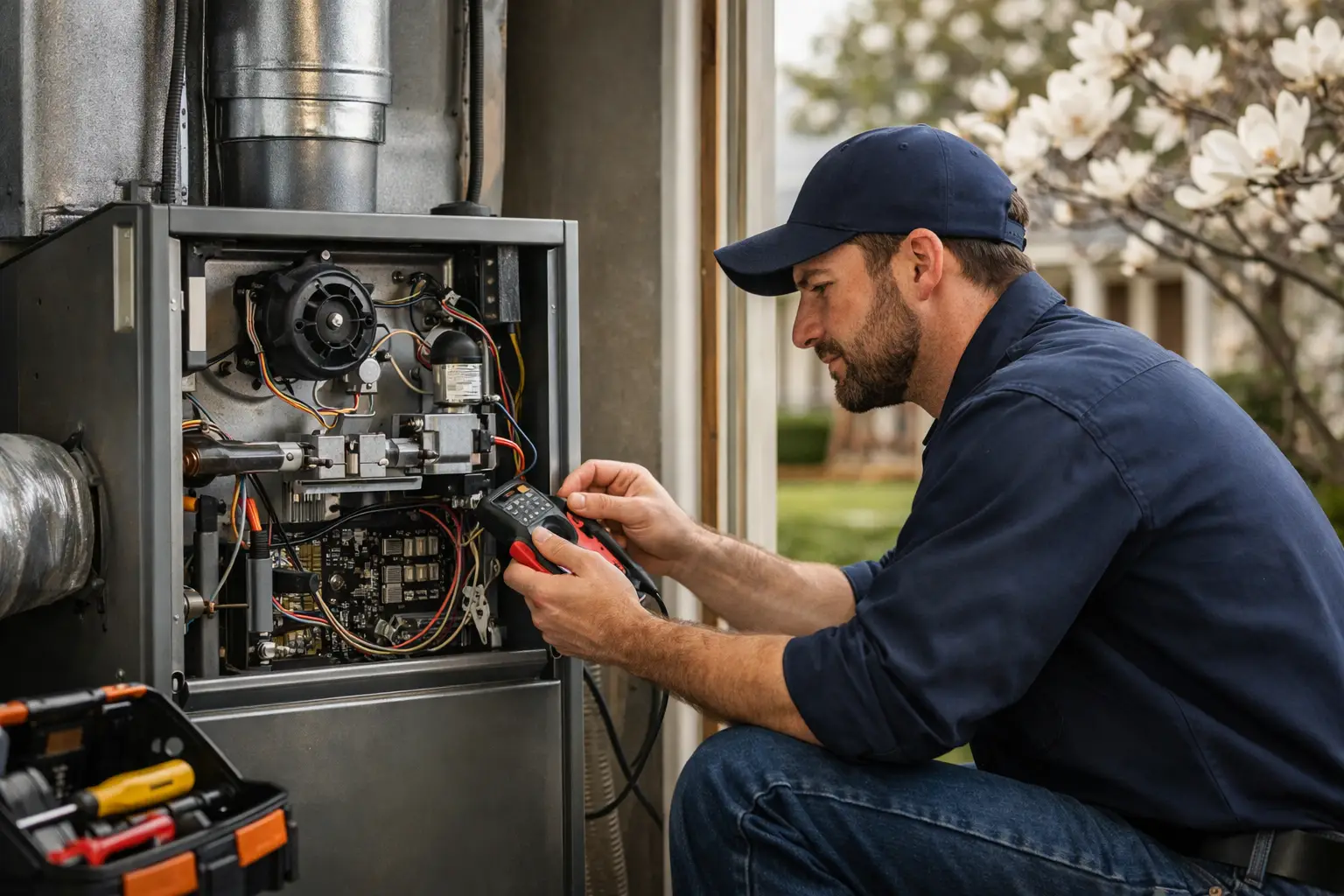
A furnace usually picks the worst possible time to act up – on a cold morning, before guests arrive, or right when your business needs steady indoor comfort. If you are searching for furnace repair near Magnolia TX, you probably do not need vague advice. You need to know what the problem might be, what you can safely check yourself, and when it is time to bring in a licensed HVAC technician.
In Southeast Texas, heating systems may not run as hard as air conditioners, but that can actually create its own problems. A furnace can sit for long stretches, then suddenly get pushed into service during a cold snap. When that happens, small issues that went unnoticed can turn into no heat, short cycling, strange odors, or rising utility costs.
When furnace repair near Magnolia TX should move to the top of your list
Some furnace problems are obvious. The system will not turn on, the air coming through the vents is cold, or the unit starts and stops every few minutes. Others are easier to miss at first, especially in a home or commercial space where people are used to uneven temperatures.
If your furnace is making banging, rattling, squealing, or grinding sounds, that is not normal wear you should ignore. Those noises can point to loose components, blower motor issues, airflow restrictions, or ignition problems. A slight delay in calling may mean the repair stays simple. Waiting too long can lead to a larger failure and a longer service call.
Unusual smells also deserve attention. A dusty smell at first startup can be normal if the system has been sitting unused. A burning smell that lingers, or any odor that seems electrical, should be checked promptly. If you suspect a gas issue, leave the area and call the proper emergency provider right away before scheduling HVAC service.
Higher heating bills are another red flag. If your usage habits have not changed but your furnace seems to run longer to maintain temperature, the system may be losing efficiency. That could be caused by a clogged filter, thermostat issue, dirty burners, airflow problems, or worn parts that are forcing the equipment to work harder than it should.
What you can check before calling for service
There are a few basic things that homeowners and property managers can look at before scheduling a repair. These checks are simple, safe, and often worth doing because they can rule out minor problems quickly.
Start with the thermostat. Make sure it is set to heat and that the temperature setting is above the current room temperature. If the thermostat uses batteries, replace them. A thermostat issue can mimic a furnace failure, and it is one of the simplest fixes.
Next, check the air filter. A dirty filter can restrict airflow enough to cause overheating, poor performance, or shutoffs. If the filter looks packed with dust, replace it with the correct size and type. This is one of the most common causes of avoidable heating trouble.
You should also check the breaker panel if the furnace is not responding at all. Sometimes the issue is electrical rather than mechanical. If a breaker has tripped once, you can reset it. If it trips again, stop there and call for professional diagnosis. Repeated electrical problems should not be treated as a DIY project.
If your system uses a gas furnace, confirm that the fuel supply is on, but do not attempt repairs involving the gas line, burners, or ignition components. That is where professional service matters most. The goal is to identify simple issues, not to take risks.
Why furnaces fail after sitting idle
A common pattern in Texas is a heating system that worked fine last season but suddenly struggles when temperatures drop. That does not always mean the furnace is old or ready for replacement. Often, it means the system has not been maintained and the first real demand exposes a part that is dirty, worn, or out of adjustment.
Ignition systems can fail after months of disuse. Blower motors can develop performance issues. Filters may already be dirty from prior cooling use. Flame sensors can become coated and stop reading properly. Electrical connections can loosen over time. In commercial properties, heavier run time swings and larger systems can make these issues even more noticeable.
This is why seasonal maintenance matters. Preventive service does not guarantee that a furnace will never break, but it often catches the kind of small problems that lead to emergency calls later.
Repair or replace? It depends on the system
Not every furnace problem means you need a new unit. In many cases, a targeted repair is the smartest and most cost-effective choice, especially if the equipment is still within a reasonable service life and the rest of the system is in good shape.
That said, there are times when replacement deserves a serious look. If the furnace needs frequent repairs, struggles to heat evenly, or causes energy bills to climb year after year, putting more money into it may not be the best long-term decision. The same goes for older systems with major component failures. A repair may get the heat back on, but it may not solve the underlying reliability problem.
For property managers and business owners, the calculation can be even more practical. Downtime, tenant comfort, customer experience, and operating cost all matter. A lower repair bill today is not always the better value if the equipment is likely to fail again during the next cold stretch.
An honest HVAC assessment should walk through both options clearly. You want to know what failed, what it will cost to repair, how the rest of the system looks, and whether replacement would improve efficiency and dependability enough to justify the investment.
What to expect from professional furnace repair near Magnolia TX
A professional service visit should feel organized from the start. That means clear scheduling, timely arrival, proper diagnostics, and straightforward pricing before repair work moves forward. When your heat is out, you do not need guesswork. You need answers.
A qualified technician will inspect the system, test the key electrical and mechanical components, verify airflow, evaluate thermostat communication, and look at the ignition and safety sequence. The right diagnosis matters because many heating problems can appear similar from the outside. Short cycling, for example, could be caused by airflow restriction, overheating, a control issue, or something more serious.
For commercial clients, professional repair should also account for system design and building use. A rooftop unit serving offices or retail space has a different operating profile than a furnace in a single-family home. Good service is not just about replacing a part. It is about restoring dependable performance in the real conditions the system faces every day.
BluePeak 360 approaches service the same way customers expect from a dependable local HVAC partner – fast response, licensed and insured workmanship, transparent pricing, and repairs focused on lasting performance rather than temporary fixes.
How to reduce the chances of another breakdown
Once the immediate repair is handled, the next step is keeping the issue from repeating. That usually comes down to maintenance, filter changes, and paying attention to early warning signs.
If your furnace has already had airflow-related issues, changing filters on schedule can make a big difference. If the problem involved wear on moving parts or electrical components, seasonal inspections become even more valuable. Small adjustments, cleaning, and testing often cost far less than emergency repair after a full failure.
For commercial properties, preventive maintenance is even more important because system interruptions affect more people and can disrupt operations. Regular service helps catch declining performance before it turns into an after-hours call.
It also helps to pay attention to how the building feels, not just whether the system turns on. Rooms heating unevenly, a furnace running longer than usual, or new noises at startup are all signs that something may be developing.
The value of fast local service
When heating problems show up, response time matters. A quick appointment can prevent frozen mornings at home, uncomfortable tenants, or business disruptions that ripple through the day. Local service also tends to be more practical because technicians understand the equipment patterns, weather swings, and customer expectations in the area.
That does not mean every issue is an emergency. A mildly noisy system on a warmer day may allow time for scheduled service. But if the furnace will not heat, keeps shutting off, smells unusual, or affects a commercial property that needs reliable comfort, waiting rarely improves the outcome.
The best time to call is usually when the problem first becomes clear. Early diagnosis protects the system, often limits repair cost, and gives you a better chance of avoiding a total breakdown when the next cold front moves in.
If your heat is unreliable, your energy bills are climbing, or your furnace simply does not sound right, getting it checked now is usually the smartest move. A professional repair today can save you from a much bigger problem the next time the temperature drops.