
A filter that looks clean can still restrict airflow, and a filter with the highest rating on the shelf is not automatically the best choice for your HVAC system. Knowing how to choose HVAC filter options correctly protects more than indoor air quality. It can help prevent frozen AC coils, overheating furnaces, uneven temperatures, and avoidable repair calls.
For homes and businesses around Magnolia and greater Houston, filters work hard. Long cooling seasons, high humidity, pollen, construction dust, and pet hair can load a filter faster than expected. The right choice comes down to fit, filtration level, system capacity, and how often you are willing to replace it.
Start With the Exact Filter Size
Before comparing ratings or brands, check the size printed on the frame of your current filter. Common sizes include 16 x 20 x 1, 20 x 25 x 1, and 16 x 25 x 4. The numbers usually refer to nominal size, which may differ slightly from the filter’s actual measured dimensions.
A filter should fit snugly in the return grille, filter cabinet, or air handler slot without bending, crushing, or leaving gaps around the edges. Air follows the path of least resistance. If there is room around an undersized filter, unfiltered air can bypass it and carry dust directly into the blower, evaporator coil, and ductwork.
Thickness matters, too. A one-inch filter cannot be replaced with a four-inch filter unless the cabinet is designed for it. Thicker media filters generally have more surface area, so they can often capture more particles with less airflow resistance and last longer. But the filter housing must accommodate them.
Understand MERV Ratings Before Buying
MERV stands for Minimum Efficiency Reporting Value. The rating indicates how effectively a filter captures particles of different sizes. Higher MERV ratings capture smaller particles, but they may also create more resistance to airflow.
For many residential systems, a MERV 8 filter is a practical baseline. It captures much of the dust, pollen, lint, and larger airborne debris that can affect equipment performance and everyday comfort. A MERV 11 filter offers stronger filtration for smaller particles and may be a good fit for households with pets, frequent allergies, or higher dust levels.
MERV 13 filters can capture finer particles, including more smoke and microscopic contaminants. They can be useful in the right system, especially when indoor air quality is a major concern. The trade-off is pressure drop. If an older system, undersized return duct, or restrictive filter cabinet cannot move enough air through a MERV 13 filter, comfort and equipment performance can suffer.
The goal is not to buy the highest MERV number. The goal is to use the highest filtration level your specific equipment can handle while maintaining proper airflow. Check your system manual or ask a licensed HVAC technician to confirm what is appropriate.
Why Too Much Filtration Can Cause Problems
Your HVAC system depends on steady airflow. When a filter is too restrictive or overdue for replacement, the blower has to work harder to pull air through it. In cooling mode, low airflow can cause the evaporator coil to get too cold and freeze. In heating mode, it can contribute to high operating temperatures and safety shutdowns.
Restricted airflow can also lead to weak air from supply vents, rooms that never seem to cool properly, higher utility bills, and extra wear on the blower motor. A more expensive filter is not a bargain if it creates a system problem.
Choose the Filter Type That Matches Your Priorities
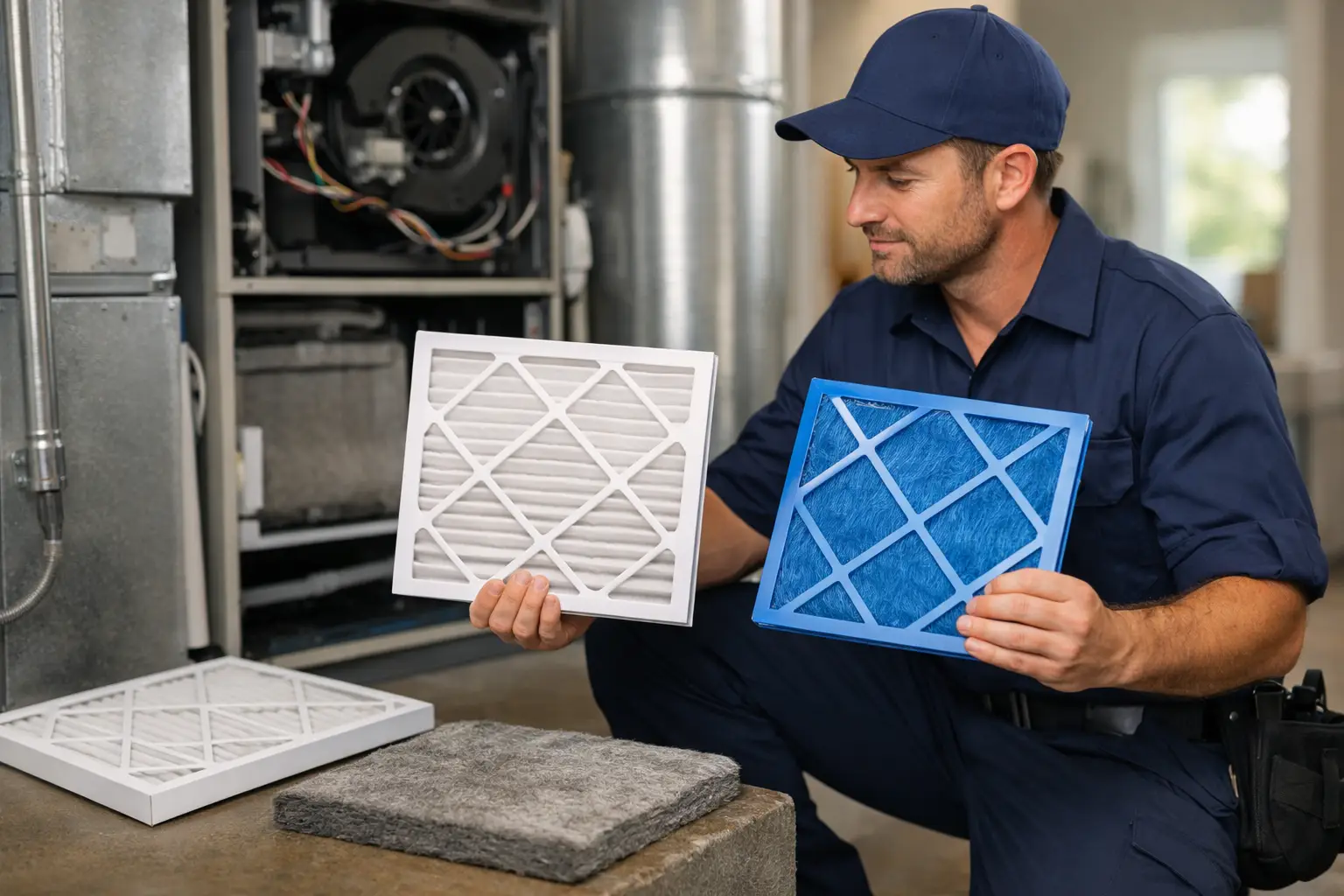
Most homeowners will encounter three broad categories: fiberglass filters, pleated filters, and media filters.
Fiberglass filters are inexpensive and allow easy airflow, but they offer limited particle capture. They may be acceptable for basic equipment protection in a low-dust setting, but they are usually not the best option for families who want meaningful air filtration.
Pleated filters are the most common choice for residential return grilles. Their folded design increases surface area, allowing them to capture more dust and allergens than basic fiberglass filters. They are available in a broad range of MERV ratings and typically provide a good balance of price, performance, and availability.
Media filters are thicker, cabinet-mounted filters often installed near the indoor unit. Because they have more filter material, they can provide strong filtration without the same restriction that a highly rated one-inch filter might create. They are especially worth considering during a system replacement or indoor air quality upgrade.
Avoid using a standard HEPA filter in a typical central HVAC return unless the system was specifically designed or modified for it. HEPA-level filtration is highly effective, but it is often too restrictive for conventional residential equipment without additional engineering.
Consider Your Home, Health Needs, and Building Use
The best filter depends on what is happening inside the building. A lightly occupied home with no pets has different needs than a busy household with two dogs, a toddler, and allergy concerns. A small office may need a different approach than a restaurant, retail space, or commercial property with frequent foot traffic.
A MERV 8 filter is often a sensible choice when equipment protection and general dust control are the main priorities. Consider MERV 11 when pets, seasonal allergies, or visible dust make better filtration worthwhile. Ask about MERV 13 or a dedicated indoor air quality solution if occupants are particularly sensitive to smoke, fine particles, or allergens and the HVAC system can support it.
For commercial properties, filter selection should account for occupancy, operating hours, ventilation requirements, and equipment specifications. Rooftop units and larger commercial systems may use different filter sizes and replacement intervals than a home system. A maintenance plan helps ensure filters are changed consistently instead of being overlooked until comfort complaints begin.
Do Not Ignore the Airflow Arrow
Every disposable HVAC filter has an arrow printed on the frame. That arrow must point in the direction air is moving through the system – toward the air handler or furnace blower.
For a ceiling or wall return grille, air moves from the room into the return duct. For a filter located at the furnace or air handler, it generally moves toward the equipment. Installing the filter backward can reduce its effectiveness and may cause the filter media to bow or fail prematurely.
If you are unsure, look for the blower compartment. The arrow should point toward it.
Set a Replacement Schedule, Then Adjust It
Filter packaging often suggests replacement intervals, but those are starting points rather than guarantees. In the Houston area, many systems run for extended periods through spring, summer, and early fall. More runtime means the filter collects debris faster.
Check a one-inch filter every month, especially during heavy cooling use. Many homes need a replacement every 30 to 90 days. Thicker media filters may last six months or longer, depending on their rating, household conditions, and system runtime.
Replace the filter sooner if you notice any of these signs:
- The filter is visibly gray, dusty, or bowed inward.
- Airflow from vents feels weaker than usual.
- The system runs longer to reach the thermostat setting.
- Dust builds up quickly on furniture or around supply vents.
- Allergy symptoms seem worse when the HVAC system is running.
Do not wait for a filter to look completely clogged. Fine particles can restrict airflow before the surface appears heavily soiled.
Avoid Common Filter Buying Mistakes
One common mistake is buying filters in bulk without confirming the exact size and rating needed. Bulk purchases can save money, but only if the filters fit and are appropriate for the system. Another is choosing a filter based only on a marketing label such as “allergen defense” without checking the MERV rating.
It is also wise to avoid doubling up filters. Using a filter at the return grille and another restrictive filter at the equipment can create too much resistance unless the setup was designed for it. If your home has multiple returns, each return needs the correct filter in place. Leaving even one return unfiltered allows dust into the system.
Finally, a new filter will not solve every air quality or comfort issue. Persistent dust, musty odors, hot and cold rooms, humidity problems, or repeated filter clogging may point to duct leaks, poor return-air design, a dirty coil, drainage issues, or equipment that needs service.
When to Ask an HVAC Professional
If your system freezes, trips limits, has weak airflow, or struggles after moving to a higher-rated filter, stop experimenting with filter ratings. Those symptoms deserve a professional inspection. The problem may be the filter, but it may also involve ductwork, blower speed, refrigerant performance, or a dirty indoor coil.
BluePeak 360 can help homeowners and commercial property managers identify a filter strategy that supports both cleaner air and reliable system operation. A quick recommendation based on the equipment, return setup, and occupancy can prevent a small filter decision from turning into a costly comfort problem.
Keep the correct filter size and preferred MERV rating written near the return grille or in your phone. When replacement day arrives, that simple note makes it easier to protect the airflow your heating and cooling system needs.