
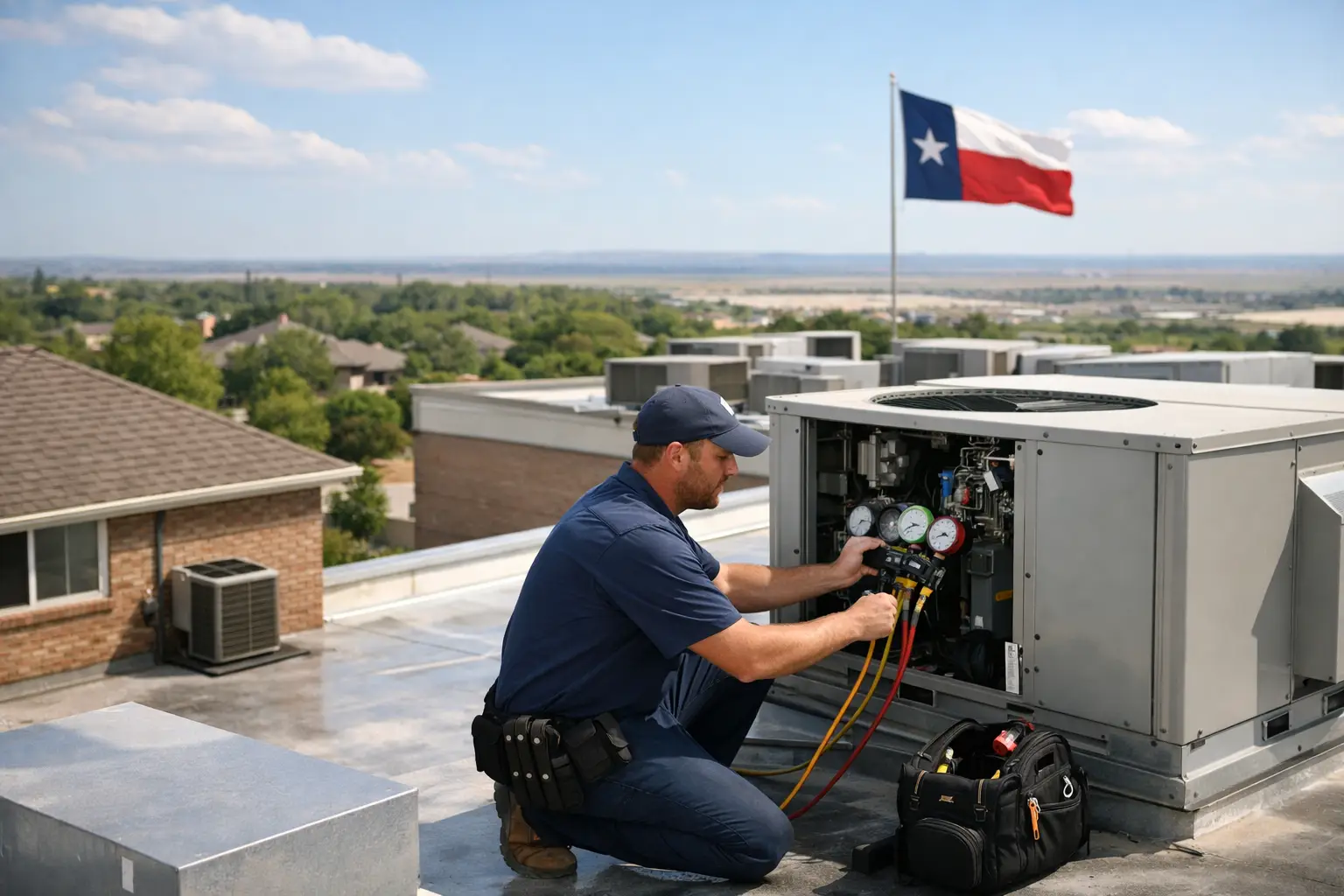
A Texas summer can expose every weak point in an air conditioning system. When your home or business is fighting afternoon heat, high humidity, and long cooling cycles, a few small efficiency problems can quickly turn into higher utility bills and uneven comfort. This Texas cooling efficiency guide explains where energy is commonly lost, which improvements make a meaningful difference, and when it is time to call an HVAC professional.
Start With How Your AC Is Actually Running
Cooling efficiency is not just about the temperature on the thermostat. An efficient system reaches the set temperature without running excessively, removes enough humidity to keep the space comfortable, and distributes air consistently from room to room.
Pay attention to what your system is telling you. If it runs nearly nonstop, leaves bedrooms warmer than the rest of the house, struggles most during the late afternoon, or produces noticeably higher bills than last year, there may be an underlying issue. Some causes are simple, such as a clogged filter or a thermostat set too low. Others, including refrigerant leaks, failing capacitors, duct leaks, or an aging compressor, require a professional diagnosis.
For commercial properties, warning signs can include hot offices, customer complaints, equipment cycling on and off, or areas that feel humid despite the AC running. These issues affect energy use, but they can also affect employees, tenants, inventory, and daily operations.
Set the Thermostat for Real-World Savings
A thermostat setting of 76 to 78 degrees is often a practical target for Texas homes when occupied. Every household has a different comfort level, so the goal is not to tolerate an uncomfortable indoor temperature. The goal is to avoid setting the thermostat dramatically lower in an attempt to cool the space faster. Your air conditioner cools at roughly the same rate regardless of whether the thermostat is set to 72 or 65.
A programmable or smart thermostat can help maintain a consistent schedule. Raise the temperature a few degrees when the home is empty, then schedule cooling to return before people arrive. For businesses, schedules should reflect actual operating hours, not just a standard weekday template. A building that begins receiving staff at 7:00 a.m. needs a different cooling schedule than one that opens at 10:00 a.m.
However, large temperature setbacks are not always ideal. In a humid climate, allowing a space to get too warm can leave the AC working harder to recover comfort and humidity levels. Moderate adjustments tend to provide better balance than extreme ones.
Change Filters and Protect Airflow
Restricted airflow is one of the most common and preventable causes of poor cooling performance. A dirty air filter forces the system to work harder to pull air through the return duct, which can reduce efficiency and add strain to components.
Check filters monthly during peak cooling season. Many standard filters need replacement every one to three months, although the right interval depends on filter type, pets, occupancy, construction dust, and indoor air quality needs. A busy office, a home with several pets, or a household near active construction may need more frequent changes.
Do not assume the highest-rated filter is always the right choice. Very dense filters can restrict airflow if the system was not designed for them. A qualified HVAC technician can recommend a filter that supports cleaner air without compromising system performance.
Keep supply vents open and unobstructed as well. Closing multiple vents does not usually reduce cooling costs. It can raise pressure in the duct system, restrict airflow, and make the equipment less efficient. Move furniture, rugs, curtains, and stored items away from vents and return grilles.
Maintain the Outdoor Unit
Your outdoor condenser needs room to release heat. When leaves, grass clippings, mulch, or overgrown shrubs block the coil, the system cannot transfer heat efficiently. That means longer run times and more wear during the hottest part of the day.
Keep at least two feet of open space around the unit, and avoid stacking items against it. Turn the system off before gently clearing loose debris from the exterior fins. Do not use a pressure washer or bend the aluminum fins, since either can damage the coil.
A dirty indoor evaporator coil can also reduce performance, but it is not a DIY cleaning project for most property owners. The coil, drain system, electrical components, and refrigerant lines should be inspected during professional maintenance. In the Houston area, where humidity creates heavy condensate production, keeping the drain clear is especially important. A clogged drain can cause water damage, system shutdowns, or mold concerns around the air handler.
Seal the Places Cool Air Escapes
Even a well-maintained AC unit will waste energy if conditioned air is escaping through the building envelope. Start with the obvious sources: worn weatherstripping around exterior doors, gaps around windows, unsealed attic penetrations, and damaged insulation.
Attic insulation matters in Texas because the attic can become intensely hot. Heat transfers through ceilings and makes the AC work longer to hold indoor temperatures. Insulation levels, attic ventilation, roof condition, and duct placement all influence the load your system must handle.
Duct leakage is another major concern, particularly in homes with ductwork running through attics. Leaky ducts can send cooled air into unconditioned spaces before it ever reaches the rooms you are paying to cool. Signs include dusty rooms, weak airflow, hot second floors, or a noticeable temperature difference between rooms. Duct sealing and airflow balancing can sometimes improve comfort more than replacing the equipment itself.
Texas Cooling Efficiency Guide: Schedule Preventive Service
Preventive maintenance is one of the best ways to protect efficiency before a breakdown happens. During a proper AC tune-up, a technician should inspect electrical connections, test capacitors and controls, verify refrigerant performance, clean components as needed, check airflow, inspect the condensate drain, and evaluate overall system operation.
This work is not about selling replacement equipment when a system still has useful life. It is about identifying small problems while they are usually less expensive to correct. A weak capacitor, dirty coil, loose connection, or drainage issue can worsen quickly under summer demand.
For homes, annual cooling maintenance before or early in the warm season is a practical baseline. Commercial systems often need more frequent attention, especially rooftop units exposed to heat, rain, debris, and extended operating hours. Property managers should also keep service records, since repair patterns can help with budgeting and replacement planning.
Know When Repair Is the Efficient Choice
Not every comfort problem means you need a new AC system. If the equipment is relatively new, has been maintained, and has a targeted repair need, a repair may be the most cost-effective option. Replacing a worn contactor, capacitor, blower motor, thermostat, or damaged drain component can restore dependable operation without major expense.
The decision gets more complicated when repairs become frequent, the system uses an outdated refrigerant, or the unit is approaching the end of its expected service life. Efficiency losses can be gradual, so owners sometimes adapt to higher bills without realizing how much performance has changed.
A professional evaluation should look beyond the outdoor unit. Proper system sizing, duct condition, insulation, airflow, indoor humidity, and thermostat performance all matter. Installing an oversized system, for example, can lead to short cycling and poor humidity control. A smaller upfront equipment cost is not a savings if the system is poorly matched to the space.
Consider High-Efficiency Equipment Carefully
Modern high-efficiency systems can reduce operating costs, but the best choice depends on your building, usage patterns, budget, and existing infrastructure. A homeowner who plans to stay in the property for many years may value lower monthly costs and improved comfort. A business owner may prioritize equipment reliability, maintenance access, and predictable operating expenses.
Look at the full installation, not just the efficiency rating on the equipment label. A high-efficiency system needs correct sizing, professional installation, properly designed ductwork, and appropriate airflow to deliver its expected performance. Ask for transparent options that compare repair costs, projected benefits, warranty considerations, and installation scope.
For commercial applications, zoning and controls can be equally valuable. Cooling empty conference rooms, unused suites, or low-traffic areas all day can add unnecessary cost. The right controls allow a building to direct cooling where it is needed without sacrificing occupant comfort.
Use Everyday Habits That Reduce Heat Gain
Small operational choices add up during long Texas cooling seasons. Close blinds or curtains on sun-facing windows during peak afternoon hours. Use ceiling fans to improve comfort in occupied rooms, but turn them off when the room is empty because fans cool people, not the air itself.
Avoid adding heat indoors during the hottest hours when possible. Running ovens, dryers, and other heat-producing appliances late in the evening can reduce the load on your AC. For businesses, review lighting, kitchen equipment, server rooms, and door traffic. An entry door that stays open repeatedly can affect comfort far beyond the front lobby.
If your AC is not keeping up, do not wait until a complete failure to get answers. BluePeak 360 provides professional HVAC service with a personal touch for homeowners and businesses across Magnolia and the greater Houston area. A clear diagnosis can help you decide whether maintenance, repair, airflow improvements, or replacement will give you the best return.
The right efficiency plan should make your space more comfortable, not more complicated. Start with maintenance and airflow, watch for changing performance, and address small issues before the Texas heat turns them into an urgent call.