
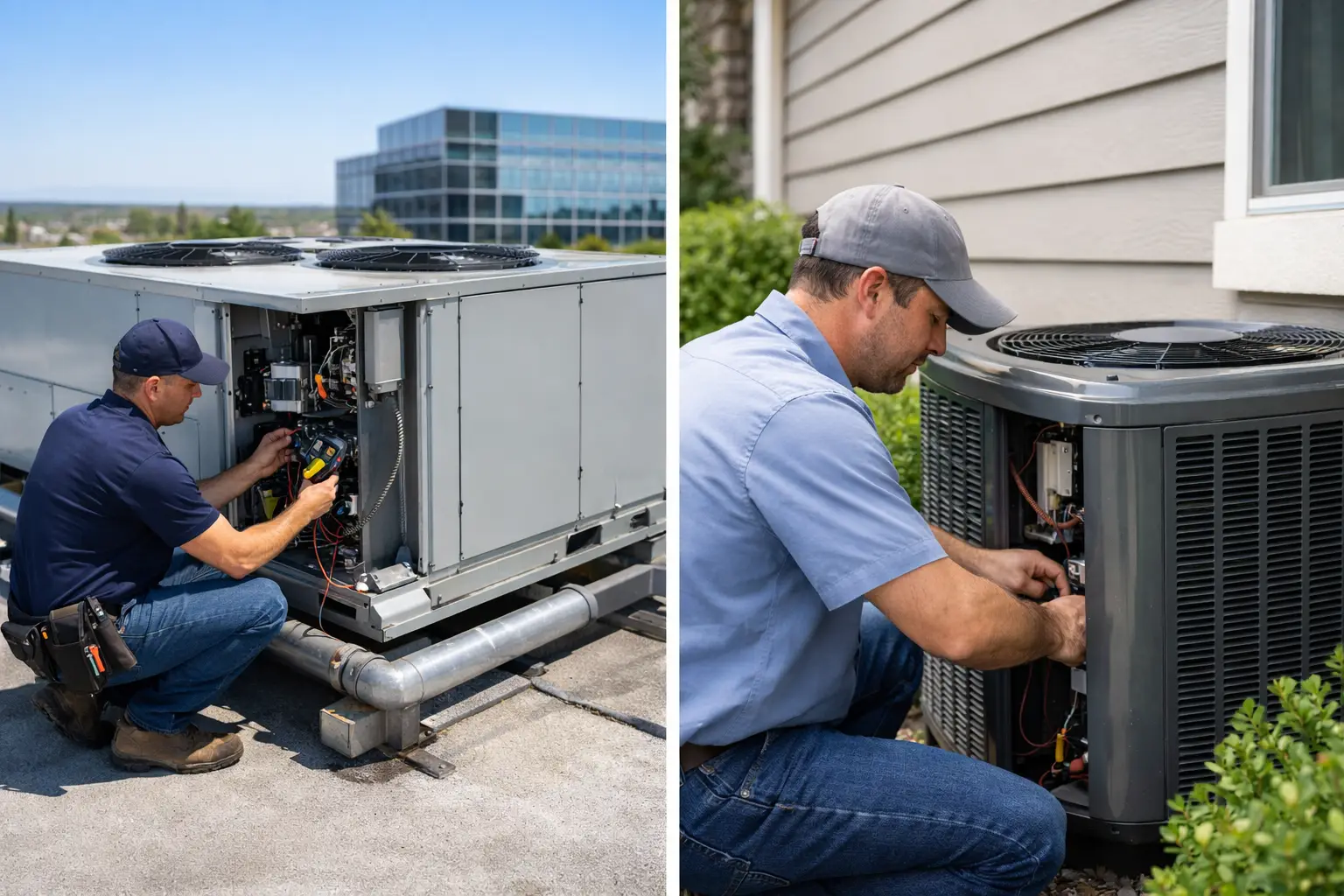
When your AC is due for replacement, the rooftop unit vs split system decision affects much more than where the equipment sits. It shapes installation cost, energy use, maintenance access, indoor noise, and how easily your building can be cooled during a Magnolia or Houston-area summer. The right answer depends on the property, not on a one-size-fits-all rule.
A split system is the familiar setup for most homes: an outdoor condenser connected to an indoor air handler or furnace. A rooftop unit, often called an RTU, packages the major heating and cooling components into one cabinet installed on the roof. Both can deliver dependable comfort when properly sized and installed. The better choice comes down to building type, available space, ductwork, service access, and long-term operating goals.
Rooftop Unit vs Split System: The Basic Difference
A split system separates its components. The outdoor unit contains the compressor and condenser coil, while the indoor equipment handles the evaporator coil, blower, and often the heating source. Refrigerant lines and electrical wiring connect the two. Because the indoor air handler is separate, it may be located in a closet, attic, garage, utility room, or mechanical space.
A rooftop unit keeps those major components together in one weather-rated cabinet. It connects directly to the building’s duct system through roof curbs and supply and return openings. Commercial RTUs may include gas heat, electric heat, economizer controls, and other features designed for larger or more complex buildings.
This design difference is why rooftop units are common on retail stores, offices, restaurants, warehouses, and other commercial properties. Split systems are more common in homes, though they can also serve offices, small commercial suites, and buildings where roof installation is not practical.
When a Rooftop Unit Makes Sense
For many commercial buildings, a rooftop unit is the cleanest and most practical configuration. It keeps equipment off the ground and out of usable interior square footage. That can matter in a small office, storefront, or restaurant where every closet and storage area has a purpose.
RTUs can also simplify zoning. A property with separate tenant spaces, office wings, or customer areas may use multiple rooftop units so each zone has its own controls and operating schedule. If one unit needs repair, the entire building may not lose cooling.
Service work can be more contained as well. Technicians can access much of the equipment from the roof rather than working above a ceiling or inside an occupied business. That said, roof access must be safe and straightforward. A steep roof, restricted access, or an aging roof structure can add time and cost to any repair or replacement.
Rooftop equipment is exposed to Texas heat, rain, wind, debris, and direct sun year-round. A quality installation, correct roof curb, proper drainage, and scheduled maintenance are not optional details. They are what help prevent water intrusion, airflow problems, and premature equipment wear.
Advantages of a rooftop unit
A rooftop unit can preserve indoor and ground-level space, support commercial zoning, and keep operating noise outside the occupied area. For businesses, a packaged design can also make replacement planning more straightforward when an existing curb and duct layout are in good condition.
The trade-off is that installation may require roof modifications, lifting equipment into place, and coordination with roofing or building management. Equipment accessibility, local code requirements, and the roof’s condition should be evaluated before selecting an RTU.
When a Split System Is the Better Fit
A split system is often the most sensible choice for houses and many light-commercial properties. It provides flexibility in where the indoor and outdoor components are installed, and it does not require a roof curb or roof penetration for the main equipment.
For homeowners, placing the condenser on a stable ground pad can make routine service easier than accessing a roof. A split system can also be a strong option when replacing existing equipment with minimal changes to ductwork and electrical service. If the home already has an attic air handler or indoor closet setup, keeping a similar configuration may reduce installation complexity.
Split systems are available in a broad range of efficiency levels and configurations. They can be paired with variable-speed air handlers, advanced thermostats, heat pumps, and indoor air quality accessories. That flexibility is useful for families trying to improve humidity control, address hot and cold rooms, or reduce energy use without redesigning the entire HVAC layout.
The drawback is that split systems require room for both indoor and outdoor equipment. Indoor units need accessible service clearance, properly designed condensate drainage, and duct connections that do not restrict airflow. Outdoor condensers need adequate clearance from walls, landscaping, and other obstructions so they can reject heat effectively.
Compare Cost Beyond the Equipment Price
A lower equipment quote does not always mean a lower total project cost. A fair comparison looks at the complete installation scope, including ductwork changes, electrical work, crane or lift requirements, roof curb work, refrigerant line replacement, drainage, controls, permits, and removal of the old unit.
For an existing commercial building with a compatible curb and duct configuration, replacing an RTU may be efficient. But if the roof needs repairs, the curb is damaged, access requires a crane, or duct transitions must be rebuilt, those costs need to be included upfront.
For a split system, the condition and length of refrigerant lines can affect the project. So can the location of the indoor air handler, attic access, electrical panel capacity, and whether the existing duct system can handle the new equipment’s airflow requirements.
Operating cost matters too. Higher-efficiency equipment can reduce energy use, but efficiency ratings alone do not guarantee lower bills. Improper sizing, leaky ducts, poor refrigerant charge, inadequate return air, and thermostat settings can erase much of the expected benefit. The system needs to be designed and commissioned as a complete comfort system.
Efficiency and Humidity in the Houston Area
In the greater Houston area, cooling equipment must manage humidity as well as temperature. An oversized system may cool a building quickly but shut off before it removes enough moisture from the air. The result can be a home or business that feels clammy even when the thermostat says the temperature is right.
Both rooftop units and split systems can perform well in humid conditions when they are correctly sized and set up. The key is a professional load calculation that accounts for square footage, insulation, windows, occupancy, sun exposure, equipment loads, and duct conditions. For commercial spaces, operating hours and the number of people in the building are especially important.
If a building has ongoing humidity issues, ask about variable-speed options, ventilation needs, duct leakage, thermostat strategy, and standalone dehumidification where appropriate. Replacing equipment without identifying the source of the problem can leave comfort issues unresolved.
Maintenance Requirements Are Different, Not Optional
Every HVAC system needs preventive care. Rooftop units need particular attention because weather and airborne debris can clog coils, affect drainage, and wear down exterior components. Filters, belts where applicable, electrical connections, economizer operation, refrigerant performance, and condensate management should be checked on a regular schedule.
Split systems need the same core attention, along with inspection of indoor components, refrigerant lines, condensate drains, blower performance, and outdoor coil cleanliness. In residential systems, a clogged drain line or neglected filter can quickly lead to water issues, reduced airflow, and unnecessary strain on the equipment.
For commercial property managers, planned maintenance is often the difference between a manageable repair and a midday emergency call. Documented service also makes it easier to budget for repairs and replacement before a system fails during peak cooling season.
How to Choose the Right System for Your Property
Start with the building, not the equipment name. A commercial property with existing roof curbs, multiple zones, limited interior mechanical space, and safe roof access may be well suited to rooftop units. A home, small office, or property with an accessible mechanical closet and established split-system layout may be better served by a split system.
Before making a decision, have a licensed HVAC professional evaluate the current equipment, ductwork, electrical capacity, drainage, ventilation, installation access, and comfort complaints. Ask for transparent pricing that explains what is included, what must be corrected, and why the recommended size and configuration fit the property.
BluePeak 360 helps homeowners and commercial clients make these decisions with clear diagnostics and practical recommendations. Whether the answer is a rooftop replacement, a high-efficiency split system, or repairs that extend the life of your current equipment, the goal should be reliable comfort without surprises when Texas heat arrives.