
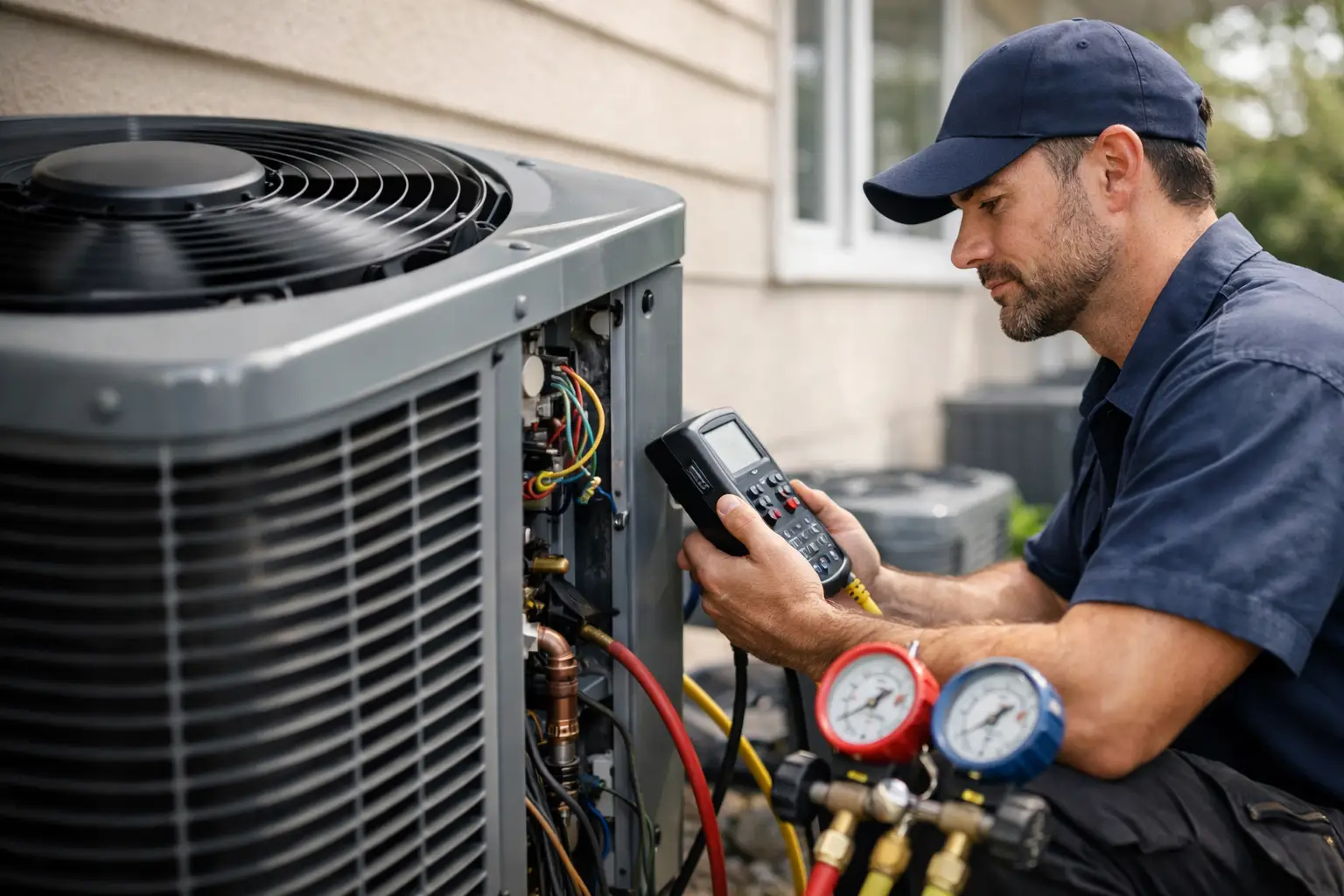
When your AC kicks on, runs for a minute or two, shuts off, and then starts right back up, that is not a minor quirk. It is one of the clearest signs something is off. Understanding air conditioner short cycling causes can help you catch a small issue before it turns into a compressor failure, high utility bills, or a house that never quite cools down.
Short cycling means your system is turning on and off too often without completing a normal cooling cycle. In Southeast Texas, where your air conditioner may run hard for much of the year, that pattern puts extra stress on the equipment fast. It also tends to show up at the worst time – during extreme heat, when you need steady cooling the most.
What short cycling actually means
In a normal cycle, your air conditioner should run long enough to remove heat and humidity from the indoor air, then shut off once the thermostat reaches the set temperature. The exact runtime depends on outdoor temperature, insulation, home size, system condition, and thermostat settings. A healthy system does not need to start every few minutes.
When short cycling happens, the unit powers down before the job is done. That may be because the thermostat is getting a bad reading, airflow is restricted, refrigerant levels are off, or a safety control is stepping in to prevent damage. The symptom looks simple. The cause is not always simple.
Most common air conditioner short cycling causes
Some causes are relatively minor. Others point to a system that needs immediate professional attention.
Dirty air filter and restricted airflow
A clogged air filter is one of the most common reasons an AC starts acting erratically. When airflow is restricted, the system cannot move enough air across the evaporator coil. That can cause the coil to get too cold and begin freezing over. As the system struggles, safety controls may shut it down early.
This is why a short-cycling unit often comes with weak airflow from the vents, uneven temperatures, or ice on refrigerant lines. The fix may be as simple as replacing a heavily clogged filter, but if the system has been running that way for a while, there may be additional issues to address.
Thermostat problems
Sometimes the air conditioner is not the real problem. The thermostat is.
If the thermostat is installed in direct sunlight, too close to a supply vent, or near a hot appliance, it can misread the room temperature. That false reading can tell the AC to shut off too soon or restart too quickly. Wiring issues, low battery power, calibration problems, or an aging thermostat can create the same result.
For homeowners and property managers, this is one of those issues that looks bigger than it is – until it is not. A thermostat replacement is usually straightforward. Bad thermostat wiring or control board communication is less straightforward and should be tested correctly.
Low refrigerant
Low refrigerant is a serious issue because air conditioners do not simply “use up” refrigerant under normal operation. If the charge is low, there is usually a leak somewhere in the system.
Low refrigerant changes system pressure and can lead to poor cooling, frozen coils, and compressor stress. In some cases, pressure switches will shut the system down to protect it, which creates the on-and-off pattern people notice as short cycling. If your AC is short cycling and also blowing warmer air than usual, this jumps higher on the suspect list.
Oversized air conditioner
Bigger is not always better in HVAC. An oversized air conditioner can cool the space too quickly, satisfy the thermostat fast, and shut off before properly removing humidity. Then the temperature rises again and the unit starts another cycle.
This is especially frustrating in humid climates because the house may feel cool but still damp or clammy. Oversizing often shows up after a replacement when the new equipment was selected without a proper load calculation. The system may not be “broken,” but it is not operating the way it should.
Frozen evaporator coil
A frozen evaporator coil is usually a symptom of another problem, not the root cause. Dirty filters, blocked return air, low refrigerant, blower motor issues, or dirty coils can all cause the evaporator coil to freeze.
Once ice begins building up, the system loses its ability to transfer heat properly. That can trigger shutdowns and erratic cycling. If you see ice around the indoor unit or refrigerant line, turn the system off and have it inspected. Continuing to run it can make the problem worse.
Electrical or control issues
Short cycling can also come from failing capacitors, damaged relays, loose wiring, contactor problems, or a control board that is not sending the right signals. These issues are harder to spot without testing because the unit may still appear to start and run.
Electrical faults matter because they can move from annoying to system-threatening quickly. A contactor that sticks or a capacitor that is weakening may cause inconsistent cycling today and a full no-cool breakdown tomorrow.
Dirty condenser coils
Your outdoor unit needs to release heat efficiently. If the condenser coil is coated in dirt, grass, or debris, the system can overheat and struggle to complete a proper cycle. In some cases, it may shut down early to protect itself, then restart again later.
This is common after heavy pollen, yard work, or long periods without maintenance. It is also one reason routine service pays off. Coil cleaning is not just cosmetic. It affects performance, efficiency, and system lifespan.
Failing compressor
The compressor is the heart of the cooling system, and when it starts failing, short cycling can be one of the warning signs. Hard starts, overheating, electrical draw problems, or internal wear may cause the compressor to shut down early.
This is one of the more urgent air conditioner short cycling causes because compressor repairs can be expensive, and delayed action may limit your options. If the unit is older and the compressor is failing, a repair-versus-replacement conversation may be the most practical next step.
Why short cycling should not be ignored
Some AC issues give you a little time. Short cycling is not one of them.
Every start-up puts stress on electrical components and the compressor. When that cycle repeats too often, wear adds up quickly. Energy use also climbs because start-up is one of the most power-intensive parts of operation. Meanwhile, comfort gets worse because the system is not running long enough to stabilize indoor temperature and humidity.
For commercial properties, the risk is bigger than comfort alone. Inconsistent cooling can affect employees, customers, equipment, tenants, and operating hours. What starts as an HVAC nuisance can become a business disruption.
What you can check before calling for service
There are a few practical things worth checking first. Make sure the air filter is clean, the thermostat has fresh batteries if needed, and the thermostat settings are correct. Look at the outdoor unit and clear away obvious debris around it. If you see ice on the indoor coil or refrigerant line, turn the system off.
That said, short cycling is often tied to refrigerant pressure, electrical faults, or internal component problems that need professional testing. If the issue continues after a filter change and thermostat check, it is time to schedule service.
When professional diagnosis makes the difference
The challenge with short cycling is that the same symptom can come from very different problems. Replacing a thermostat will not fix low refrigerant. Adding refrigerant without finding the leak will not solve the issue for long. Cleaning a coil will not correct an oversized system.
A proper diagnostic visit should look at airflow, refrigerant pressures, thermostat operation, electrical components, coil condition, safety switches, and overall system sizing. That is how you move from guessing to solving the actual problem.
For homes and businesses in Magnolia and the greater Houston area, that matters even more during peak cooling season. You do not want repeated shutdowns when outdoor temperatures are pushing your system hard.
Preventing future short cycling problems
The best prevention is routine maintenance and early action when performance changes. Replace filters on schedule, keep the outdoor unit clear, and do not ignore signs like weak airflow, rising humidity, odd noises, or uneven cooling. If your system is being replaced, make sure load calculations and equipment matching are part of the process.
Professional maintenance helps catch the quiet problems before they become expensive ones. Weak capacitors, dirty coils, refrigerant issues, and thermostat problems are much easier to deal with before the system starts shutting itself down every few minutes.
If your AC is short cycling, the smartest move is not to wait for a total breakdown. A quick, accurate diagnosis can protect your comfort, lower the risk of bigger repairs, and keep your system running the way it should when the Texas heat is not letting up.