
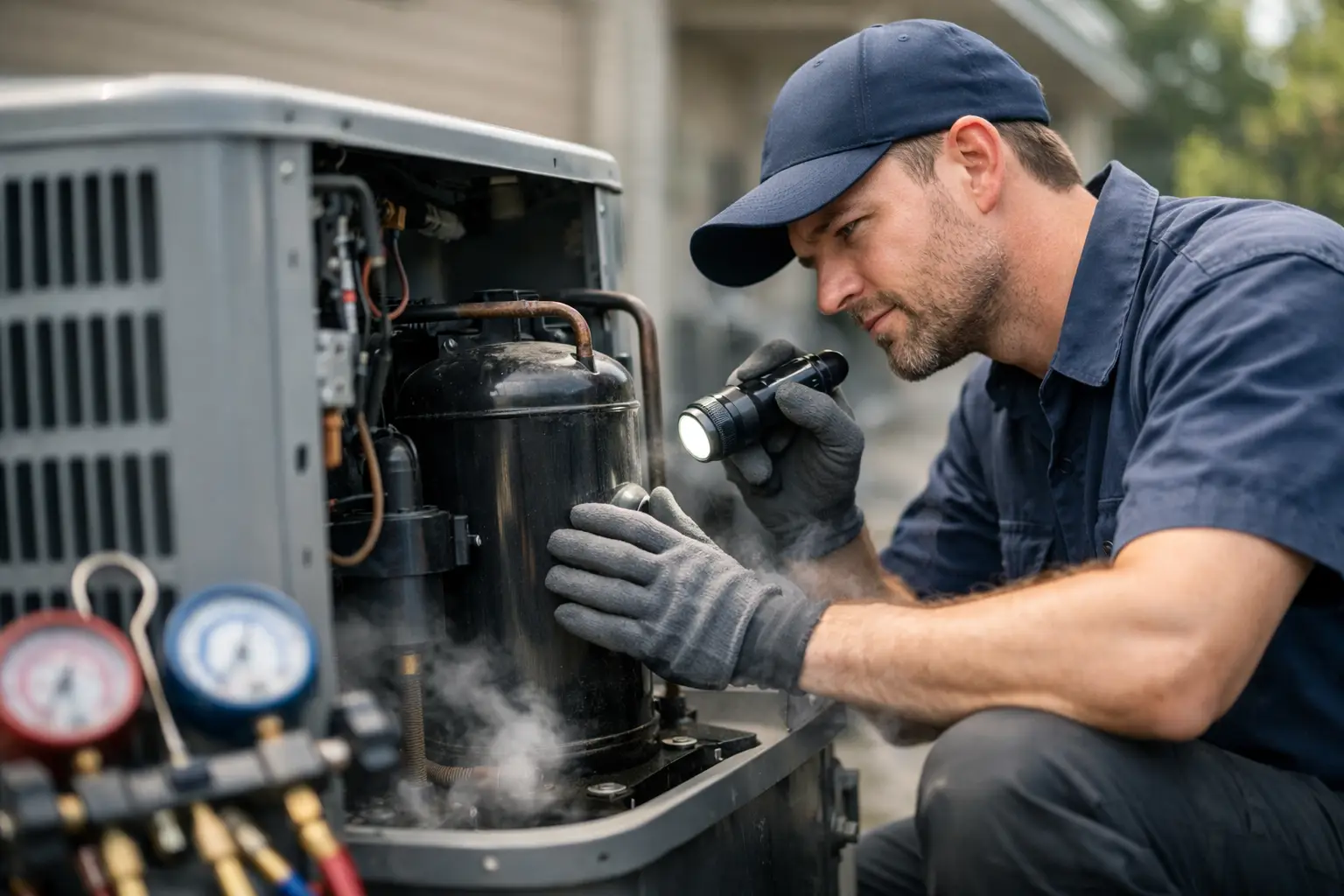
When your AC starts running but the house never really cools down, the compressor is one of the first components worth suspecting. Some of the top signs AC compressor failing show up subtly at first – longer run times, strange noises, weak cooling, or breakers that keep tripping. In Texas heat, those early warnings matter because a struggling compressor can quickly turn into a no-cool emergency.
The compressor is often called the heart of the air conditioning system for a reason. It pressurizes refrigerant and keeps the cooling cycle moving. When it begins to fail, comfort drops, energy use often climbs, and other parts of the system can be affected as well.
Why compressor problems are a big deal
Not every AC issue means the compressor is bad. A dirty condenser coil, low refrigerant charge, failed capacitor, thermostat issue, or restricted airflow can create similar symptoms. That is why accurate diagnostics matter.
Still, when the compressor is involved, the stakes are usually higher. Compressor repairs can be more complex than replacing a contactor or clearing a drain line, and in some cases a full system replacement may make more financial sense, especially on an older unit. The key is catching the warning signs early instead of waiting until the system stops altogether.
Top signs your AC compressor is failing
Your AC is blowing warm air
If the thermostat is set correctly and the blower is moving air but the air coming from the vents is warm or only slightly cool, the compressor may not be pumping refrigerant properly. This can happen when the compressor is weakening internally or failing to start at all.
That said, warm air does not automatically point to compressor failure. Refrigerant leaks, electrical issues, and frozen evaporator coils can also cause the same symptom. What makes compressor trouble more likely is when warm air shows up along with hard starting, outdoor unit noise, or repeated shutdowns.
The outdoor unit struggles to start
A healthy compressor should start with the rest of the cooling cycle without much drama. If you hear clicking, humming, or a delayed startup from the outdoor unit, the compressor may be having trouble engaging.
Sometimes the problem is the start capacitor or contactor rather than the compressor itself. That is actually good news because those repairs are typically more straightforward and less expensive. But if the compressor repeatedly fails to start even after supporting electrical components are tested or replaced, that points to a more serious issue.
Strange noises from the condenser
Compressors rarely fail quietly. Grinding, rattling, hard humming, chattering, or loud clunking from the outdoor unit can all signal trouble.
Different sounds can suggest different conditions. A rattling sound may come from loose parts, while a hard humming noise can mean the compressor is trying and failing to start. Internal mechanical failure can create more severe knocking or grinding. Any new or worsening sound from the condenser deserves prompt attention because continued operation can increase damage.
The circuit breaker keeps tripping
When an AC breaker trips once, it could be a one-time electrical issue. When it keeps happening, the system is telling you something is wrong. A failing compressor can draw too much current, overheat, or short internally, which may trip the breaker as a safety measure.
This is not something to reset over and over. Repeatedly forcing the unit back on can make the damage worse and creates unnecessary electrical risk. If the breaker trips when the cooling cycle starts or shortly after the outdoor unit kicks on, compressor diagnostics should be part of the service call.
Cooling cycles are longer than normal
One of the earlier top signs of an AC compressor failing is reduced cooling performance that does not look dramatic at first. The home still cools, but it takes much longer. Rooms may feel sticky in the afternoon, and the system may run almost nonstop during peak heat.
This can happen because the compressor is no longer moving refrigerant as efficiently as it should. Lower pumping capacity means less heat is removed from the home during each cycle. In Magnolia, The Woodlands, and the greater Houston area, that reduced performance becomes obvious quickly once temperatures climb.
Your energy bills go up without a clear reason
If usage habits have not changed but the electric bill suddenly jumps, the air conditioner may be working harder to produce less cooling. A weak compressor can force longer runtimes and less efficient operation.
Of course, energy spikes can also come from dirty filters, duct leakage, aging equipment, or thermostat problems. The difference is that compressor-related inefficiency often shows up together with weak cooling, loud outdoor operation, or startup trouble.
The outdoor unit shakes or vibrates excessively
Some vibration is normal when the system starts. Strong shaking, aggressive vibration, or noticeable movement from the condenser cabinet is not.
This can happen when the compressor is hard starting or when internal parts are wearing out. If the unit sounds rough and feels unstable during startup, shut it down and have it checked. Letting it keep running can stress mounting hardware, refrigerant lines, and electrical connections.
The system turns on and off too often
Short cycling is another warning sign that should not be ignored. If the AC starts, runs briefly, then shuts off and tries again, the compressor may be overheating or struggling under electrical strain.
Short cycling is one of those symptoms where the cause really does depend. Oversized equipment, thermostat placement, airflow restrictions, low refrigerant, and dirty coils can all contribute. But if short cycling is paired with poor cooling and outdoor unit noise, the compressor becomes a stronger suspect.
What can cause a compressor to fail?
Compressors usually do not fail out of nowhere. Many failures are the result of another problem that has gone unresolved. Low refrigerant from a leak can overwork the compressor. Dirty condenser coils can trap heat and increase operating pressure. Electrical issues can damage windings or prevent proper startup. Poor maintenance can slowly wear the system down until the compressor is the part that gives out first.
Age matters too. If an older system has had several repairs, runs constantly in summer, and has lost efficiency over time, compressor failure may simply be part of the unit reaching the end of its service life. That does not mean every older system needs replacement right away, but it does mean repair decisions should be weighed carefully.
Repair or replace? It depends on the full system
When a compressor is confirmed to be failing, the next step is not always obvious. In some cases, replacing a capacitor, contactor, fan motor, or correcting a refrigerant issue can restore operation if the compressor itself is still healthy. In other cases, the compressor is mechanically or electrically damaged and needs major repair or replacement.
Whether that repair makes sense depends on the age of the unit, warranty status, refrigerant type, overall system condition, and cost compared to replacement. If the system is newer and otherwise in good shape, repair may be the smart move. If the equipment is older, inefficient, or using outdated refrigerant, replacement may offer better long-term value and reliability.
For commercial properties, the decision often comes down to downtime and operating cost as much as repair price. A rooftop unit with compressor issues may limp along for a while, but repeated disruptions can cost more than a planned upgrade.
What to do if you notice these warning signs
Start with the basics. Check the thermostat setting, replace a dirty filter if needed, and make sure the breaker has not tripped. If the outdoor unit is making loud noises, blowing warm air, or repeatedly tripping the breaker, turn the system off and schedule service.
Avoid trying to force the AC to keep running when the compressor is under stress. That can turn a repairable problem into a complete failure. A licensed HVAC technician can test electrical components, refrigerant pressures, compressor amperage, and system performance to pinpoint the cause.
At BluePeak 360, that kind of diagnostic approach matters because compressor symptoms often overlap with other AC problems. The goal is to give you a clear answer, transparent pricing, and the right fix for the system you actually have – not a guess.
A struggling compressor rarely gets better on its own. If your system is showing these signs, acting early gives you more repair options, less disruption, and a better chance of keeping your home or business comfortable when you need cooling most.