
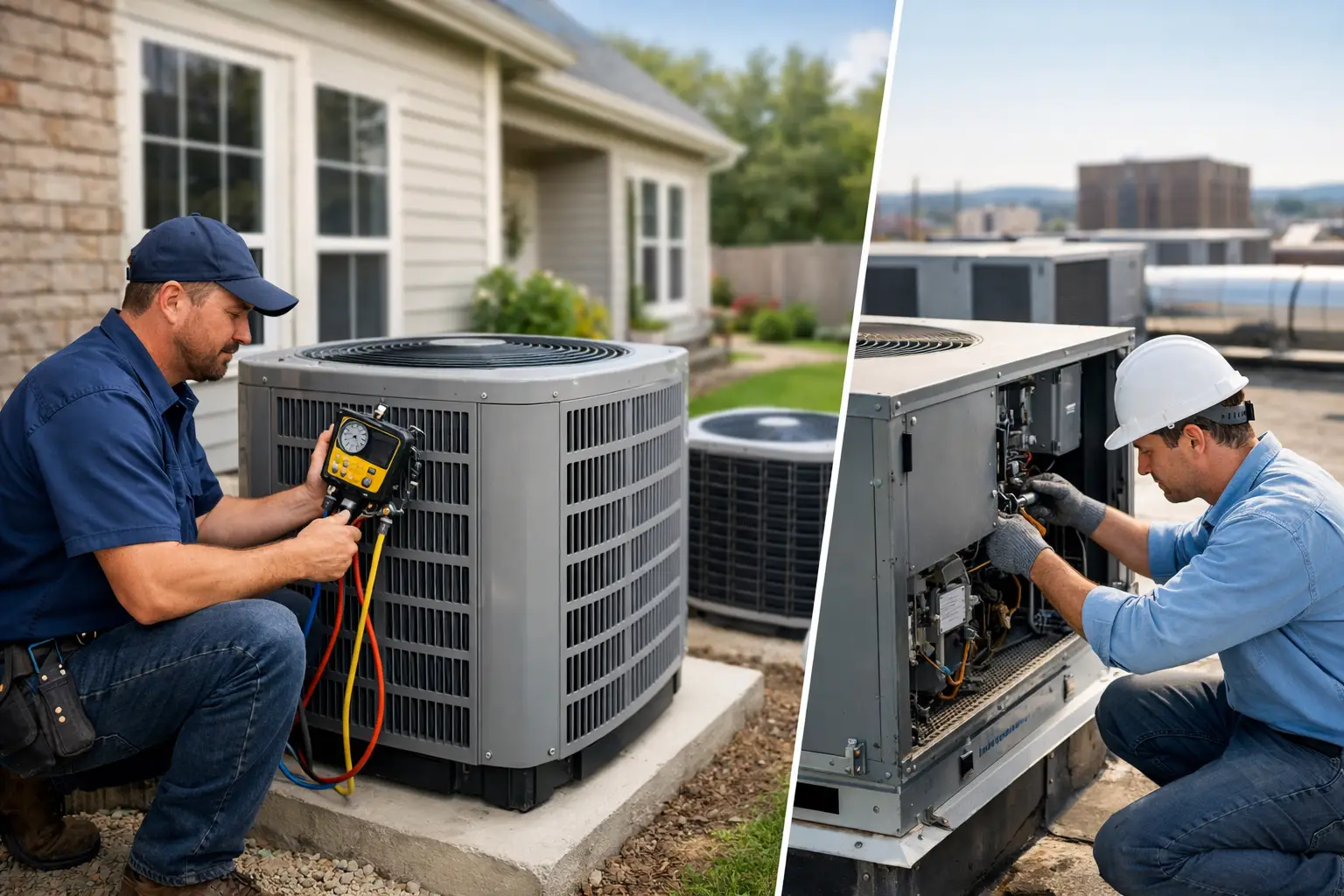
A 3-ton system sounds like a safe bet until your home still feels sticky in July or your business pays too much to heat and cool empty space. When people ask what size HVAC system they need, they usually want a quick number. The honest answer is that sizing is part math, part building science, and part experience.
A system that is too small will run constantly and struggle to keep up. A system that is too large can short cycle, waste energy, leave humidity behind, and wear out faster than it should. Good HVAC sizing is not about picking the biggest unit your budget allows. It is about matching equipment to the building so comfort, efficiency, and reliability all work together.
What size HVAC system really means
In HVAC, size does not mean the physical dimensions of the equipment. It means the heating and cooling capacity. Air conditioners and heat pumps are commonly measured in tons, and furnaces are measured by BTUs. One ton of cooling equals 12,000 BTUs per hour.
That is why a contractor might say a home needs a 2.5-ton system or a commercial suite needs a 5-ton rooftop unit. They are talking about how much heat the system can remove or produce in an hour, not how large the cabinet looks sitting outside or on the roof.
Why rule-of-thumb sizing causes problems
You may have heard shortcuts like one ton for every 500 square feet. Those estimates can point you in a rough direction, but they are not reliable enough to choose equipment. Two buildings with the same square footage can need very different systems.
A newer home with good insulation, quality windows, and tight ductwork may need less capacity than an older home of the same size. A west-facing building with large windows and poor attic insulation may need more. In the greater Houston area, humidity also changes the equation. Cooling is not just about temperature. It is also about removing moisture from the air so the space feels comfortable.
If someone gives you a firm answer based only on square footage, they are guessing.
What size HVAC system is right for your property?
The right answer comes from a load calculation, not a quick estimate. A proper calculation looks at the details that affect how your building gains and loses heat throughout the day.
For homes, that includes square footage, ceiling height, insulation levels, window type, sun exposure, number of occupants, duct condition, and how much air leaks in from outside. Kitchens, upstairs rooms, and bonus spaces over garages can all shift the load.
For commercial spaces, the calculation gets even more specific. Occupancy patterns, lighting, office equipment, store hours, ventilation requirements, rooftop exposure, and zoning needs all matter. A small retail shop and a similarly sized office may need very different system capacities because the internal heat load is different.
This is why professional sizing matters. The system has to fit the way the building is actually used, not just the size printed on a real estate listing.
The factors that affect HVAC sizing most
Square footage still matters, but it is only one piece of the picture. Insulation plays a major role because it determines how quickly conditioned air escapes and outdoor heat moves in. Windows matter too, especially in Texas where afternoon sun can add a significant cooling load.
Ductwork is another factor homeowners often miss. Leaky, undersized, or poorly designed ducts can make a correctly sized unit perform like the wrong one. If airflow is restricted, comfort drops and efficiency follows it.
Humidity deserves special attention in this climate. A larger system may cool the air faster, but if it shuts off too soon, it may not run long enough to remove enough moisture. That leaves rooms cool but damp, which is not real comfort.
Occupancy also changes sizing. More people, more electronics, and more lighting all add heat. In commercial buildings, those internal loads can be substantial. In homes, additions like enclosed patios, home offices, and converted garages can change what the original system was designed to handle.
Bigger is not better
Many property owners assume a larger system will cool faster and solve comfort issues. Sometimes it does the opposite.
An oversized air conditioner often short cycles. That means it turns on, cools quickly, and shuts off before completing a longer, steady run. Frequent starts and stops increase wear on components. They can also drive up energy use and create uneven temperatures from room to room.
The bigger issue in humid areas is moisture control. Short cycles reduce dehumidification. That can leave the building feeling clammy even when the thermostat says the temperature is fine. If your current system cools quickly but the indoor air still feels damp, oversizing may be part of the problem.
Undersizing has its own costs. A unit that is too small runs longer, struggles on peak heat days, and may never quite reach the set temperature. Long run times are not always bad if the system was designed that way, but constant strain usually means comfort and efficiency suffer.
Residential sizing versus commercial sizing
Homeowners and commercial property managers ask the same question, but the answer is handled differently.
For a house, the goal is consistent comfort across bedrooms, living spaces, and shared areas. That includes temperature balance, humidity control, and manageable utility bills. A properly sized residential system should not only cool the home but also maintain comfort during the hottest parts of summer without running into the ground.
For a business, system sizing often has to support operating hours, tenant expectations, ventilation codes, equipment heat load, and sometimes multiple zones with very different demands. A restaurant, medical office, warehouse, and retail storefront each create unique HVAC requirements. Rooftop units, split systems, and zoned commercial setups all need to be sized to the building use, not just the square footage.
That is one reason commercial replacements should not be treated like a simple swap. If the space use has changed since the last installation, the old size may no longer be the right size.
Signs your current system may be the wrong size
You do not need to be an HVAC technician to notice when sizing may be off. If some rooms stay hot while others get too cold, the system may be improperly sized or the ductwork may be underperforming. If humidity stays high indoors, oversizing is a common cause. If the system seems to run nonstop and still falls behind, it may be undersized or facing efficiency issues.
High energy bills, short cycling, noisy starts and stops, and repeated repair calls can all point to a mismatch between equipment and building load. The same symptoms can also come from poor maintenance or aging components, so it takes a real inspection to know for sure.
How contractors determine what size HVAC system you need
A reputable HVAC contractor should inspect the property, review the existing equipment, and perform a formal load calculation before recommending a replacement. For homes, that usually means a Manual J calculation. Equipment selection and duct design should also line up with that data.
In commercial settings, the process may involve a broader engineering review, especially for larger buildings or spaces with specialized occupancy needs. Ventilation, duct layout, controls, zoning, and rooftop conditions all affect the final recommendation.
This is also where efficiency ratings come into play. The right size and the right efficiency level should work together. A high-efficiency unit that is poorly sized will not deliver the performance you expect.
The best next step before you replace a system
If you are shopping for a new unit, the smartest move is to ask for a real sizing evaluation. That protects you from paying for more capacity than you need or ending up with a system that never feels right. For property owners in Magnolia and the surrounding Houston area, that matters even more because summer heat and humidity do not leave much room for guesswork.
BluePeak 360 approaches sizing the way it should be handled – by looking at the full building, the duct system, and the comfort issues you are trying to solve, not by throwing out a one-size-fits-all number.
The right HVAC size is the one that keeps your space comfortable on the days that test it most, without wasting energy or creating new problems. If you are unsure what your building actually needs, getting the numbers right now is a lot cheaper than living with the wrong system for the next 10 to 15 years.