
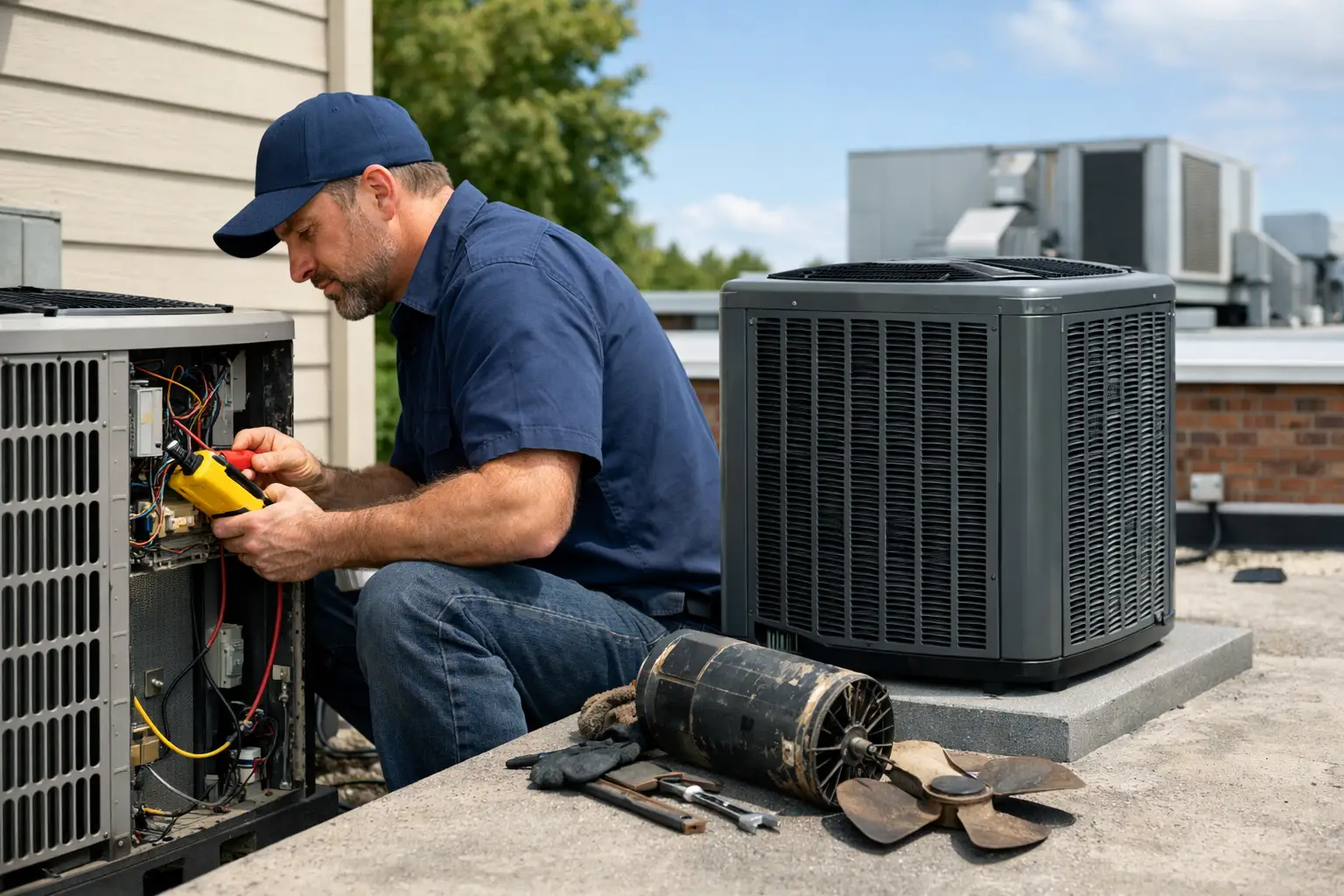
When your AC starts blowing warm air in the middle of a Texas afternoon, the question gets real fast: should you repair or replace air conditioner equipment? For homeowners, property managers, and business owners, this is not just about comfort. It is about cost, timing, reliability, and whether the next repair will actually solve the problem or just buy a little time.
The right answer depends on the age of the system, the type of failure, energy use, repair history, and how well the equipment is keeping up with your space. A quick repair can absolutely make sense. In other cases, replacing the system is the more practical financial decision, especially when breakdowns are becoming routine.
When repair is usually the smarter move
A repair is often the better choice when the system is still within a reasonable service life and the issue is isolated. If your air conditioner is under 10 years old, has been maintained regularly, and the repair involves a part like a capacitor, contactor, thermostat, or fan motor, repair is usually the logical first step.
This is also true when the system has been cooling well until a sudden failure. One bad component does not automatically mean the entire unit is at the end of its life. Many AC problems are fixable without turning into a full replacement project.
For commercial properties, repair can also make sense when the equipment is still sized correctly for the building, replacement lead times would disrupt operations, and the repair cost is controlled. The key is whether the repair restores dependable performance rather than postponing a larger failure by a few weeks.
When to replace your air conditioner instead
Replacement becomes more attractive when the system is older, less efficient, and increasingly expensive to keep running. Most central air conditioners have a life expectancy of around 10 to 15 years, though Texas heat, long cooling seasons, and inconsistent maintenance can shorten that window.
If your AC is in that age range and needs a major repair, replacement often deserves serious consideration. A failed compressor, evaporator coil leak, or repeated refrigerant issues can push repair costs high enough that putting more money into the old system stops making sense.
There is also the comfort factor. If your unit runs constantly, struggles to cool certain rooms, produces high humidity indoors, or causes your utility bills to climb every summer, replacement may solve problems that repair alone cannot. Sometimes the system is technically operating, but not operating well.
The age-and-cost rule that helps
A common rule of thumb is to multiply the age of the air conditioner by the estimated repair cost. If the number is high, replacement is usually the better long-term move.
For example, if a 12-year-old system needs a $900 repair, that decision looks different than a 4-year-old system needing the same repair. The older unit is closer to the point where additional failures become more likely, and you may not recover that repair cost before another major issue appears.
This rule is not perfect, but it is useful because it keeps the decision grounded in math instead of frustration. An experienced HVAC technician should also look at the condition of the coil, compressor, blower components, refrigerant type, airflow, and duct performance before recommending either option.
Signs you should repair or replace air conditioner equipment soon
Some systems make the decision easier than others. If you are noticing one or more of these issues, it is time for a professional evaluation.
Signs repair may be enough
If the unit is relatively young, the repair is minor, and your cooling performance has otherwise been steady, repair is usually worth pursuing. The same goes for a one-time breakdown that has a clear cause and no history of recurring service calls.
A repair is also more reasonable when your energy bills have stayed consistent and the system still cools your home or building evenly. In that case, you are likely dealing with a component issue rather than a system-wide decline.
Signs replacement may save you more
If you are scheduling repairs every cooling season, hearing unusual noises, smelling burning or musty odors, or seeing indoor temperatures drift no matter how low the thermostat is set, your AC may be reaching the end of the line.
Water leaks, frozen coils, weak airflow, and constant cycling are also red flags. These issues can sometimes be repaired, but when they happen repeatedly on an older unit, replacement often becomes the more dependable choice.
Another major factor is refrigerant. Older systems that use outdated refrigerants can become more expensive to service over time. If your system develops a refrigerant leak and uses an older refrigerant type, replacement may be more cost-effective than repeated repairs.
Efficiency matters more than many people realize
An older air conditioner may still run, but that does not mean it is running efficiently. Newer systems are designed to deliver better cooling with less energy use, and that difference can show up clearly on monthly utility bills.
For homeowners, the savings can help offset the upfront installation cost over time. For commercial properties, improved efficiency can have an even bigger impact because cooling loads are often larger and operating hours are longer.
Still, efficiency should not be the only reason to replace a working unit. If your current system is fairly new and needs a modest repair, replacing it just for a higher SEER rating may not deliver the return you expect right away. The real value comes when efficiency gains are paired with improved reliability and comfort.
Comfort problems are often part of the decision
A lot of people focus only on whether the equipment turns on. That is too narrow. The better question is whether your system is keeping the space comfortable without constant strain.
If some rooms stay hot, humidity feels high, or your system runs all day without reaching the set temperature, there may be larger issues at play. The air conditioner could be undersized, the ductwork may have airflow problems, or the unit may simply be worn out.
In those cases, repeated repairs may keep the equipment limping along without fixing the actual comfort issue. A replacement, especially when paired with a proper load calculation and system review, can correct problems that have been frustrating you for years.
How the decision looks for businesses and property managers
For commercial clients, deciding whether to repair or replace air conditioner equipment usually comes down to risk as much as cost. A repair may be cheaper today, but a system failure during business hours can impact employees, customers, tenants, inventory, and equipment.
That is why many property managers and facility decision-makers look beyond the immediate invoice. If a rooftop unit is aging, requiring frequent service, and causing comfort complaints, replacement can be the more predictable way to control costs and reduce disruption.
Planned replacement also gives you more control over scheduling. Emergency replacements rarely happen on the best timeline. When you replace before a complete failure, you have more flexibility and less pressure.
Why professional diagnostics matter
This is one of those decisions where guessing gets expensive. A proper inspection can tell you whether the issue is a simple electrical repair, a refrigerant leak, an airflow restriction, or a sign of broader system decline.
Transparent pricing matters here too. You should be able to see the cost of repair, understand the condition of the equipment, and compare that with the cost and benefits of replacement. A trustworthy HVAC contractor will explain both paths clearly, not push one option without context.
For customers in Magnolia and the greater Houston area, that local experience matters. AC systems in this region work hard for long stretches of the year, and recommendations should reflect that reality.
A practical way to make the call
If your AC is newer, the repair is straightforward, and the system has been reliable, repair is usually the smart move. If the system is older, inefficient, and asking for more money every year, replacement is often the better investment.
The middle ground is where expert guidance matters most. That is where a licensed and insured HVAC team can help you weigh cost, performance, repair history, and long-term value without overcomplicating the decision. BluePeak 360 approaches that process the same way customers want it handled – clearly, honestly, and with a focus on what works best for the property.
If you are stuck between one more repair and a new system, do not wait for the next breakdown to make the decision for you. The best time to choose is while you still have options.