
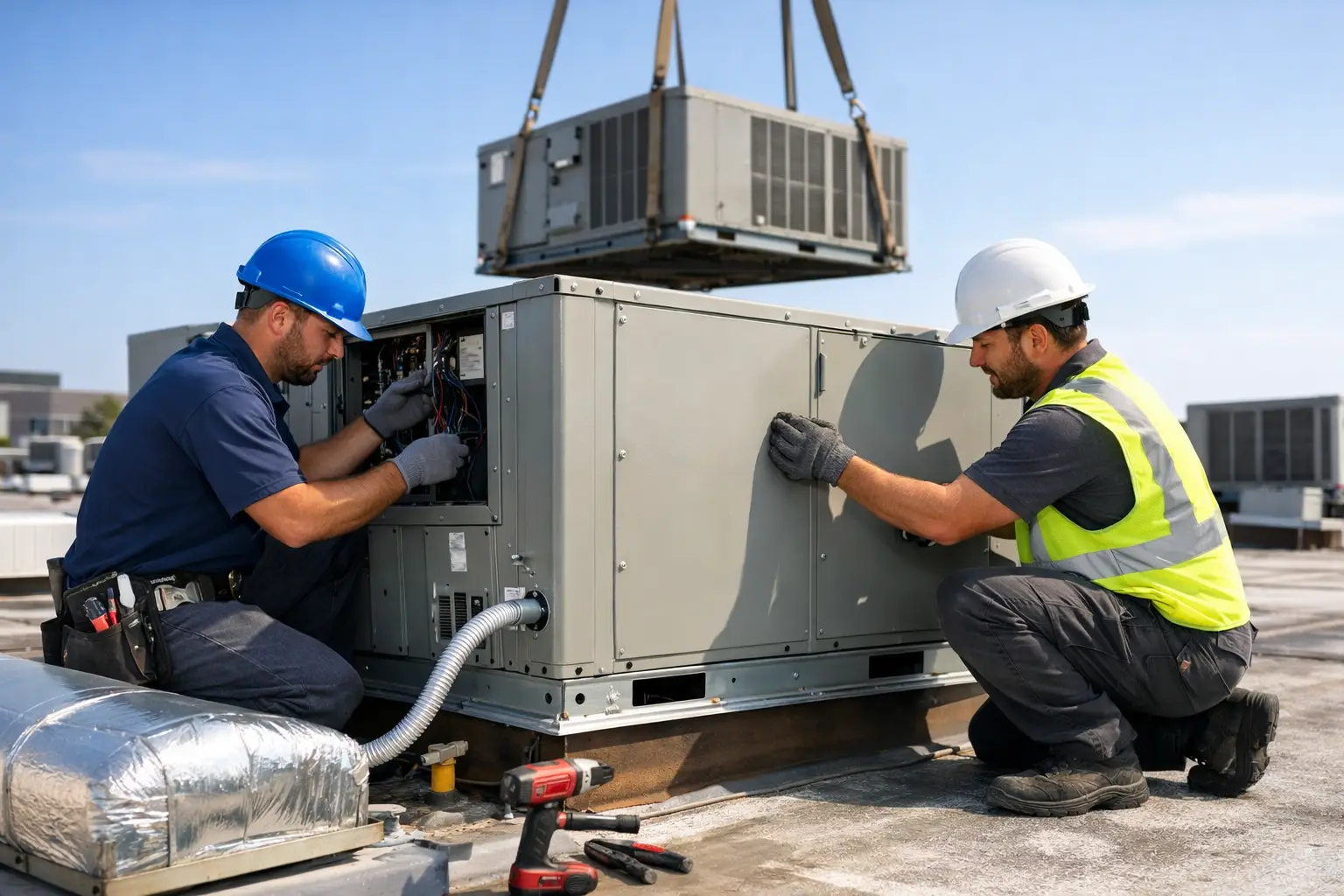
A rooftop unit that is undersized will struggle through a Texas summer. One that is oversized can short cycle, waste energy, and leave humidity problems behind. That is why commercial rooftop unit installation is not just about setting equipment on the roof and connecting ductwork. It is a planning job, a safety job, and an operations decision that affects comfort, utility costs, and uptime for years.
For business owners, property managers, and facility teams, the stakes are straightforward. If the installation is done right, the building stays comfortable, the equipment lasts longer, and service calls tend to be less disruptive. If key details are missed, even a brand-new unit can become an expensive source of complaints.
What commercial rooftop unit installation really involves
A commercial rooftop unit, often called an RTU, is a packaged HVAC system installed on the roof of a building. It typically contains heating and cooling components in one cabinet and connects to the building through ductwork, power, gas when applicable, and control wiring.
The installation process starts well before delivery day. Load calculations, equipment selection, curb measurements, roof access, electrical capacity, and code requirements all need to be reviewed. In many cases, replacing an older unit with a similar tonnage is not enough. Building use may have changed, occupancy may be different, and newer equipment may have different airflow or control requirements.
That is where experience matters. A retail space, office building, church, warehouse office, or light industrial site can all need rooftop equipment, but they do not behave the same way. Internal heat loads, outside air needs, operating schedules, and zoning all change the recommendation.
Sizing matters more than most people expect
The biggest assumption in commercial HVAC is that replacing like-for-like is the safe choice. Sometimes it is. Sometimes it is the exact reason the old comfort issues never went away.
Proper sizing should account for square footage, insulation levels, windows, roof exposure, occupancy, lighting, equipment loads, and ventilation requirements. In the greater Houston area, humidity also deserves serious attention. A unit that cools too quickly without running long enough may satisfy the thermostat while leaving the space damp and uncomfortable.
Oversizing can also increase wear on compressors and blowers because the system starts and stops more often. Undersizing has the obvious problem of never quite catching up. The best installation begins with actual building needs, not just the nameplate on the unit being removed.
Roof curbs, ductwork, and structural fit
One of the most overlooked parts of commercial rooftop unit installation is the physical interface between the new equipment and the building. The roof curb has to match the unit properly, support the equipment correctly, and maintain weather protection. If the curb is wrong, you can end up with leaks, vibration, poor return air sealing, or costly field modifications.
Duct connections also need close attention. A new unit may have different supply and return openings than the old one. If transitions are rushed, airflow can suffer. That leads to uneven temperatures, noisy operation, and reduced efficiency. In some retrofit projects, duct leakage or poor duct design is a bigger issue than the equipment itself.
Structural review can matter too. Not every roof is ready for a larger or heavier replacement unit without verification. This is especially important in older commercial buildings where original documentation is limited.
The crane day is only one part of the job
When people picture an RTU installation, they usually think about the crane lift. It is important, but it is not the whole project. By the time the crane arrives, permits, scheduling, equipment staging, safety planning, and roof prep should already be handled.
A smooth lift requires coordination between the HVAC crew, crane operator, site contact, and sometimes other trades. Access around the building may need to be controlled. Deliveries may need to be timed carefully. For occupied commercial properties, minimizing disruption is part of doing the job right.
The actual placement of the unit should be precise. Once the equipment is set, the team still has to complete mechanical connections, electrical work, gas piping if needed, drainage, economizer setup, and control integration. Then comes startup and testing, which is where many long-term performance issues are either prevented or created.
Controls, thermostats, and ventilation are not minor details
A rooftop unit can be high quality and still perform poorly if the controls are wrong. Thermostat compatibility, staging, occupied and unoccupied schedules, ventilation settings, and sensor placement all affect how the system behaves day to day.
In commercial spaces, ventilation is especially important. Outside air requirements are not optional details. Bringing in too little fresh air can affect comfort and indoor air quality. Bringing in too much can drive up humidity and energy use, especially in hot and humid conditions.
Economizers also deserve careful setup. In the right conditions, they can reduce cooling costs by using outside air. If they are not calibrated properly, they can create comfort problems and waste energy instead of saving it.
Replacement versus new installation
Not every commercial rooftop unit installation starts from scratch. Many projects are replacements, and that changes the scope. Replacement work can look simple from the ground, but once the old unit is removed, hidden issues often show up. Damaged curbs, aging disconnects, brittle controls, roof penetration concerns, and mismatched duct openings are common examples.
New construction or first-time installation gives more flexibility, but it also raises more design decisions. Equipment placement, duct layout, drainage routing, service clearance, and future maintenance access should all be considered early. Saving space on paper can create service headaches later.
The right approach depends on the building, budget, and timeline. A low-cost replacement may be appropriate for some properties. For others, it makes more sense to improve efficiency, controls, or zoning while the job is already in motion.
What affects installation cost
Business owners often ask for a simple installed price, but RTU projects rarely stay simple for long. Equipment size and efficiency rating are major factors, but they are only part of the total.
Curb adapters, crane access, electrical upgrades, gas line modifications, duct transitions, control work, permits, and roof conditions can all change the final number. A unit swap on an accessible one-story building is very different from a project with limited staging, structural concerns, or complicated integration with existing systems.
The cheapest proposal is not always the lowest operating cost. Higher-efficiency equipment, better controls, and a more careful startup process can reduce service issues and utility bills over time. On the other hand, premium options do not always pay back quickly in every building. It depends on runtime, occupancy, energy costs, and how long the owner plans to keep the property.
Why startup and commissioning deserve attention
A new unit is not truly installed when it is sitting on the curb. It is installed when airflow, refrigerant charge, electrical readings, controls, safeties, and temperature performance have been checked and documented.
Commissioning helps confirm that the system is operating as designed. That includes verifying fan performance, confirming heating and cooling stages, checking drain performance, and making sure economizers and thermostats respond properly. If these steps are skipped, small problems can go unnoticed until they turn into callbacks, tenant complaints, or early equipment wear.
For occupied buildings, this step is especially valuable. It catches issues before the space is fully back in use and gives the owner more confidence that the project was completed correctly.
Maintenance starts the day after installation
Even the best commercial rooftop unit installation needs follow-up care. Filters, belts, coils, drains, electrical connections, and refrigerant performance all need regular inspection. A new system should not be treated like a set-it-and-forget-it asset.
Preventive maintenance protects the installation investment and helps preserve efficiency. It also gives technicians a chance to spot issues like airflow restriction, failing capacitors, loose wiring, or drainage problems before they interrupt business operations. For multi-site owners and property managers, scheduled service also makes budgeting more predictable.
That is one reason many commercial customers prefer working with one contractor for both installation and ongoing service. The team that installed the system already understands the equipment layout, controls, and project history. BluePeak 360 takes that practical approach because long-term performance matters just as much as install day.
Choosing the right contractor for commercial rooftop unit installation
Credentials matter, but so does communication. A qualified contractor should be licensed and insured, able to explain scope clearly, and willing to discuss what is included versus what may be uncovered during the project. For commercial clients, responsiveness also matters. Delays can affect tenants, staff, customers, and operating hours.
Look for a contractor who addresses sizing, controls, ventilation, startup, and maintenance instead of talking only about equipment brand. The installation crew should be organized, safety-minded, and realistic about access, scheduling, and disruption. Transparent pricing is important, but clear expectations are just as important.
A good rooftop installation should leave you with fewer surprises, not more. When the system is properly selected, properly set, and properly commissioned, it becomes one less thing to worry about when outdoor temperatures are working against your business.
If you are planning an RTU replacement or evaluating options for a commercial property, the smartest next step is not rushing to a model number. It is getting a clear assessment of the building, the load, and the details that will decide whether the new system performs the way it should.