
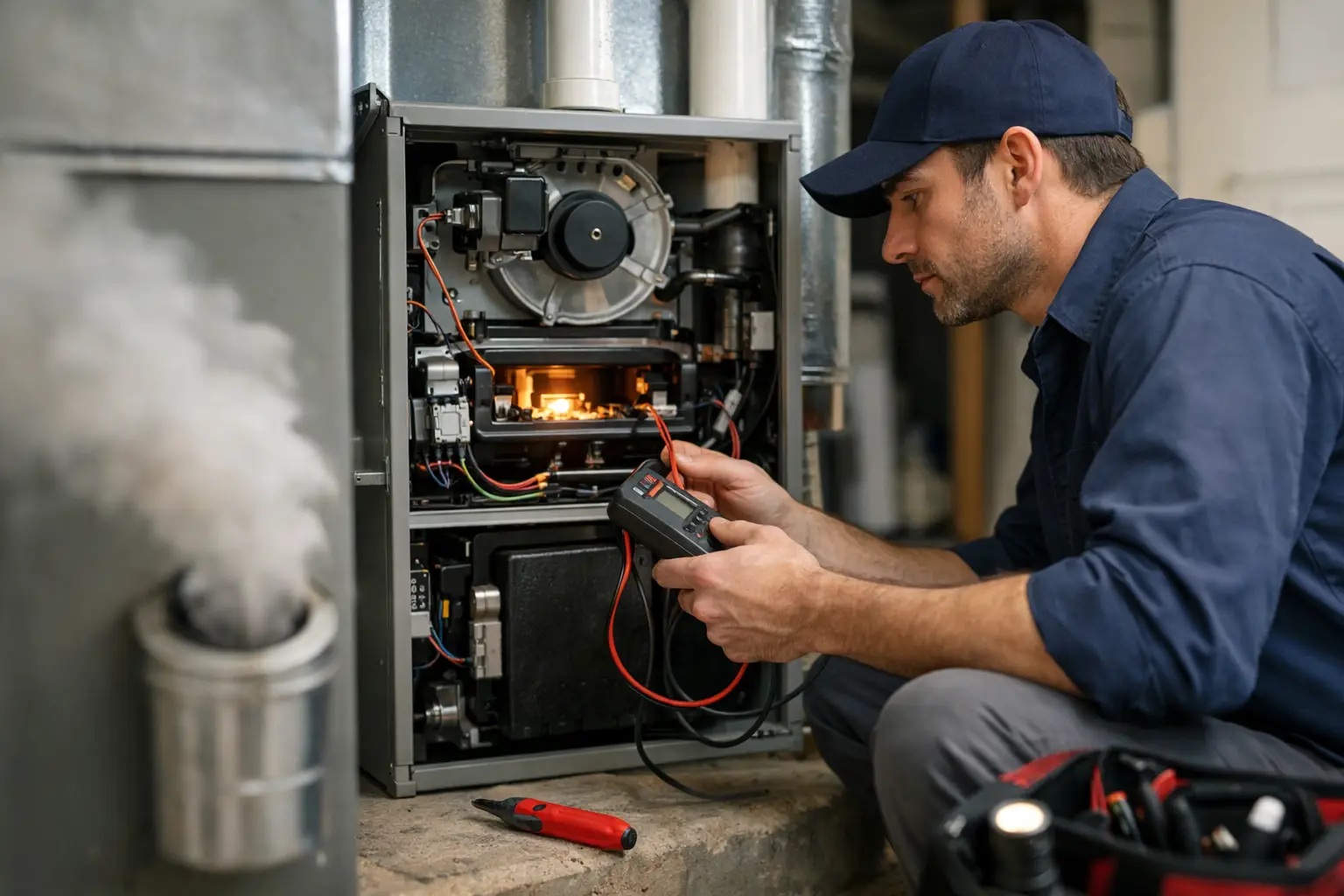
A furnace that quits on a cold Texas night rarely gives much notice. One room feels chilly, the thermostat keeps climbing, or the system starts making a sound it never made before. Prompt furnace repair protects more than comfort. It can prevent a small ignition, airflow, or electrical issue from becoming a complete breakdown when your home or business needs heat most.
In Magnolia and the greater Houston area, heating systems may sit unused for long stretches before a cold front arrives. That makes the first few heating cycles of the season especially revealing. Knowing which warning signs deserve a service call, which issues require immediate action, and when replacement makes more financial sense helps you make a clear decision under pressure.
When Furnace Repair Cannot Wait
Some furnace problems are inconvenient. Others can create a safety concern or cause damage to the equipment if the system continues running. Turn the furnace off and arrange professional service promptly if you notice any of the following:
- A gas or sulfur-like odor near the furnace, gas line, or vents
- A carbon monoxide detector alarm, soot around the unit, or yellow rather than blue burner flames
- Repeated breaker trips, a burning electrical smell, smoke, or visible damaged wiring
- Loud banging, grinding, screeching, or metal-on-metal noises during operation
If you suspect a gas leak, leave the building, avoid switches, flames, and electrical devices, and contact your gas utility or emergency services from a safe location. Do not try to find the leak yourself or restart the furnace.
A furnace that is blowing cool air, short cycling, or failing to start is not always an emergency, but it still deserves timely attention. Running a system that cannot complete a normal heating cycle can strain components and leave you without heat when temperatures drop further.
Common Signs Your Furnace Needs Service
A furnace does not need to be completely dead to need repair. In many cases, the earliest symptoms are changes in comfort, sound, airflow, or energy use.
Uneven heat from room to room
If bedrooms remain cold while the living area overheats, the furnace may not be the only factor. Restricted filters, closed or blocked registers, duct leakage, poor return airflow, and an improperly sized system can all contribute. A technician should evaluate the whole heating system rather than replace a furnace part based on temperature differences alone.
Short cycling or frequent starts
Short cycling means the furnace turns on, shuts off before completing a normal cycle, and starts again soon afterward. A clogged filter can contribute, but so can a dirty flame sensor, overheating limit switch, thermostat issue, or airflow problem. Short cycling wastes energy and places extra wear on ignition and blower components.
Strange sounds after startup
A brief click at ignition or the steady sound of moving air can be normal. Persistent noises are different. Rattling may point to loose panels or ductwork, while squealing can indicate a blower motor or belt issue in applicable systems. A boom or delayed ignition sound should be inspected quickly because it may mean burners are not lighting smoothly.
Higher utility bills without a clear reason
Heating costs rise during cold weather, but a sharp increase can signal a furnace working harder than it should. Dirty filters, failing blower components, duct leakage, incorrect thermostat settings, and declining equipment efficiency are common causes. A proper diagnostic visit can identify whether the problem is a repair issue, a maintenance issue, or a larger system-performance concern.
The thermostat says heat is on, but the air is cold
First, confirm the thermostat is set to Heat and the fan setting is on Auto rather than On. Check that the filter is not heavily clogged and that the furnace breaker is on. If those basics do not resolve the issue, the cause could involve the igniter, flame sensor, control board, gas supply, blower motor, or safety switch. Those are not parts to troubleshoot by trial and error.
What Happens During Professional Furnace Repair
Reliable furnace repair starts with diagnosis, not a guess. A licensed HVAC technician should inspect the thermostat call for heat, electrical connections, safety controls, filter condition, airflow, burners, ignition sequence, venting, and blower operation. On gas furnaces, combustion-related components and carbon monoxide risks require special attention.
After identifying the issue, the technician should explain what failed, why it matters, and what the repair involves before work begins. Transparent pricing matters here. Homeowners and property managers should be able to understand whether the recommended repair restores safe, dependable operation or merely postpones a larger problem.
Many common repairs can be completed in one visit when the needed part is available. More involved issues, such as a failed control board, damaged heat exchanger, or hard-to-source component, may require additional planning. The right answer depends on equipment age, condition, availability of parts, and the cost of keeping the system in service.
Repair or Replace: How to Make the Right Call
A repair is often the practical choice when the furnace is under 10 years old, has been maintained, and needs a contained repair such as an igniter, capacitor, flame sensor, pressure switch, or blower-related component. The goal is not to replace equipment prematurely. It is to restore safe, efficient heating at a reasonable cost.
Replacement becomes worth serious consideration when repairs are frequent, the system is near or beyond its expected service life, or a major component fails. A cracked heat exchanger, for example, can create a combustion safety concern and may make replacement the wiser path. Older furnaces can also cost more to operate than newer high-efficiency options, especially in larger homes or commercial spaces with long run times.
There is no single percentage rule that fits every decision. A $600 repair on a well-maintained 8-year-old furnace is different from the same repair on a 17-year-old unit that has needed multiple service calls. Consider the repair cost, expected reliability, energy use, warranty status, and whether the existing system still meets the building’s heating needs.
For commercial properties, the calculation may also include tenant comfort, employee productivity, operating hours, and the cost of an unexpected shutdown. Preventive service and a documented equipment plan can reduce the chance that a rooftop unit or building heating system fails during a critical period.
Safe Steps to Take Before the Technician Arrives
There are a few simple checks that can save time without putting you at risk. Make sure the thermostat has power and is set correctly. Replace a visibly dirty air filter with the proper size and confirm supply registers and return vents are not blocked by furniture, boxes, or rugs.
If the furnace has stopped after a power interruption, check the electrical panel for a tripped breaker. Reset it once if necessary. If it trips again, leave it off and call for service. Repeated resets can mask an electrical fault and cause more damage.
Avoid removing furnace panels, bypassing door switches, relighting equipment without instructions, or repeatedly cycling the thermostat in hopes the unit will catch. Modern furnaces use safety controls for a reason. A professional can test the system without defeating the protections designed to keep your property safe.
Preventing the Next Heating Breakdown
The best time to schedule heating maintenance is before the first sustained cold weather arrives, not after the furnace stops. A seasonal tune-up gives a technician the opportunity to inspect ignition components, verify safeties, clean where appropriate, assess airflow, and catch wear before it becomes a no-heat call.
Between visits, change filters on the schedule appropriate for your home, pets, occupancy, and filter type. Keep the area around the furnace clear, listen for new noises, and test carbon monoxide detectors regularly. For businesses and multi-unit properties, maintenance records and planned inspections make budgeting and operational decisions far easier.
When your furnace starts acting differently, do not wait for a complete failure to get answers. BluePeak 360 provides professional HVAC service with a personal touch for homeowners and businesses that need clear diagnostics, responsive repairs, and dependable heat when it counts.