
If your AC is limping through another Texas summer, waiting until it fails completely is usually the most expensive way to handle it. A good home hvac installation guide should help you make smart decisions before you are stuck sweating through an emergency replacement, and that starts with understanding that installation quality matters just as much as the equipment itself.
For homeowners, a new HVAC system is not just another appliance purchase. It affects comfort, humidity control, utility bills, indoor air quality, and how hard your system has to work every day. In a climate like ours, where cooling demand is high for much of the year, getting the details right upfront can save a lot of frustration later.
What a home HVAC installation guide should cover
Most people focus on brand names and tonnage first. Those matter, but they are only part of the picture. The real job is matching the system to the home, the ductwork, and the way the house is actually used.
A proper installation plan should cover sizing, efficiency ratings, duct condition, airflow, thermostat compatibility, drainage, insulation around key components, and electrical requirements. If one of those pieces is off, even a premium system can underperform.
This is also where homeowners can get tripped up by low quotes. A cheaper bid may leave out duct modifications, code updates, drain improvements, or startup testing. That lower number can look attractive until comfort problems or repair costs show up a few months later.
Start with the right system size
Bigger is not better in HVAC. An oversized unit can cool the home too quickly without running long enough to remove humidity. That often leaves rooms feeling cold and clammy at the same time. An undersized system has the opposite problem – it runs too long, struggles in peak heat, and wears itself down trying to keep up.
Correct sizing should be based on more than square footage. Window exposure, insulation levels, ceiling height, air leakage, duct design, and occupancy all affect the load. In older homes, additions or remodels can change what the house needs compared to the system that was there before.
If a contractor recommends the same size unit you already have without reviewing those factors, it is fair to ask why. Sometimes the existing size is right. Sometimes it has been wrong for years.
Choosing between repair and replacement
A home HVAC installation guide is most useful when you are still deciding whether to replace at all. If your current system is newer and the repair is minor, fixing it may be the better call. If the unit is older, out of warranty, using outdated refrigerant, or breaking down repeatedly, replacement often makes more financial sense.
Utility costs matter too. A system that technically still runs may be costing you more every month in energy waste and poor performance. That does not mean every older unit should be replaced immediately, but it does mean the decision should include operating cost, reliability, and comfort, not just whether the unit can be revived one more time.
Efficiency ratings and what they really mean
Higher efficiency equipment can lower operating costs, but the best choice depends on how long you plan to stay in the home and how well the house supports that equipment. SEER2 ratings are useful, but they are not a magic number that guarantees savings.
For example, paying more for very high-efficiency equipment may not deliver the return you expect if the ductwork leaks, the attic insulation is poor, or the thermostat settings are inconsistent. On the other hand, in homes with strong insulation and heavy summer usage, stepping up in efficiency can make a noticeable difference.
Variable-speed and two-stage systems are worth discussing if humidity control and quieter operation matter to you. They usually cost more upfront, but they can improve comfort in a way single-stage equipment often cannot.
Don’t ignore the ductwork
This is one of the most overlooked parts of any installation. If your duct system is undersized, leaking, poorly sealed, or badly laid out, the new equipment will not perform the way it should.
You may notice this already if certain rooms stay hot, airflow is weak, or dust builds up quickly. A replacement project is the right time to evaluate whether the ductwork needs repair, sealing, balancing, or partial redesign.
Not every installation requires full duct replacement. Sometimes targeted fixes are enough. But skipping duct assessment entirely is a common reason homeowners end up disappointed after buying a new system.
Indoor air quality upgrades to consider
Installation day is also the easiest time to add indoor air quality improvements. If you have allergy concerns, uneven humidity, lingering odors, or fine dust issues, this is the moment to ask about options that work with the new system.
Better filtration, whole-home dehumidifiers, UV treatment, and upgraded thermostats can all make sense depending on the home. The key is matching the upgrade to the actual problem. There is no reason to pay for add-ons that sound impressive but do not solve anything you are experiencing.
In the Houston area, humidity control is often just as important as temperature. A house that reaches the set temperature but still feels sticky is not truly comfortable.
What installation day should look like
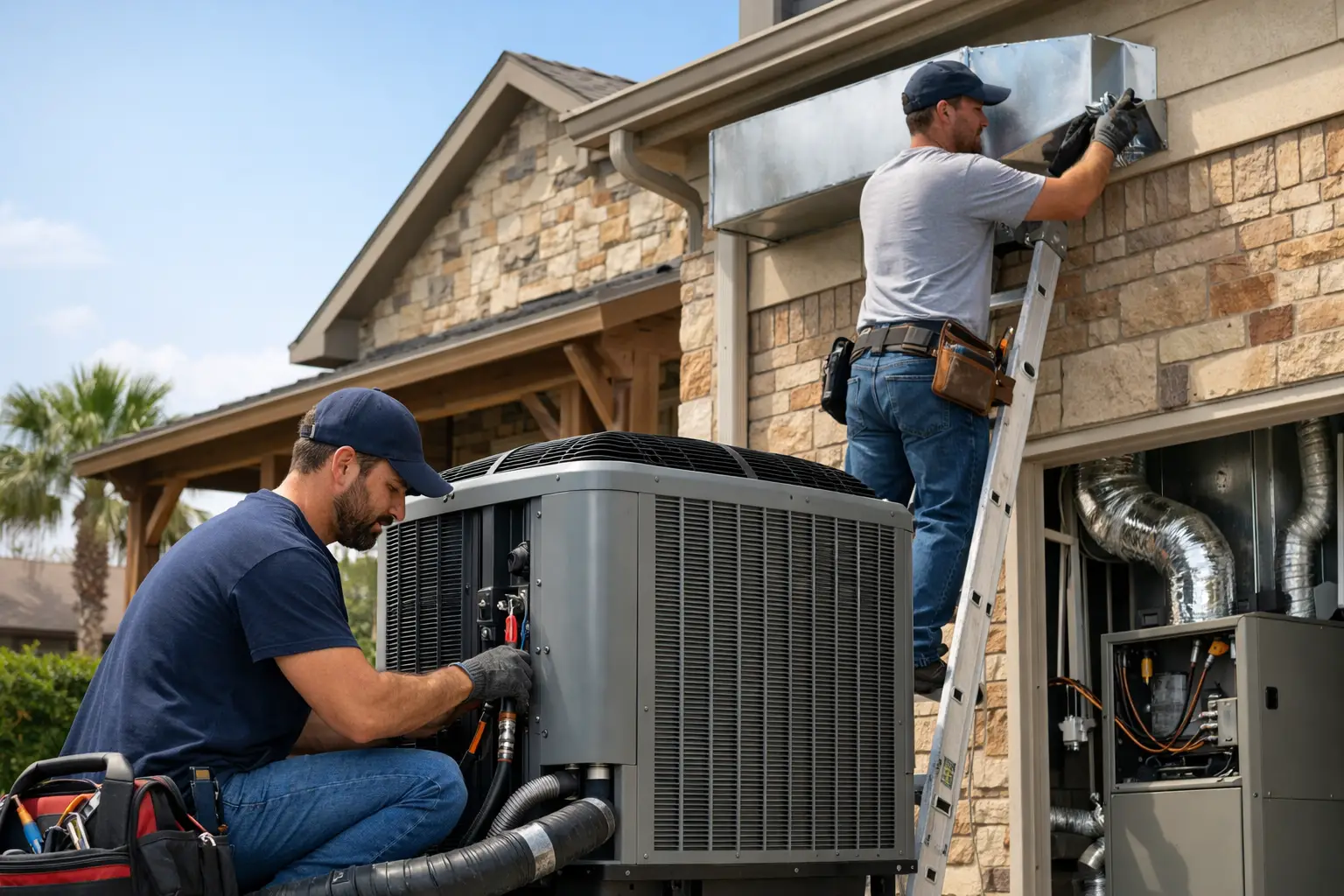
A professional install should feel organized, not chaotic. The old equipment is removed, the new components are set correctly, refrigerant lines and drains are addressed as needed, electrical connections are checked, and the system is tested before the job is considered complete.
Depending on the scope, the work may take one day or longer. Straight equipment swaps are usually simpler. Projects involving duct changes, code corrections, thermostat upgrades, or attic access challenges may take more time.
Homeowners should expect clear communication about what is being installed, what changed from the original setup, and whether any existing issues were found during the job. Transparent pricing and clear scope matter here. Surprises are rarely welcome during an HVAC replacement.
Questions worth asking before you approve the job
You do not need to know every technical detail, but you should know what you are paying for. Ask how the system was sized, whether ductwork was inspected, what efficiency level is being recommended, and whether the thermostat will need to be replaced or reconfigured.
It is also smart to ask about warranty coverage, permit requirements if applicable, startup testing, and what kind of maintenance the new system will need. Licensed and insured installation is not just a trust signal. It protects you when major mechanical work is being done in your home.
If the quote includes options, ask what you gain by moving up a tier and what you give up by choosing the lower-cost model. Sometimes the middle option is the best fit. Sometimes the entry-level system is perfectly reasonable. It depends on your budget, comfort priorities, and how long you expect to stay in the property.
Common mistakes homeowners can avoid
The biggest mistake is treating HVAC replacement like a simple box swap. It is a system, not just a unit. The second mistake is shopping only by price.
A low quote can become expensive if the install is rushed, the system is mis-sized, or the airflow is never corrected. Another common issue is skipping maintenance after installation. Even the best equipment needs regular service to protect performance and warranty coverage.
Timing also matters. If your system is showing signs of decline, planning ahead usually gives you better choices than waiting for a total breakdown during peak season. Emergency replacements can be done, but they often come with more pressure and fewer scheduling options.
A practical way to think about your next install
A new HVAC system should make your home more comfortable, more efficient, and less stressful to manage. That only happens when the installation is designed around the house, not rushed to fit a low number on a quote.
For homeowners who want dependable performance, the best path is simple: ask better questions, expect clear answers, and work with a contractor who treats sizing, airflow, and workmanship like the core of the job. That approach is what turns a major expense into a long-term upgrade you can actually feel every day.