
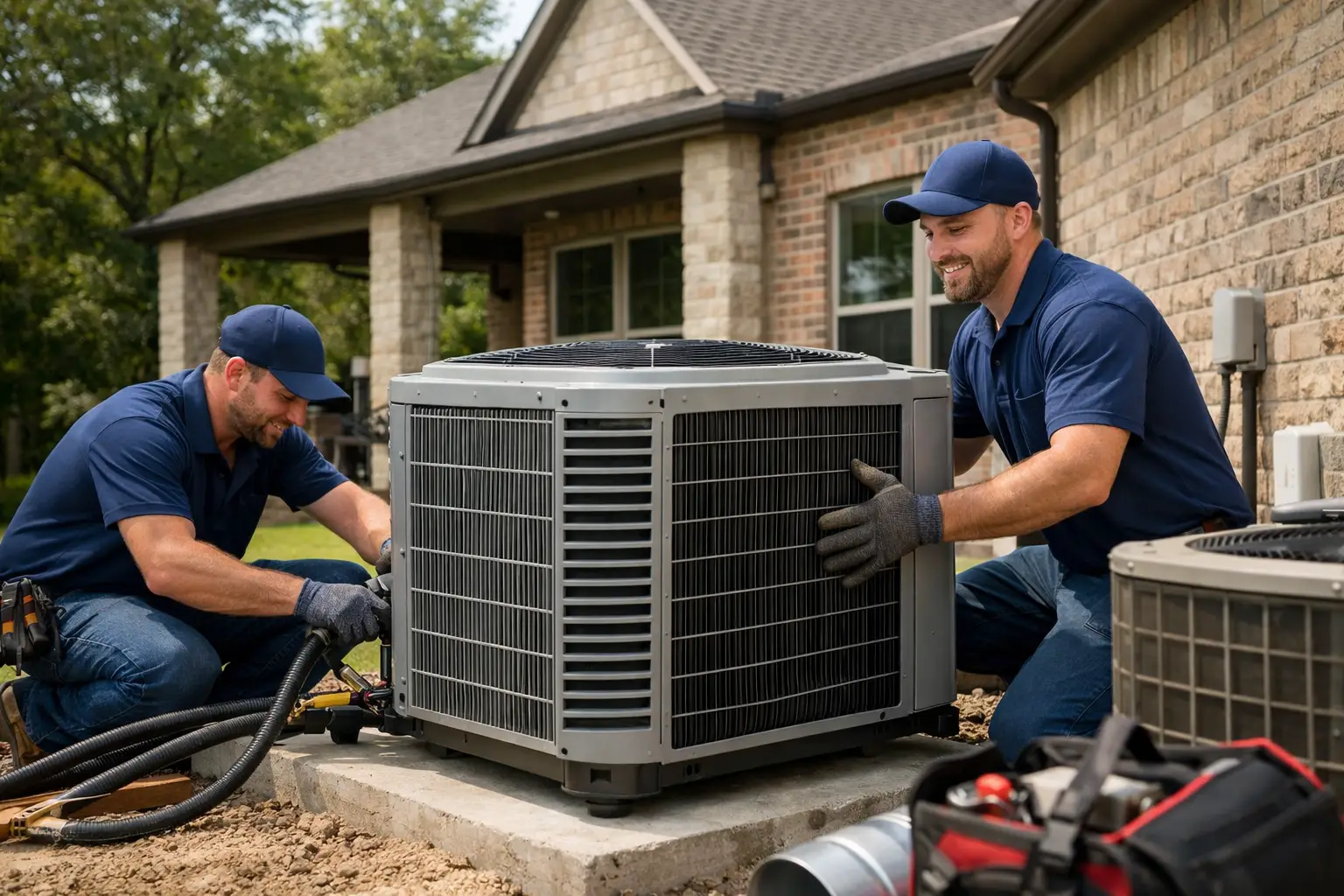
When your AC limps through another Magnolia summer, replacement stops feeling like a future project and starts feeling like a decision you need to make fast. If you are searching for ac system replacement Magnolia TX, you are probably dealing with high energy bills, uneven cooling, repeat repairs, or a system that simply cannot keep up when the heat settles in.
A full replacement is a major expense, but waiting too long can cost more than most homeowners and property managers expect. Older systems run longer, cool less effectively, and often break down at the worst time. For homes and commercial spaces alike, the real question is not just whether the system still turns on. It is whether it is still doing its job efficiently, reliably, and safely.
When AC system replacement in Magnolia TX makes sense
Not every AC problem means you need a new system. Sometimes a repair is the right call, especially if the issue is isolated and the equipment is still relatively young. A failed capacitor, a bad contactor, or a thermostat problem can often be fixed without replacing the entire system.
Replacement becomes the smarter option when the system is older, repairs are stacking up, and comfort is getting worse. If your unit is around 10 to 15 years old and needs a major repair, it is worth looking closely at the bigger picture. That is especially true if your utility bills have been climbing even though your usage habits have not changed.
There are also cases where your AC was never properly sized for the building. An oversized unit may short cycle and leave humidity behind. An undersized system may run constantly and still struggle to cool the space. Replacing the system gives you a chance to fix those problems instead of paying to keep an inefficient setup alive.
Signs your current system is costing you more than it should
The warning signs usually show up before a total breakdown. Some are obvious, and some get brushed off for months until they become expensive.
Frequent service calls are one of the clearest signs. If you have already paid for multiple repairs in the last couple of seasons, the pattern matters. Constantly replacing parts on an aging system rarely delivers long-term value.
Uneven temperatures are another red flag. If some rooms feel comfortable while others stay warm and sticky, the issue may be more than airflow. It could point to a system that no longer has the capacity to cool the property properly.
Strange noises, poor humidity control, and longer run times also matter. So does the age of the refrigerant. If your system uses R-22, repairs can become especially costly because that refrigerant has been phased out. In many of those cases, replacement makes more financial sense than trying to extend the life of outdated equipment.
What a full AC replacement actually includes
A lot of people picture replacement as swapping the outdoor unit and moving on. In reality, a proper replacement should look at the entire system.
That can include the condenser outside, the indoor evaporator coil, and in some cases the furnace or air handler. It may also involve thermostat upgrades, electrical adjustments, drain line improvements, or ductwork corrections if airflow problems are part of the issue. Replacing only one component when the rest of the system is mismatched can reduce efficiency and create performance problems.
For commercial properties, the scope may include rooftop units, controls, zoning considerations, and scheduling around occupied business hours. The right installation plan protects day-to-day operations while making sure the equipment is sized and configured for the building’s actual load.
A reliable contractor should explain what is being replaced, why it is being replaced, and whether any supporting components need attention. Clear recommendations and transparent pricing matter just as much as the equipment itself.
What affects AC replacement cost
The biggest pricing factor is not just the brand name on the equipment. Size, efficiency level, installation complexity, and the condition of the existing system all play a role.
A larger home or commercial space may need higher-capacity equipment, but bigger is not always better. The system has to be matched to the property. That means considering square footage, insulation, windows, duct layout, occupancy, and how the building handles heat. A rushed quote based only on square footage can miss important details.
Higher-efficiency systems usually cost more upfront, but they can lower monthly operating costs. Whether that upgrade pays off depends on your usage, budget, and how long you plan to stay in the property. Some owners want the lowest initial price. Others want stronger long-term savings and better humidity control. Neither goal is wrong, but the recommendation should fit your priorities.
Labor and installation conditions also affect cost. Tight attic access, damaged ductwork, code upgrades, or electrical modifications can change the price. That is why an in-person evaluation is so important. A real estimate should be based on your actual system and building conditions, not a generic number.
Choosing the right efficiency level for Magnolia heat
In Southeast Texas, efficiency is not just a nice feature. It directly affects comfort and utility costs through a long cooling season.
That said, the highest-rated system is not automatically the best choice for every property. The right fit depends on how often the system runs, how well the building is sealed, and whether the ductwork supports the performance you are paying for. A high-efficiency unit installed on a home with major duct leakage may not deliver the return you expect.
Variable-speed and two-stage systems can offer better temperature consistency and humidity control than basic single-stage equipment. That can be a meaningful upgrade in Magnolia, where the air often feels as heavy as the heat. For homeowners who notice clammy indoor air or hot spots, this type of equipment can improve comfort in ways a lower-end replacement may not.
For businesses, better efficiency can also help stabilize overhead costs. In offices, retail spaces, and tenant-occupied buildings, reliable cooling is part of keeping people comfortable and operations on track.
Why installation quality matters as much as the equipment
A premium system will not perform the way it should if the installation is rushed or incomplete. Proper sizing, airflow setup, refrigerant charge, and system testing all matter. Small mistakes at installation can lead to poor efficiency, short cycling, humidity issues, and avoidable repairs.
This is where licensed and insured service becomes more than a line in a brochure. You want technicians who understand load calculations, ventilation, code requirements, and how the full system works together. You also want a company that communicates clearly, shows up on time, and stands behind the work.
If the proposal skips over duct condition, thermostat compatibility, or drainage, ask questions. A replacement should solve problems, not carry old ones into new equipment.
Planning the timing of your replacement
Many replacements happen after a breakdown, but that is not always the best time to make the decision. Emergency replacement can be done quickly, but it often comes with more stress because you are choosing under pressure.
If your current system is still operating but clearly declining, planning ahead gives you more control. You can compare options, think through efficiency levels, and schedule installation before peak demand puts extra strain on your equipment. For commercial properties, advance planning also helps avoid disruption during business hours or high-occupancy periods.
Fast response still matters, especially when the system fails during extreme heat. That is where working with a responsive local HVAC company helps. BluePeak 360 serves both residential and commercial customers with the kind of organized, professional support that matters when comfort cannot wait.
Questions worth asking before you approve the job
A good estimate should answer a few practical questions without a lot of vague language. What size system is being recommended, and why? Will the indoor and outdoor components be matched? Are there duct or airflow issues that need to be fixed now? What warranty coverage applies to equipment and labor?
You should also ask about thermostat compatibility, expected efficiency performance, and whether any code-related upgrades are needed. For business owners and property managers, it is smart to ask how installation timing will be handled and whether tenant comfort or operations will be affected during the work.
The best conversations are straightforward. You should feel like you understand your options, not like you are being pushed into the most expensive package on the page.
Replacing an AC system is never small, but it does not have to be confusing. When the recommendation is clear, the pricing is transparent, and the installation is done right, a replacement becomes less about reacting to a breakdown and more about getting dependable comfort back where it belongs.